
Mercedes Vision V: 2026’s Luxury Van Revolution
- Car Blog
- Electric Cars
- EV
- Global Auto News
- Luxury Cars
- News
- Jun 02
- 9 min read
- Share post
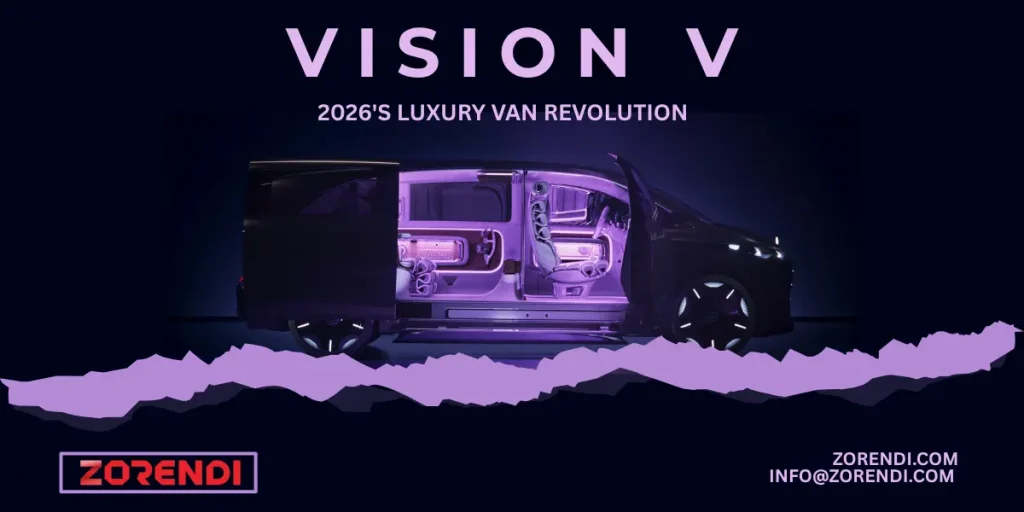
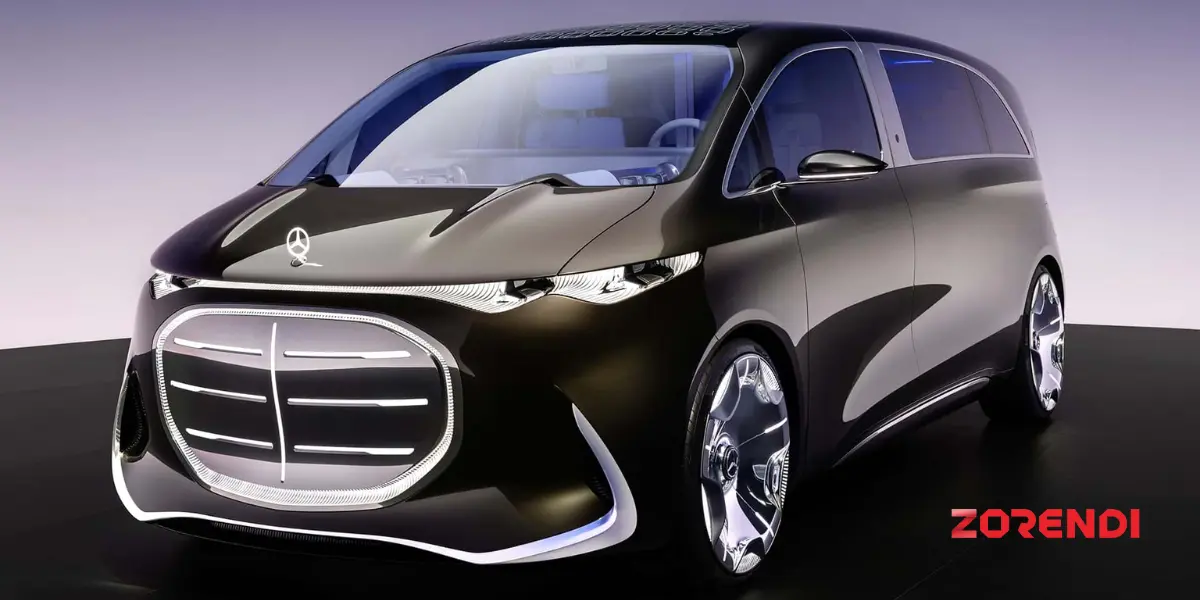
The Mercedes Vision V matters because it shows Mercedes is no longer treating a luxury van as a commercial vehicle with nicer seats. It previews a new class of chauffeur-focused luxury transport, while the production Mercedes-Benz VLE has already turned much of that idea into a real vehicle in 2026 and the higher-end VLS is set to push the concept even further.
There is one important distinction, though. The Vision V itself is a concept car, not something buyers can order from a Mercedes showroom. Think of it as Mercedes showing how far its new van platform can go, particularly at the expensive end of the market.
Vision V, VLE and VLS Are Not the Same Thing
This is where a lot of coverage gets confusing.
Mercedes revealed the Vision V at Auto Shanghai in April 2025 as a preview of a new luxury passenger-van strategy. The company calls its future passenger models “Grand Limousines” rather than simply vans, with the VLE covering everything from family transport to premium shuttles and the VLS positioned above it in the top-end luxury segment.
The VLE is now the real production vehicle. Series production began at Mercedes-Benz’s Vitoria plant in Spain in June 2026. The VLS will sit further up the range, making it the model more closely aligned with the extravagant ideas shown by Vision V.
So anyone searching for a “2026 Mercedes Vision V” to buy should understand that there is no production car carrying that exact name.
Explore More: Mercedes benz for sale

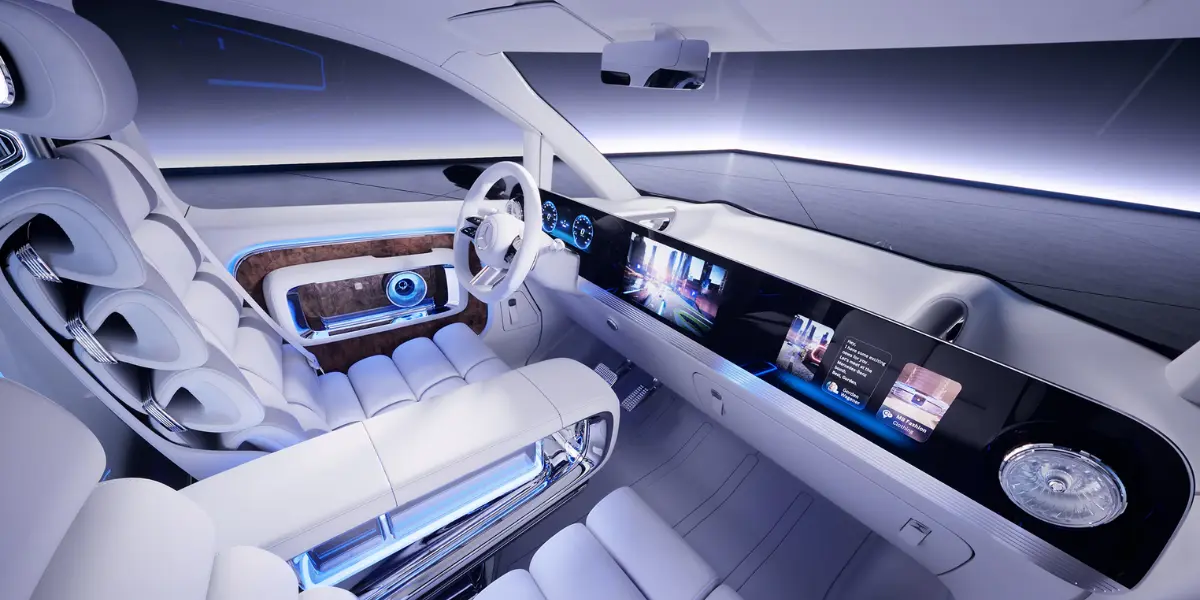
The Vision V Cabin Was the Real Headline
The exterior looks far more sculpted than a traditional V-Class, but the cabin is where Mercedes made its point.
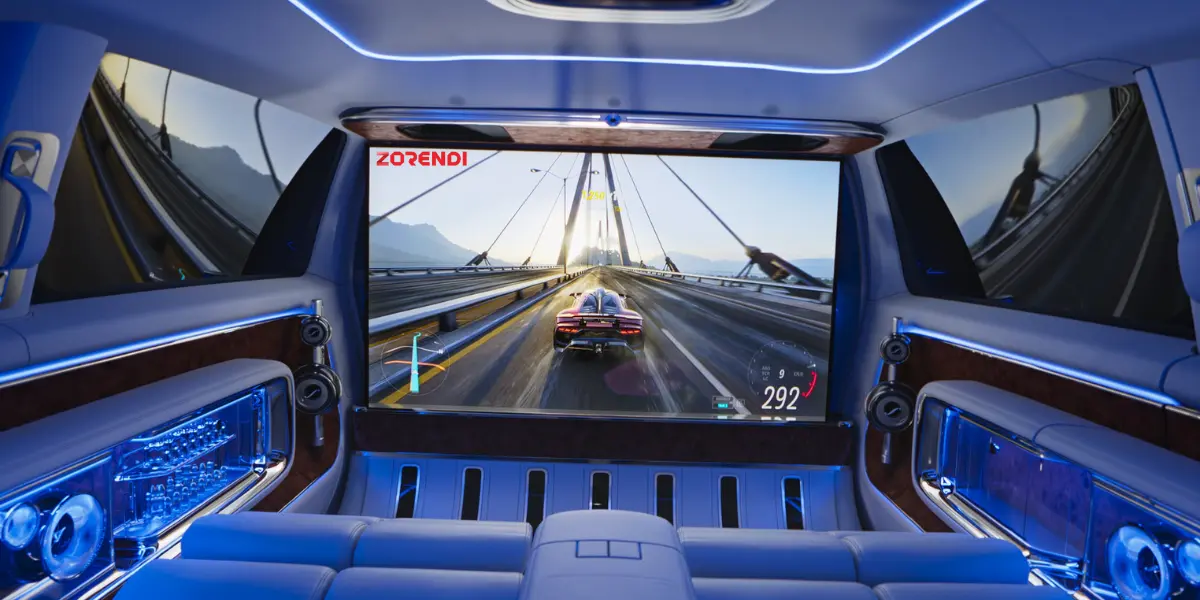
The concept featured a retractable 65-inch cinema screen, Dolby Atmos surround sound through 42 speakers and seven projectors integrated into the headliner and floor. Mercedes essentially turned the rear compartment into a private entertainment room rather than just adding larger screens behind the front seats.
That distinction matters. Plenty of premium vans already offer reclining chairs, televisions, tables and privacy partitions through aftermarket conversion companies. Vision V was Mercedes showing what could happen when that experience is engineered into the vehicle from the beginning.
Not everything from the concept has carried directly into the production VLE, which is probably a good thing. A 65-inch screen and seven-projector cabin are impressive at a motor show, but they are not necessary for every family or hotel shuttle.
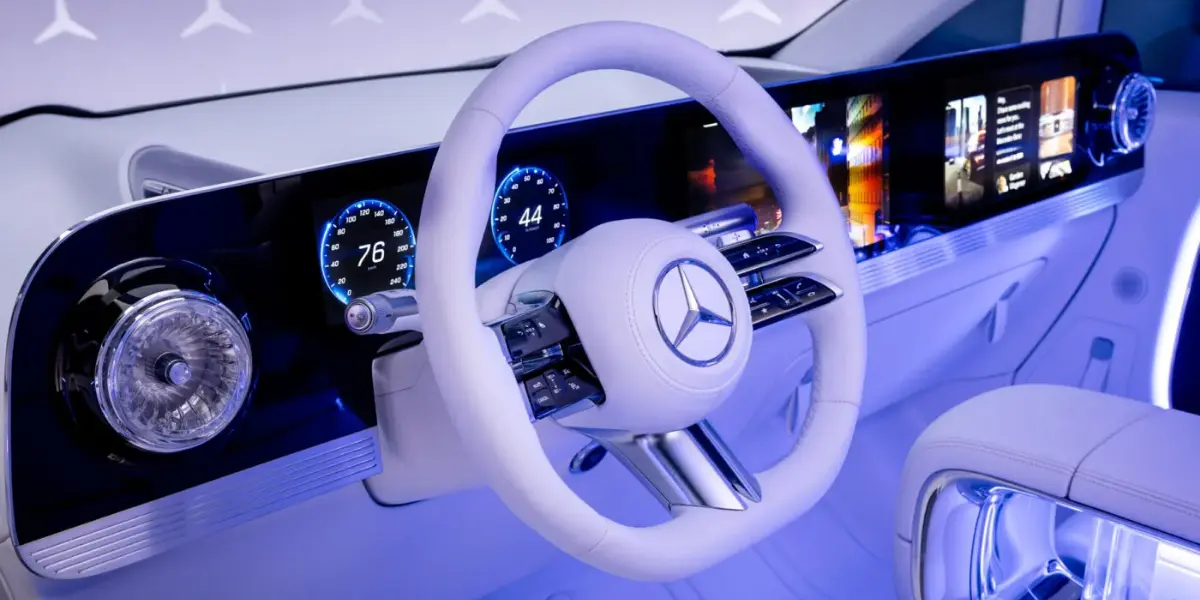
The production VLE takes a more usable approach. An optional 31.3-inch retractable 8K panoramic rear display can operate in split-screen mode, while an integrated camera supports video calls. The available Burmester 3D surround system uses 22 speakers and Dolby Atmos.
Still extravagant, but much closer to something people can use every day.
The Production Technology Is More Important Than the Concept Tricks
The biggest change underneath the new Mercedes luxury vans is the new Van Architecture.
The electric VLE 300 uses a 115 kWh usable NMC battery and a 203 kW electric powertrain. Mercedes quotes more than 700 km of WLTP range, although those figures were initially published as provisional and should not be treated as guaranteed Dubai summer range.
An 800-volt electrical architecture allows DC charging at more than 300 kW. Mercedes says as much as 355 km of WLTP range can be added in 15 minutes under suitable fast-charging conditions.
The more powerful VLE 400 4MATIC uses all-wheel drive and produces more than 300 kW. Mercedes gives it a claimed 0-100 km/h time of 6.5 seconds. That level of acceleration is hardly necessary in a chauffeured MPV, but it tells you how far removed the engineering is from the traditional slow, heavy van formula.
Rear-wheel steering is arguably more useful. With seven degrees of rear steering, the VLE can achieve a 10.9-metre curb-to-curb turning circle. For a large vehicle being used around Downtown Dubai, Business Bay, hotel entrances or multi-storey parking, that matters more than a dramatic acceleration figure.
Optional AIRMATIC air suspension can also raise or lower the body by 40 mm, helping with both comfort and efficiency.
Browse More: Mercedes Benz G Class for sale

The UAE Might Be One of the Best Markets for This Idea
The UAE already has the customer base for luxury vans. Mercedes V-Class models are commonly used for hotel transport, executive transfers, large families and private chauffeur services, while heavily customised VIP vans can cost far more than the standard vehicle.
The VLE and eventually VLS make that market more interesting because buyers will no longer need to start with what is fundamentally a conventional van platform and then spend heavily on a conversion.
Mercedes has even specifically referenced hot-weather operation. The VLE uses three climate-control systems, and the company describes the system as being designed to provide comfortable cabin temperatures in conditions including +35°C in Dubai.
That is more relevant to UAE buyers than another ambient-lighting demo.
Range needs more caution. A quoted WLTP figure above 700 km does not mean a VLE will travel 700 km between charges while carrying passengers from Dubai to Abu Dhabi in peak August heat with all three climate systems running. Battery temperature, road speed, load and air-conditioning use can all affect real consumption.
The 800-volt charging system could therefore matter just as much as headline range.
Explore More: Mercedes Benz S Class for sale
It Is Also Much More Flexible Than a Luxury SUV
A Range Rover, Mercedes-Maybach GLS or large luxury SUV may make more sense for an owner-driver. The VLE is aimed at a different problem.
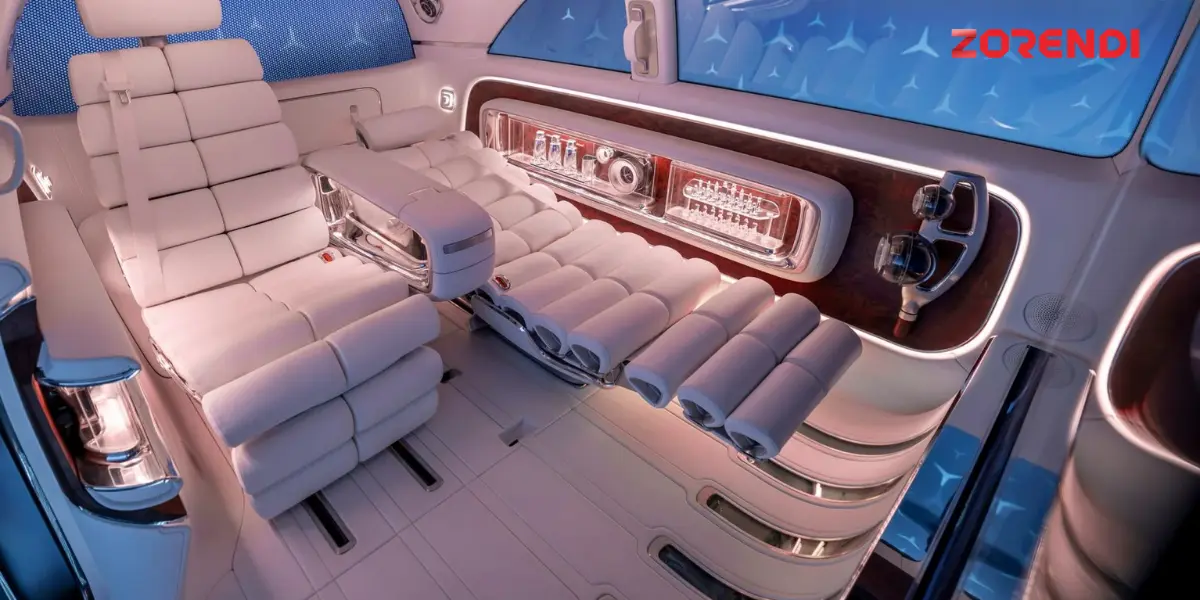
It can be configured with between five and eight seats. Mercedes offers individual comfort seats, electrically adjustable premium seats and a Grand Comfort Seat with functions including lumbar support, massage and a calf rest.
The clever part is the new seating system. Manual Roll & Go seats can slide through the cabin and be removed, while electrically adjustable versions can reposition themselves using predefined configurations controlled through the vehicle interface.
Need more luggage room? Move the seats forward.
Need executive rear legroom? Move them back.
That sounds basic until you consider how awkward removing and repositioning heavy van seats normally is.
Depending on specification, Mercedes quotes up to 795 litres of luggage capacity with three seating rows installed and as much as 4,078 litres with the removable manual rear seats taken out. Towing capacity can reach 2.5 tonnes.
This is where the VLE starts making more practical sense than an ultra-luxury SUV for large UAE families.
Browse More: Mercedes Benz AMG for sale
What About the Price in Dubai?
There is currently no official UAE retail price for the Mercedes Vision V because, again, it is a concept and will not be sold under that name.
More importantly, buyers should be cautious about websites already publishing estimated UAE prices for the VLE or future VLS. As of August 8, 2026, Mercedes-Benz’s UAE sites do not provide an official local VLE retail price in the same way they do for established models.
For context only, Mercedes-Benz’s official Dubai van operation currently lists the conventional V-Class from AED 349,000.
That should not be used to predict the VLE price. The electric architecture, large battery, advanced rear cabin equipment and eventual positioning of higher VLE and VLS specifications could create a very different price structure.
For UAE buyers, the sensible move is to wait for confirmed GCC pricing and specification rather than making a decision from European pricing converted directly into dirhams.
Explore More: Mercedes Benz GLE Coupe for sale
What Should UAE Buyers Check Before Ordering One?
The first question should be specification, not screen size.
Check whether the vehicle is an official GCC-spec example and what battery warranty is included. Confirm which rear-seat package is installed, because the difference between a family-focused eight-seater and an executive Grand Comfort configuration will be substantial.
Then look at charging. Owners with villa charging and regular access to high-output DC chargers will get much more value from the VLE’s electric architecture than buyers who depend entirely on slower public infrastructure.
The Sky View panoramic roof also deserves attention in the UAE. It includes an electric sunblind, which is something buyers should actually use rather than leaving a huge glass area exposed during summer parking.
Finally, do not assume every futuristic Vision V feature will appear on a VLE. The production car already demonstrates that Mercedes has selected the ideas it considers realistic while saving the most extreme interpretation of this luxury-van formula for the VLS and possibly Mercedes-Maybach versions.
Explore More: Mercedes Benz EQS for sale
Is Mercedes Really Starting a Luxury Van Revolution?
Yes, but not because the Vision V has 42 speakers or a cinema-sized display.
The real change is that Mercedes has developed a passenger-focused architecture where electric range, charging, rear-wheel steering, air suspension, flexible seating, digital entertainment and chauffeur comfort were considered together from the start.
The VLE proves the project has moved beyond concept-car promises. Production is underway, the technical specifications are public and the first member of Mercedes’ new Grand Limousine family is real.
Vision V shows where the expensive end of that family may eventually go.
For Dubai in particular, that makes the upcoming VLS worth watching. In a market where Maybach SUVs, chauffeur-driven luxury sedans and heavily modified VIP vans already coexist, a factory-built Mercedes luxury MPV could fill a gap that has existed for years.
Read More: The Latest BMW Safety Innovations in New Models

Zorendi Editorial Team is the editorial team behind Zorendi, covering cars, motorcycles, luxury vehicles, automotive technology, and mobility trends across the UAE and international markets.
Our articles are developed through research, comparison of reliable sources, official manufacturer information, vehicle specifications, and relevant market data. The team focuses on creating clear, practical, and regularly reviewed content to help readers better understand new models, specifications, technologies, ownership considerations, and developments across the automotive industry.
Zorendi Editorial Team aims to present information in a straightforward and useful way, with an emphasis on accuracy, relevance, and providing readers with the context they need when researching vehicles and mobility-related topics.