Full Review of Lamborghini Temerario Fastest Supercar
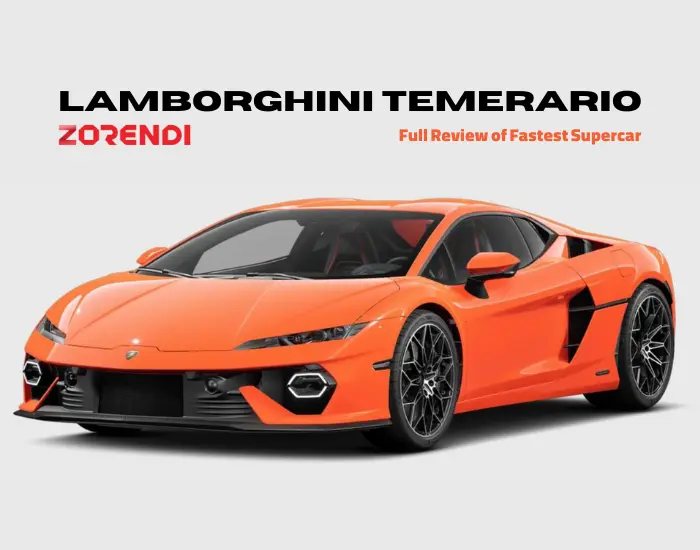
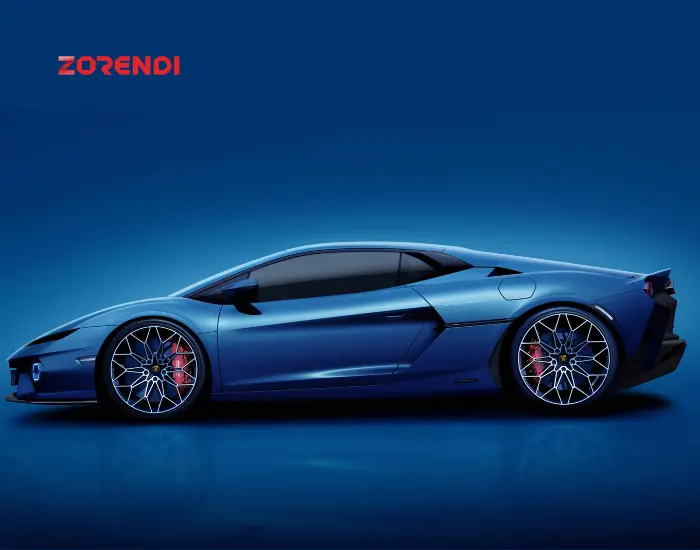
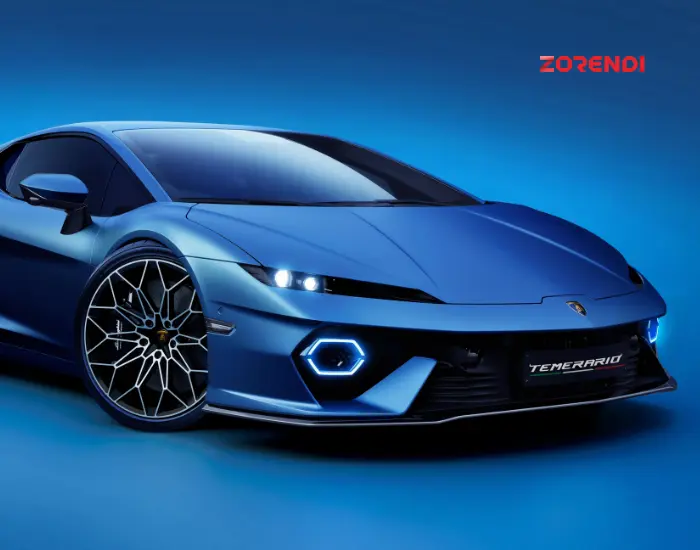
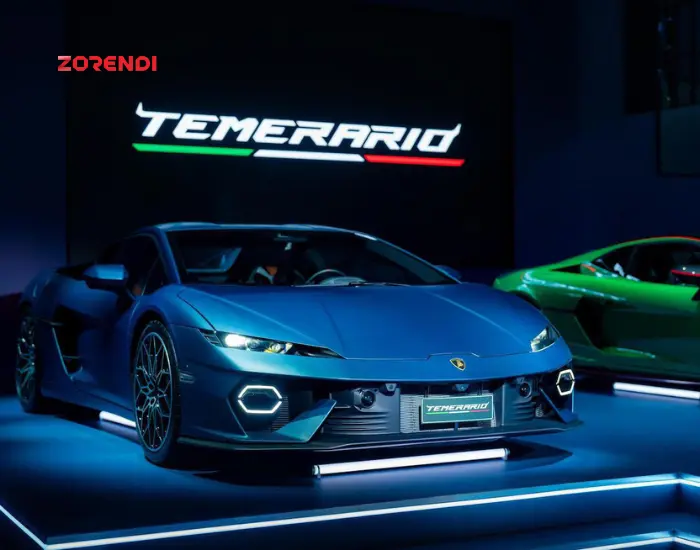
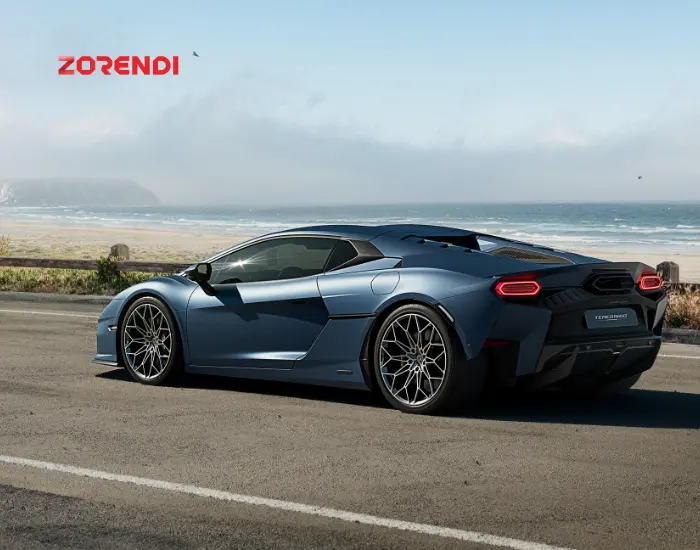
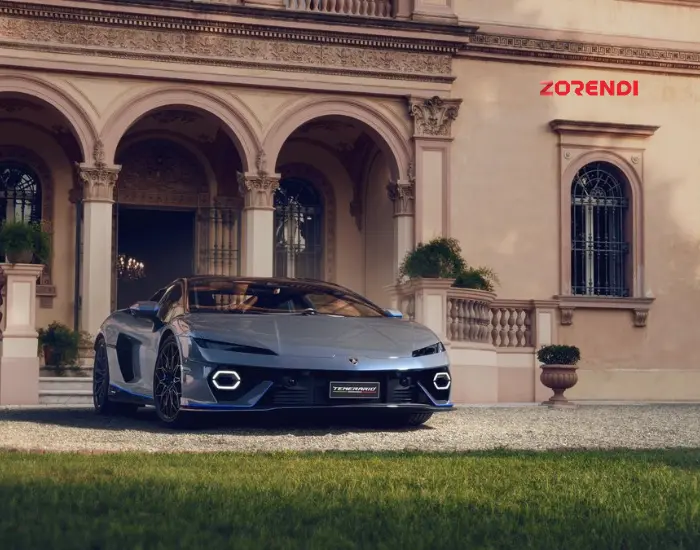
The Lamborghini Temerario is the replacement for the Huracán and introduces a completely new powertrain for Lamborghini’s V10 successor. Its 4.0-liter twin-turbo V8 works with three electric motors to produce a combined 920 CV, making it one of the most technically advanced models in Lamborghini’s current range.

For buyers looking at Lamborghini for sale in Dubai, the important point is that the Temerario is not simply a smaller version of the Revuelto. It uses a different hybrid layout, a different engine and a different approach to combining electric assistance with a high-revving combustion engine.

Powertrain Mastery

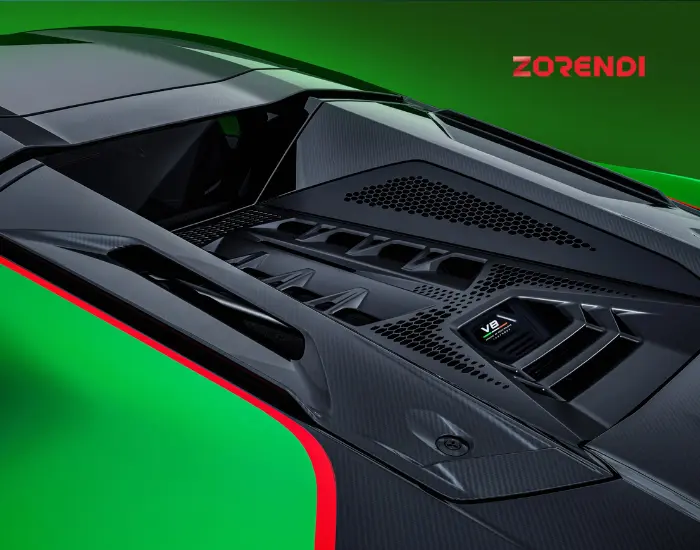
The Temerario uses a 3,995.2 cc twin-turbocharged V8 with a flat-plane crankshaft. The combustion engine produces 800 CV between 9,000 and 9,750 rpm, while maximum torque reaches 730 Nm between 4,000 and 7,000 rpm. Combined output from the V8 and electric system reaches 920 CV, or 677 kW.

The hybrid system uses three electric motors. Two motors are mounted at the front axle and provide electric all-wheel drive, while a third electric motor is integrated with the rear powertrain. The front e-axle is rated at 220 kW, giving the system the ability to manage torque across the front axle independently rather than relying on a conventional mechanical front differential.

A 3.8 kWh lithium-ion battery sits inside the car and is designed primarily around high power output rather than long electric-only driving. This is important because the Temerario is not trying to become an electric supercar with a large battery. The electric system is there to fill gaps in acceleration, support all-wheel drive and improve the response of the V8-powered car.

The transmission is an eight-speed dual-clutch unit. Lamborghini also uses a dedicated electric motor at the rear, which allows the hybrid system to add torque while the combustion engine and gearbox are working through their own operating range.

Aerodynamic Edge

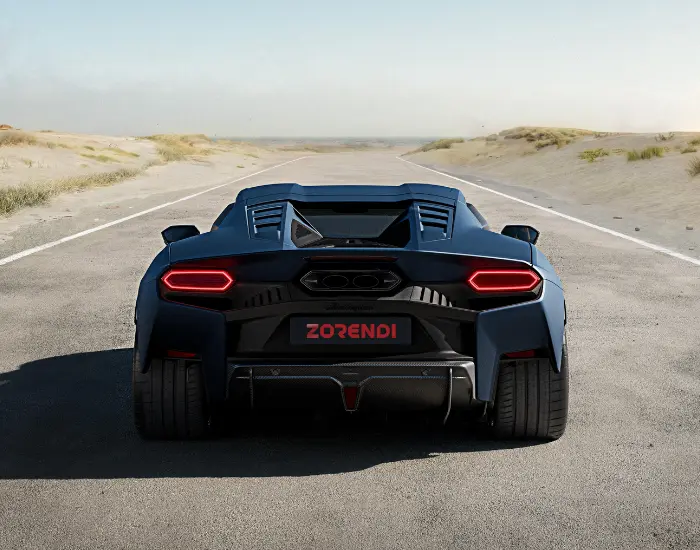
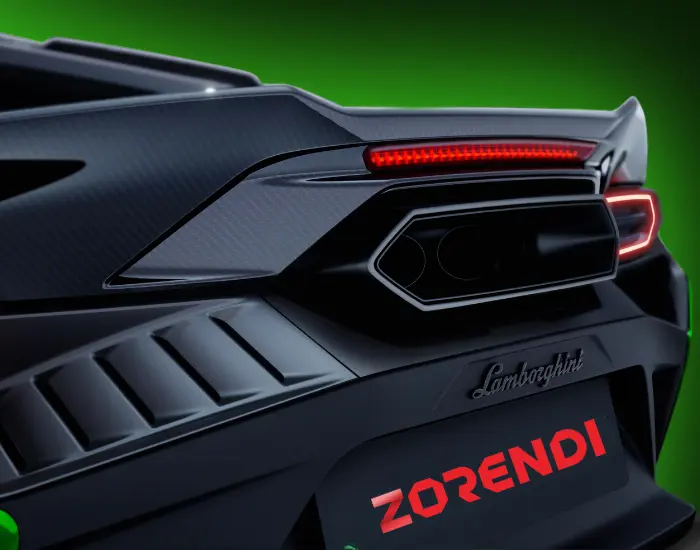
The Temerario’s aerodynamic design is closely tied to the car’s overall shape rather than relying on a collection of dramatic add-on elements. Lamborghini uses a front splitter, rear diffuser, side air intakes, underbody airflow management and a functional rear spoiler to control the air moving around the car.

The design also incorporates vortex generators and aerodynamic channels around the rear section. These elements help manage airflow leaving the body and contribute to the balance required at high speed.

What should be avoided are unsupported claims about exact downforce at individual speeds. The previous article listed specific figures for front and rear downforce, drag coefficients and active-wing angles, but Lamborghini’s official technical information does not support those numbers as general Temerario specifications.

The confirmed headline figure is the 343 km/h maximum speed. That is already enough to establish the car’s performance level without inventing aerodynamic test data.

Luxury Cabin

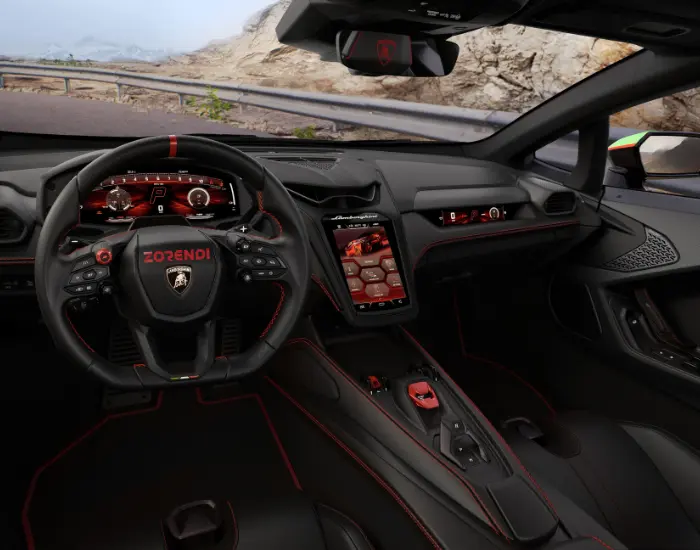
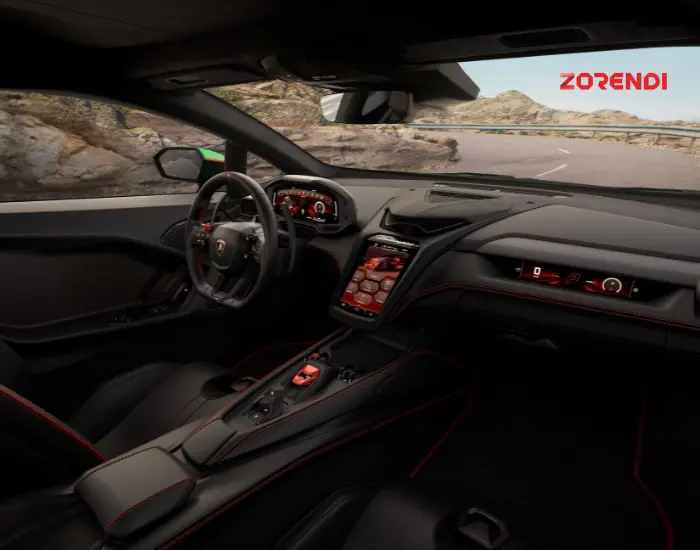
The Temerario’s cabin follows Lamborghini’s newer interior philosophy, combining a driver-focused layout with three digital displays. The driver receives a dedicated instrument display, while the centre screen controls major infotainment functions and a separate passenger display gives the front passenger access to selected information and controls.

Lamborghini also places considerable emphasis on physical controls and the relationship between the driver and the car. The steering wheel incorporates the company’s familiar driving-mode controls, allowing the driver to change the character of the powertrain and chassis without navigating through multiple touchscreen menus.

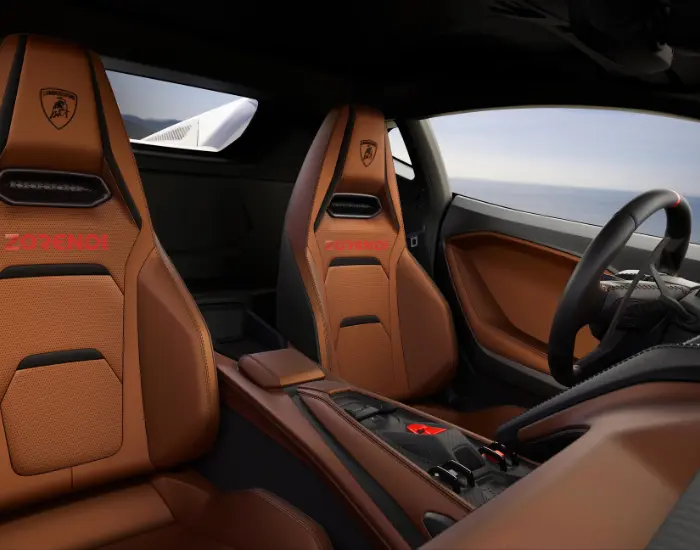
The materials and finishes can vary considerably because Lamborghini offers an extensive Ad Personam personalisation programme. Buyers can choose different leather, Alcantara, carbon-fibre and colour combinations, meaning two Temerarios can have very different interiors even when their mechanical specification is similar.

Storage remains limited compared with a conventional car, but that is expected from a mid-engine supercar. Lamborghini’s focus is on creating a usable two-seat cabin without compromising the low driving position and mechanical packaging required by the powertrain.

For a buyer considering a car for sale, the important distinction is that the Temerario’s interior is designed around the driver rather than trying to turn a supercar into a luxury sedan.

Performance Metrics

The official performance numbers are already extreme. Lamborghini lists 0–100 km/h in 2.7 seconds, 0–200 km/h in 7.3 seconds and a top speed of 343 km/h. The car’s combined power output reaches 920 CV, giving it a 1.81 kg/CV weight-to-power ratio based on Lamborghini’s current technical data.

The dry weight is 1,690 kg, while weight distribution is 43.4 percent at the front and 56.6 percent at the rear. That rear-biased balance suits a mid-engine layout and works with the electric front axle to give the car additional control over traction and corner-exit behaviour.

The previous version of this article included independent-style figures such as a 2.5-second launch, a 10.1-second quarter-mile time and a specific 32-metre braking distance. Those figures should not be presented as factory specifications unless they come from a documented test.

Lamborghini itself lists braking from 100 to 0 km/h at 32 metres, so that figure can be retained as an official specification. The car uses Carbon Ceramic Brakes Plus with 410 mm front discs and 390 mm rear discs.

Handling Dynamics

The Temerario’s handling philosophy is built around electronic control rather than a simple mechanical all-wheel-drive system. The two front electric motors can manage torque independently, while Lamborghini’s LDVI 2.0 system coordinates the vehicle’s major dynamic systems according to the selected driving mode.

That gives the car a different character from the Huracán it replaces. The electric front axle can provide additional traction and torque distribution without requiring a conventional driveshaft connecting the engine-driven rear axle to the front wheels.

The chassis uses double-wishbone suspension and Lamborghini’s electronically controlled systems to adjust the vehicle according to the selected driving mode. Strada prioritises road use, Sport changes the balance toward a more dynamic response, and Corsa is designed for maximum performance on a suitable circuit.

The previous article claimed precise damping frequencies, exact understeer reductions and specific Nürburgring calibration hours. There is no need for those claims. The underlying technology is already substantial enough to explain why the Temerario can combine high power with electronic control.

Luxury Touches

Lamborghini gives buyers significant freedom to customise the Temerario. The Ad Personam programme allows different combinations of exterior paint, interior materials, stitching, trim and other details, so the final specification can be highly individual.

The optional Alleggerita package is aimed more directly at performance. It uses lighter materials and other weight-saving measures to reduce mass, while Lamborghini also offers carbon-fibre wheels as part of its broader performance-focused options.

The previous article stated that Alleggerita removes exactly 25 kg and costs a fixed $49,113. Those figures should not be treated as universal because equipment and pricing depend on market and configuration.

Resale should also be discussed carefully. There is no reliable basis for claiming that a Temerario will depreciate exactly 15 percent over three years in Dubai. A future used-car value will depend on mileage, specification, condition, supply and demand.

Lamborghini Temerario price

There is no single global price that can be converted directly into a reliable Dubai retail figure. Lamborghini pricing varies between markets and can also change substantially once options and personalisation are added.

That makes the previous article’s $382,654 starting-price calculation and fixed UAE ownership budget unsuitable as a general buying guide. Service costs, insurance and tyre replacement depend heavily on the exact vehicle and owner profile.

Fuel consumption is also difficult to represent with one dramatic number. Lamborghini’s current technical information lists weighted combined energy consumption of 4.3 kWh/100 km plus 11.2 L/100 km, with 272 g/km of weighted combined CO₂ emissions under the applicable test cycle. With the battery discharged, the listed combined fuel consumption is 14.0 L/100 km.

For UAE buyers, the more useful question is therefore not whether the Temerario is economical. It is whether the hybrid system provides enough additional performance and flexibility to justify the cost and complexity compared with the Huracán it replaces.

Track Prowess

The Temerario was engineered with circuit performance in mind, but there is a major difference between analysing its factory hardware and claiming a personal lap time.

The previous version reported an Estoril lap of 1:48.2 and claimed a two-second advantage over the Huracán. Unless a documented independent test is available, those numbers should not be presented as established performance data.

What can be confirmed is the combination of a 920 CV powertrain, all-wheel drive through the electric front axle, carbon-ceramic brakes and electronically controlled chassis systems. That hardware gives the Temerario the tools required for serious circuit driving without pretending that every owner will achieve a particular lap time.

The 3.8 kWh battery also has a different role from a large EV battery. It is designed to provide high power for the hybrid system rather than allow long-distance electric driving.

For track use, that means the value of the battery lies in how it supports acceleration, torque distribution and the overall powertrain strategy rather than how many kilometres the car can travel without using its V8.

Everyday Usability

The Temerario is still a supercar, but Lamborghini has paid attention to the parts of ownership that happen away from a circuit. The car offers front storage, a relatively compact footprint for its performance class and electronic systems designed to make normal road driving easier.

Ground clearance is an important consideration in Dubai. The car’s low body means steep ramps, parking entrances and speed bumps still require care, even with available lift functionality.

The hybrid powertrain can also make low-speed driving less demanding than a purely combustion-powered supercar in certain situations. The electric motors can provide immediate response at low speeds, while the V8 remains available when the driver asks for stronger acceleration.

However, the Temerario should not be described as a quiet electric car at motorway speeds or as a normal daily commuter. It remains a low, wide and highly specialised performance car, and owners should expect more attention to tyres, servicing, parking and road conditions than with an ordinary vehicle.

Final Thoughts

The Lamborghini Temerario represents a major change for Lamborghini’s entry-level supercar line. The move from the Huracán’s naturally aspirated V10 to a twin-turbo V8 supported by three electric motors changes the character of the car, but the objective remains familiar: deliver extremely high performance while retaining the driving focus expected from a Lamborghini.

The official numbers make the case without needing exaggerated claims. A 920 CV combined output, 2.7-second 0–100 km/h time and 343 km/h top speed place the Temerario firmly among today’s high-performance supercars.

For UAE buyers, the more interesting question is whether the additional hybrid technology adds enough value to justify choosing the Temerario over other supercars in the same price range. The answer will depend on whether the priority is outright performance, everyday usability, technology, exclusivity or the character of the powertrain.

The Temerario is not the end of Lamborghini’s traditional approach to performance. It is a different interpretation of it, using electrification to add performance rather than simply reducing fuel consumption.

Also Read: Mercedes G63 AMG Specs and Price in dubai 

Comments

  • Faisal_K
    August 11, 2025 at 5:35 pm

    That torque vectoring with the twin front motors sounds like a game-changer. Do you feel it actually makes cornering sharper than the Huracán, or is it more of a spec-sheet flex?

    • Mr.Amin
      September 3, 2025 at 1:56 pm

      It’s not just marketing — you can literally feel the nose dig in mid-corner. The Huracán feels raw, but the Temerario feels like it’s predicting your move before you make it.

  • Fahad
    August 12, 2025 at 3:36 pm

    That breakdown of the axial-flux e-motors working with the flat-plane V8 is insane. It’s wild how Lamborghini blended old-school aggression with that predictive regen tech—0.2g decel before you even touch the pedal sounds like something out of F1. Honestly though, with all that hybrid wizardry, do you ever feel like the Temerario loses a bit of the rawness your Aventador has, or does the electric torque just make it even more brutal?

    • Mr.Amin
      September 3, 2025 at 1:51 pm

      Good catch, Fahad. I thought the same at first—worried the hybrid system might dull the edges. But honestly, the opposite happened. The e-motors don’t tame the beast; they sharpen it. The Aventador roars with drama, but the Temerario punches with precision—every shift, every launch feels laser-cut. It’s a different kind of brutality, but still very much Lamborghini.

  • Ali R
    August 13, 2025 at 6:58 am

    This is hands-down one of the most detailed Lamborghini Temerario reviews I’ve read, and it hits differently coming from someone who’s actually lived with Lambos in Dubai. The torque vectoring breakdown and the aero metrics you shared? Pure gold. Do you feel the hybrid system takes away from the rawness of the Aventador’s V12, or does the instant e-motor punch make it even more addictive?

    • Mr.Amin
      September 3, 2025 at 1:48 pm

      Thanks, Ali! Great question—I thought I’d miss the Aventador’s raw V12 scream, but the Temerario’s hybrid punch is honestly next-level. That instant torque off the line makes city sprints and track launches insane. It’s a different kind of thrill, but trust me—it doesn’t feel any less raw.

  • Khalid Al Suwaidi
    August 20, 2025 at 5:17 am

    Man, that breakdown of the aero with vortex generators and the 450 kg downforce in Corsa mode blew me away—most reviews just talk about wings, but you dug into the science. What I really like is how you mentioned the 10.9m turning circle with rear-wheel steering; that’s a detail that makes a real difference on Dubai streets. Quick thought though—do you feel like the hybrid setup actually improves daily usability over your Aventador, or is it more about the performance edge on track?

    • Mr.Amin
      September 3, 2025 at 1:14 pm

      Great catch, Khalid. Honestly, it’s both. Around Dubai Marina, the hybrid silence is a blessing—you can cruise stealthily without attracting too much attention. But the real magic shows up on track days; the torque fill from the e-motors makes every shift seamless, something my Aventador could never pull off.

  • Fahad Al Suwaidi
    August 25, 2025 at 8:14 am

    Man, reading this felt like I was strapped into the passenger seat 😅. The part about the aero vortex generators caught my eye — that’s some F1-level stuff on a road car. But here’s my question: with all this active aero and hybrid tech, does the Temerario feel like a raw Lambo, or is it more of a polished spaceship?

    • Mr.Amin
      September 3, 2025 at 12:25 pm

      Good point, Fahad. It’s still got that wild Lambo DNA — brutal acceleration, loud character — but yeah, it’s more high-tech beast than raw bull. Think of it as controlled chaos: less “fight the car,” more “dance with it.”

  • Omar Al Mansour
    August 29, 2025 at 1:56 am

    920 horsepower sounds wild, but with all that hybrid tech and sensors, doesn’t it risk feeling more like a computer on wheels than a raw Lambo?

    • Mr.Amin
      September 3, 2025 at 12:11 pm

      Fair question, Omar. The electronics definitely step in, but the Temerario still keeps that savage edge—especially in Corsa mode. The hybrid just fills the gaps; it doesn’t tame the beast.

Add a comment

Post Your Ad Free