
Ferrari F80: How It Compares to the World’s Top Hypercars
- Car Blog
- Car Comparisons
- Car Review
- Expert Reviews
- Luxury Cars
- Jul 09
- 9 min read
- Share post
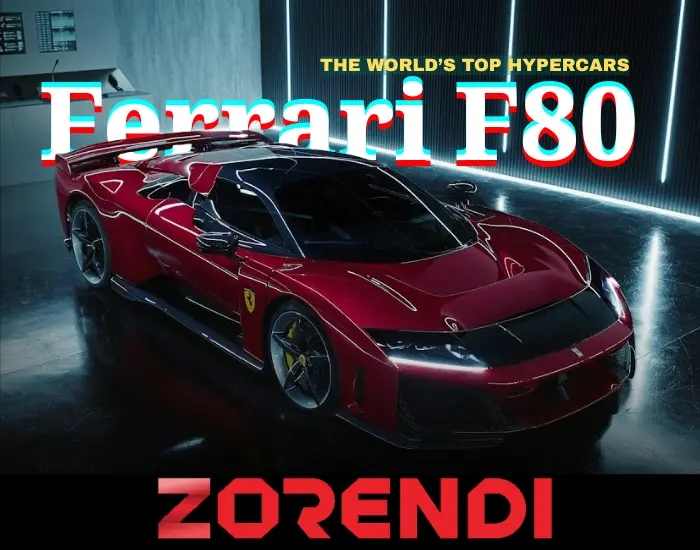
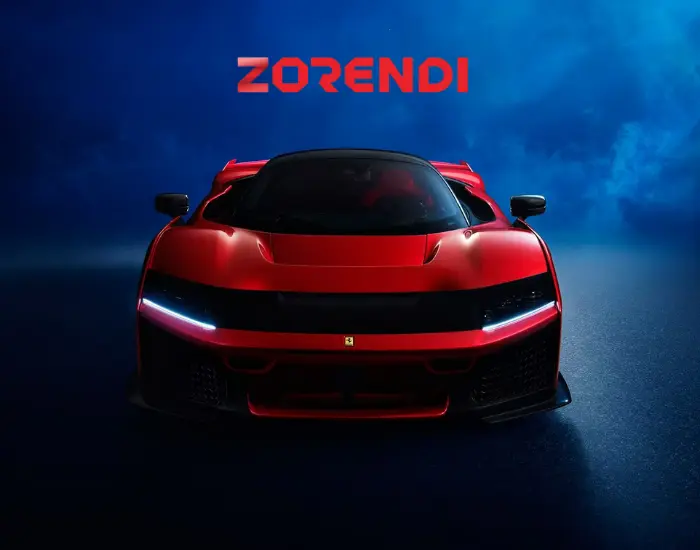
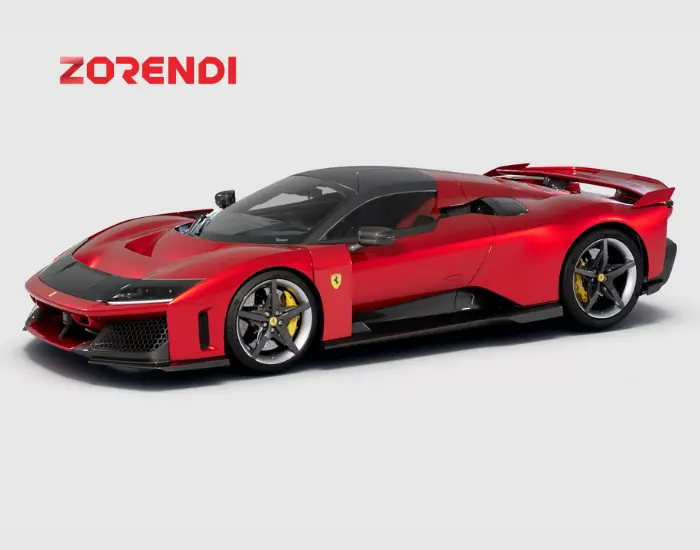
ou have probably heard the easiest criticism of the Ferrari F80 already: it has 1,200 cv, while some rival hypercars make considerably more, so Ferrari must have fallen behind. That sounds convincing until you compare what these cars are actually designed to do. The F80 is not the horsepower champion, but its acceleration, downforce, hybrid architecture and motorsport-derived engineering put it much closer to the front of the hypercar field than the headline power number suggests.
Myth: The Ferrari F80 Is Too Weak Compared With New Hypercars
No. It simply does not chase the same number as every rival.
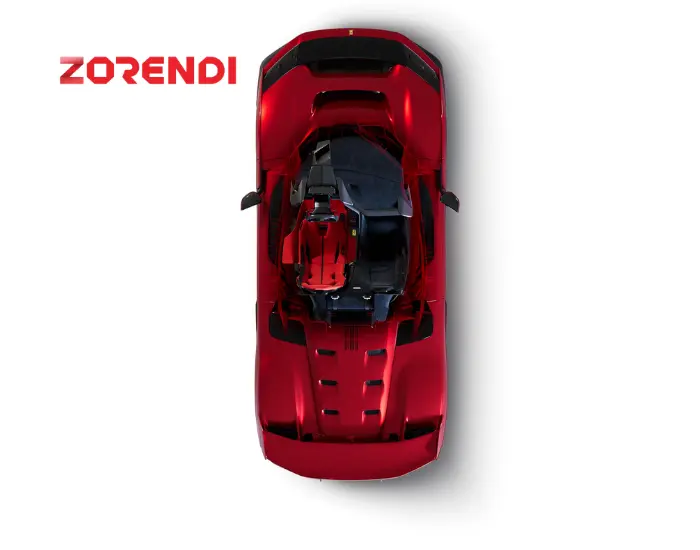
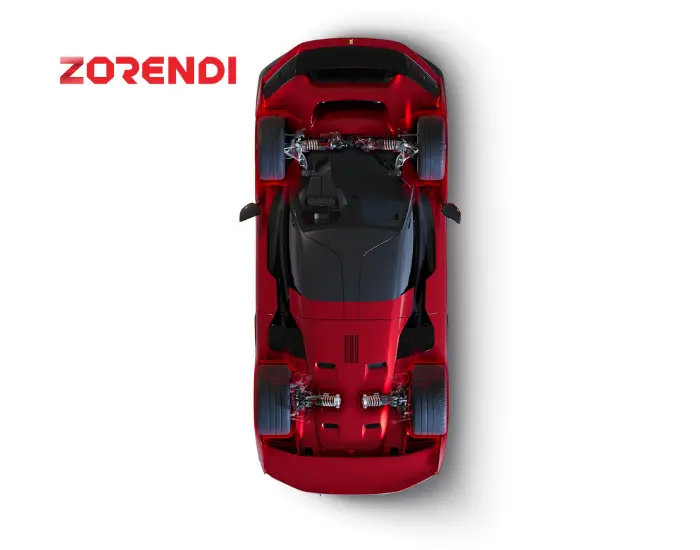
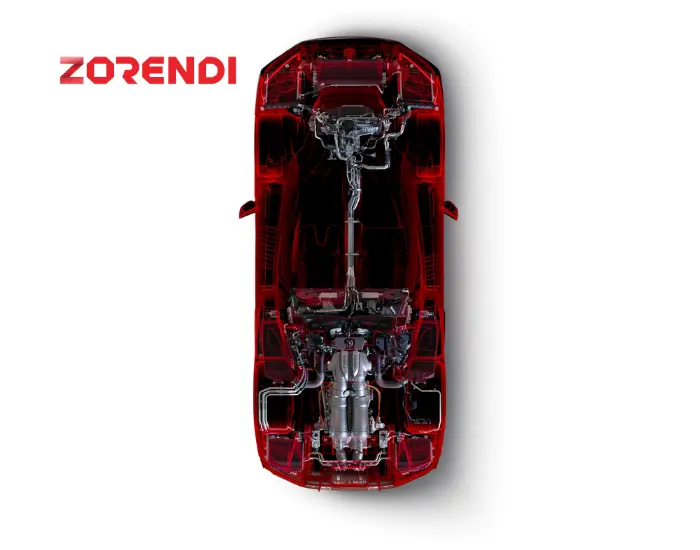
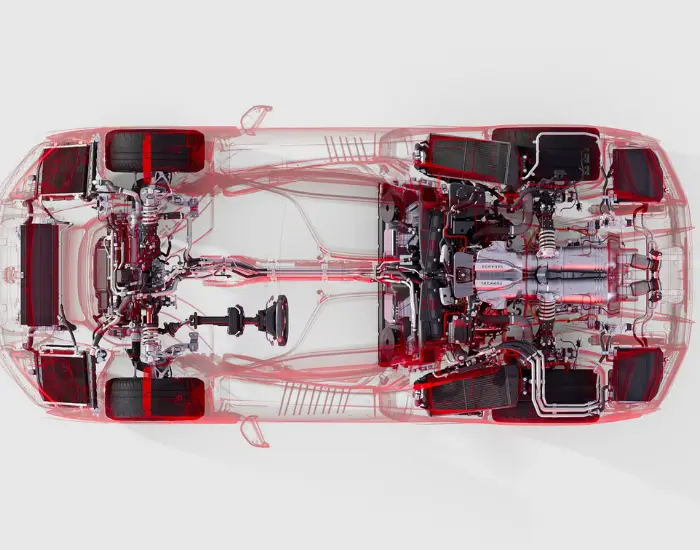
The F80 combines a 3.0-litre 120-degree twin-turbo V6 with its hybrid system for a total output of 1,200 cv. The combustion engine alone produces 900 cv, while the electric side contributes the remaining 300 cv. Ferrari also gives it electrically driven front wheels, so unlike the rear-wheel-drive McLaren W1, the F80 can use four-wheel drive when trying to put its output onto the road.
Now put that beside the competition. McLaren’s W1 produces 1,275 PS, while the Bugatti Tourbillon produces 1,800 hp and Koenigsegg’s Jesko can produce up to 1,600 hp on E85 fuel. If your comparison ends there, Ferrari loses.
But that’s the wrong comparison.
The F80 officially reaches 100 km/h in 2.15 seconds and 200 km/h in 5.75 seconds. The W1 takes 2.7 seconds to reach 100 km/h and 5.8 seconds to reach 200 km/h. So despite the McLaren having more quoted power and a lower minimum dry weight, the Ferrari’s AWD hybrid system gives it a clear advantage in the first acceleration test and a tiny advantage to 200 km/h.
Myth: The McLaren W1 Makes the F80 Look Old Already
This is probably the most interesting comparison because the two cars arrived in the same era and follow very different engineering philosophies.
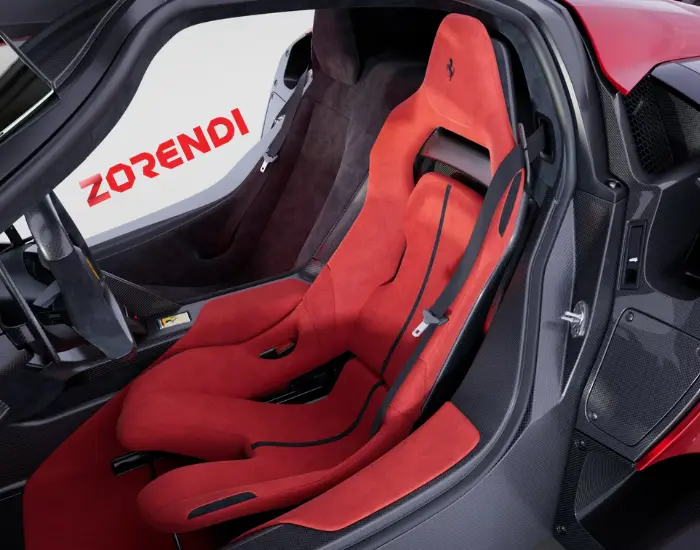
The W1 uses a 4.0-litre twin-turbo V8 hybrid producing 1,275 PS and 1,340 Nm, with all of that power sent through the rear wheels. McLaren quotes a minimum dry weight of just 1,399 kg, while Ferrari lists the F80 at 1,525 kg dry with optional lightweight content.
So yes, the McLaren is lighter.
But Ferrari’s advantage is traction and aerodynamic load. The F80 can generate 1,050 kg of downforce at 250 km/h, using a package that includes its active rear wing, underbody, front S-Duct and aerodynamic elements influenced by Ferrari’s racing programmes. Ferrari specifically connects the car’s technology with both Formula 1 and the Le Mans-winning 499P.
The W1 counters with ground-effect aerodynamics, an active front element and its Active Long Tail rear system. It is not simply a lighter Ferrari alternative. It is a rear-wheel-drive interpretation of the modern hypercar, while the F80 uses electrification partly to create traction and active chassis control.
For a buyer, that distinction matters more than 75 PS.
Myth: The AMG ONE Is Automatically More Advanced Because It Has an F1 Engine
The Mercedes-AMG ONE has one technical claim the Ferrari cannot copy: its 1.6-litre V6 hybrid powertrain is directly connected to Formula 1 engine technology and revs to 11,000 rpm. It combines that engine with four electric motors and produces 1,063 hp.
But being closer to an F1 powertrain does not automatically make it quicker in every measurement.
Mercedes quotes 2.9 seconds from 0-100 km/h and 7.0 seconds from 0-200 km/h, with a 352 km/h electronically limited top speed. Ferrari’s corresponding figures are 2.15 and 5.75 seconds, while its maximum speed is 350 km/h.
The AMG ONE remains an extraordinary piece of engineering, particularly because Mercedes managed to make such an unusual powertrain usable in a road-legal car. But if someone at a dealership tells you the F80 is less serious because it does not use an actual 1.6-litre Formula 1-derived engine, the stopwatch does not support that argument.
Ferrari approached the problem differently. Its V6 draws heavily from the architecture and knowledge behind the 499P endurance racer, while technologies such as the electrically assisted turbo system also reflect Formula 1 development.
Explore More: Ferrari for sale in Dubai
Myth: The Bugatti Tourbillon Is Just a More Expensive F80
Not really. These cars are almost answering different questions.
The Tourbillon has an 8.3-litre naturally aspirated V16, three electric motors and a combined 1,800 hp. Bugatti quotes 0-100 km/h in 2.0 seconds, less than five seconds to 200 km/h and a maximum of 445 km/h when using the Speed Key. Only 250 examples are planned, with an official starting price of €3.8 million before taxes.
Those figures make the F80’s 350 km/h maximum look modest.
But Ferrari is far more focused on circuit performance than absolute top speed. Its 1,050 kg downforce figure at 250 km/h tells you where the engineering effort went. Bugatti has designed the Tourbillon to combine huge speed, luxury, mechanical theatre and the character of a naturally aspirated V16.
If you want the most dramatic engine architecture and extreme high-speed capability, the Bugatti has the stronger case. If you want Ferrari’s interpretation of a Le Mans and Formula 1 influenced road car, the F80 is the more relevant comparison.
Myth: The Aston Martin Valkyrie Has Been Left Behind
Do not dismiss the Valkyrie because it arrived earlier.
Aston Martin’s road-going Valkyrie uses a naturally aspirated 6.5-litre Cosworth V12 assisted by a hybrid system. Aston Martin has quoted roughly 1,130 bhp with KERS assistance, and the engine reaches 11,100 rpm. The company has also stated that the car can produce around 1,100 kg of downforce.
That makes the Valkyrie arguably the most uncompromising naturally aspirated alternative in this group.
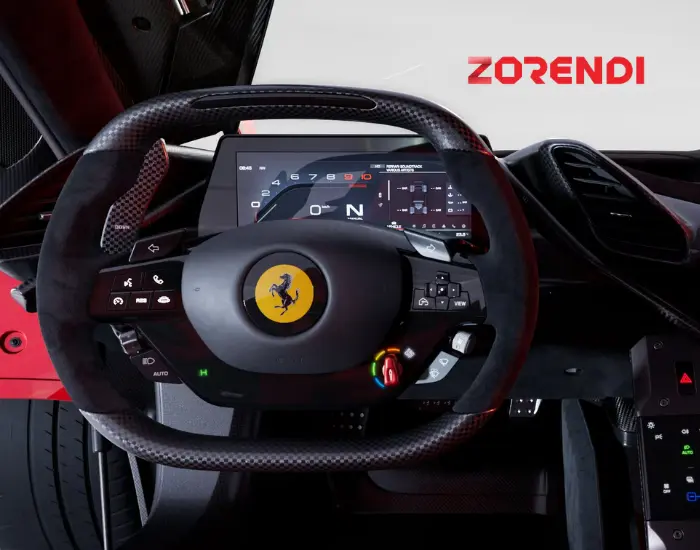
Its design is heavily centred around huge Venturi tunnels running underneath the car, extreme seating and aerodynamic efficiency. The F80, by comparison, provides a more complicated electronic and hybrid performance package with four-wheel drive, active suspension and electronically assisted turbocharging.
There is no clean winner here. A collector choosing between them is effectively choosing between different eras of hypercar engineering.
Browse More: Cars for sale in Dubai
Myth: Top Speed Tells You Which Hypercar Is Best
Here’s where the numbers become misleading.
| Hypercar | Power | 0-100 km/h | 0-200 km/h | Top Speed |
|---|---|---|---|---|
Ferrari F80 Ferrari Hypercar | 1,200 cv | 2.15 sec | 5.75 sec | 350 km/h |
McLaren W1 McLaren Hypercar | 1,275 PS | 2.7 sec | 5.8 sec | 350 km/h |
Mercedes-AMG ONE AMG Hypercar | 1,063 hp | 2.9 sec | 7.0 sec | 352 km/h |
Bugatti Tourbillon Bugatti Hypercar | 1,800 hp | 2.0 sec | Under 5.0 sec | 445 km/h with Speed Key |
These are manufacturer figures, so they should not be treated as the result of one identical independent test. What they show is that each manufacturer is optimising for something different.
The Tourbillon dominates top speed. The F80 looks particularly strong in initial acceleration. The W1 combines enormous output with unusually low weight. The AMG ONE gives buyers a road-legal interpretation of Formula 1 hybrid technology.
One number cannot rank them properly.
Myth: Buying an F80 in the UAE Is Just About Finding One for Sale
This is where the comparison stops being theoretical.
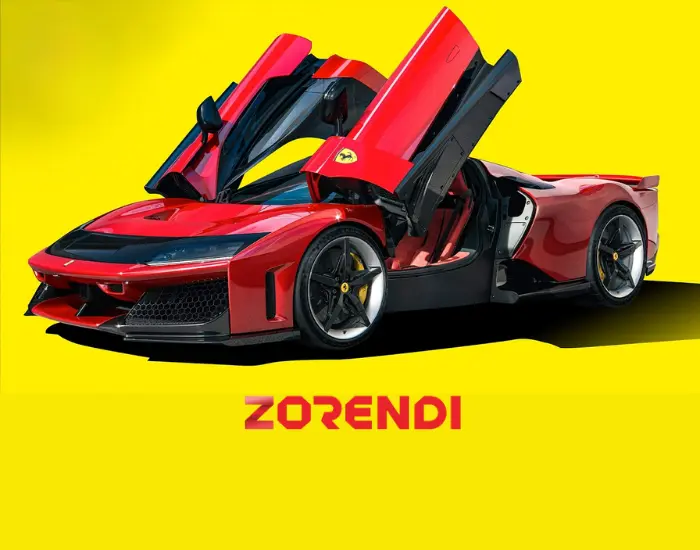
Ferrari is building only 799 F80s, with production scheduled through 2027. For a UAE buyer considering a secondary-market car, an allocation, or an early-delivery example, the exact identity of what is being sold matters as much as the advertised price.
Check the chassis documentation, original selling market, factory specification and service history. If someone is selling a position or undelivered car rather than a physically available F80, confirm exactly what rights are being transferred and whether the transaction is recognised by the relevant Ferrari dealer.
For a delivered car, inspect tyre condition and age, carbon-ceramic brakes, underbody damage and carbon panels carefully. UAE cars can cover very low mileage while still spending years exposed to heat, so a tiny odometer number does not replace a proper inspection.
Also verify warranty and maintenance coverage rather than assuming it transfers automatically. With a car at this level, a clean ownership trail and original documentation can have a direct effect on future resale.
The Practical Takeaway
Do not buy the F80 because someone tells you it is the world’s fastest hypercar. It isn’t.
Buy it, if you can get access to one, because Ferrari has built a 1,200 cv AWD hybrid around technology taken from its current racing era, then wrapped that engineering into a limited run of 799 cars. The Tourbillon is faster at the top end, the W1 is lighter, the AMG ONE has a more literal Formula 1 powertrain connection, and the Valkyrie gives you a naturally aspirated V12 experience the F80 cannot reproduce.
That is exactly why the comparison is useful. Once you stop looking for one universal “best hypercar,” the F80 makes much more sense.
Also Read: Richard Mille’s Motorcycle; The Most Expensive Motorcycle in The World
Frequently Asked Questions About the Ferrari F80
Key facts about the Ferrari F80, its performance, rivals, production and what UAE buyers should know.
Is the Ferrari F80 the most powerful hypercar in the world?
No. The Ferrari F80 produces 1,200 cv, while hypercars such as the Bugatti Tourbillon have a higher total output. Ferrari has focused heavily on acceleration, aerodynamics, hybrid traction and circuit performance rather than chasing the biggest horsepower figure.
What engine does the Ferrari F80 use?
The F80 uses a 3.0-litre 120-degree twin-turbo V6 combined with a hybrid system. The combustion engine produces 900 cv, while the complete hybrid powertrain delivers a total of 1,200 cv.
How fast is the Ferrari F80 from 0-100 km/h?
Ferrari quotes 0-100 km/h in 2.15 seconds and 0-200 km/h in 5.75 seconds. Its officially stated top speed is 350 km/h.
Is the Ferrari F80 faster than the McLaren W1?
Based on manufacturer figures, the F80 reaches 100 km/h quicker. Ferrari quotes 2.15 seconds, while McLaren quotes 2.7 seconds for the W1. Their claimed 0-200 km/h figures are much closer at 5.75 seconds for the Ferrari and 5.8 seconds for the McLaren.
How much downforce does the Ferrari F80 produce?
Ferrari states that the F80 can generate 1,050 kg of downforce at 250 km/h. Its aerodynamic package includes an active rear wing, underbody aerodynamics and an S-Duct at the front.
How many Ferrari F80s will be produced?
Ferrari plans to build 799 examples of the F80. That limited production makes allocation, specification, ownership history and documentation especially important when a car appears on the secondary market.
What should UAE buyers check before buying a Ferrari F80?
Verify the chassis documentation, original market, factory specification, service history and whether the seller is offering a delivered car or an allocation. For a physical car, also inspect the carbon bodywork, underbody, tyres and carbon-ceramic braking system carefully before purchase.

Zorendi Editorial Team is the editorial team behind Zorendi, covering cars, motorcycles, luxury vehicles, automotive technology, and mobility trends across the UAE and international markets.
Our articles are developed through research, comparison of reliable sources, official manufacturer information, vehicle specifications, and relevant market data. The team focuses on creating clear, practical, and regularly reviewed content to help readers better understand new models, specifications, technologies, ownership considerations, and developments across the automotive industry.
Zorendi Editorial Team aims to present information in a straightforward and useful way, with an emphasis on accuracy, relevance, and providing readers with the context they need when researching vehicles and mobility-related topics.