
A Deep Look at the Porsche 918 Spyder and Its Engineering
- Car Blog
- Car Review
-
Dec 29
-
7 min read
- Share post

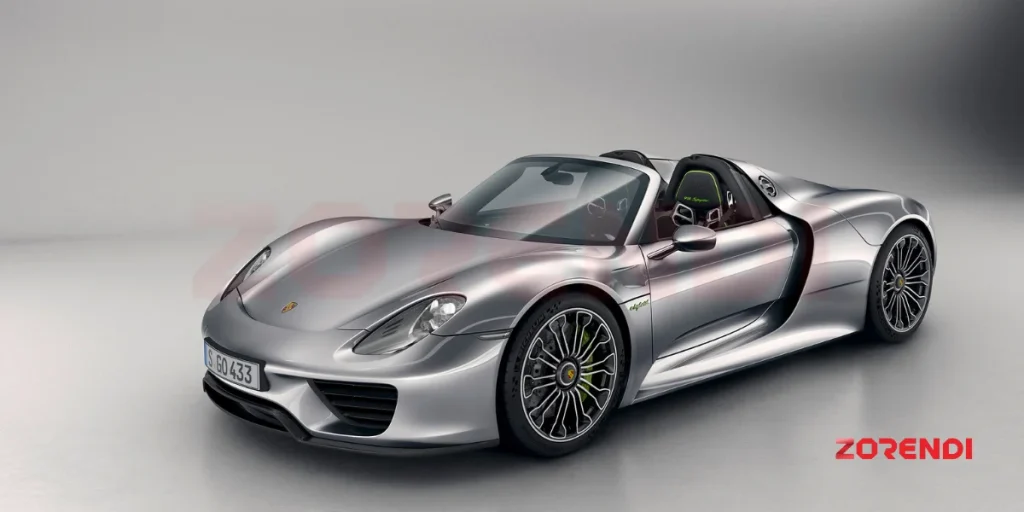
When people search for porsche for Sale, they are often chasing speed numbers or badge prestige. I get it. But with the Porsche 918 Spyder, that mindset falls apart fast. This car was never about being loud or theatrical. It was built as an engineering thesis, one that just happens to hit 0 to 100 km/h in under three seconds. I have spent years dissecting performance cars, and this one still stands apart because every decision has a reason, not a slogan.
The Idea That Changed Porsche’s Trajectory
The Porsche 918 Spyder did not start as a response to rivals. It began as an internal question. How far can we push efficiency and performance together without compromising either? Porsche’s answer was not incremental. They went all-in on a plug-in hybrid system at a time when most enthusiasts still dismissed electrification as dead weight.
What matters here is intent. The engineers were not trying to make a green statement. They were solving a performance problem using electricity as a tool, not a marketing badge. That philosophy is why the Porsche 918 Spyder still feels relevant years later.
Carbon, Magnesium, and the Discipline of Weight
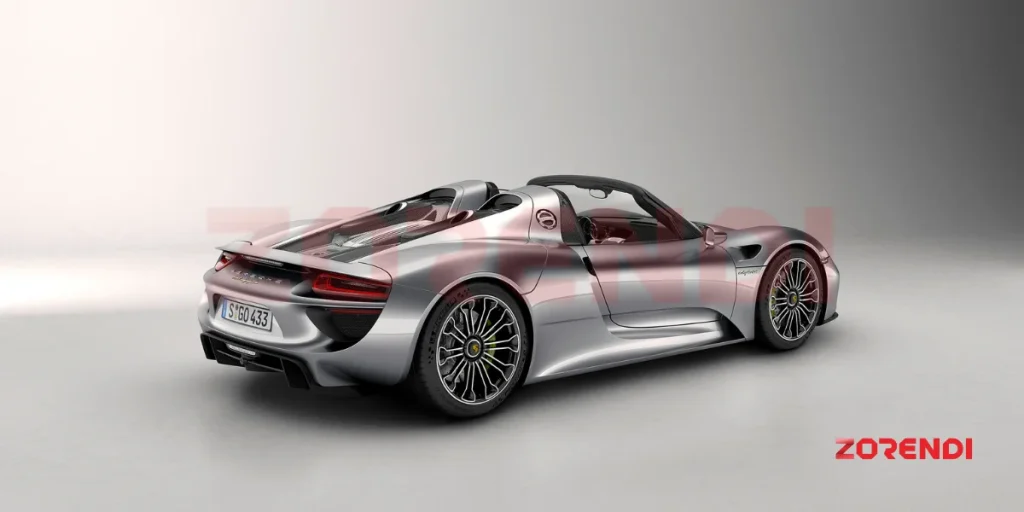
Weight is the enemy of everything. Porsche treated it like an obsession. The Porsche 918 Spyder uses a carbon-fiber reinforced plastic monocoque paired with subframes that are optimized down to grams. Even the brake system uses ceramic composite discs, not for bragging rights but because they reduce unsprung mass.
What impressed me most is that weight reduction never hurt durability. This is a car designed to run hard, repeatedly, without excuses.
The Hybrid System Explained Without the Hype
At the heart of the Porsche 918 Spyder is a naturally aspirated 4.6-liter V8 derived from Porsche’s RS Spyder race program. It revs past 9,000 rpm and produces around 608 horsepower on its own. That is already serious.
Now add two electric motors. One sits on the front axle and another between the engine and the transmission. Combined output reaches 887 horsepower. But raw output is not the story. Torque fill is. The electric motors eliminate the dead zones you feel in even the best combustion engines.
This setup allows the Porsche 918 Spyder to behave like an all-wheel-drive car when needed and a rear-biased weapon when pushed.

Real-World Ownership and Market Value
Let’s talk about money without pretending it is taboo. When new, the Porsche 918 Spyder was priced around $845,000 before options. Today, depending on mileage and specification, prices often exceed $1.5 million. Some Weissach-equipped examples push higher.
Midway through the market, when browsing Cars for Sale, the Porsche 918 Spyder sits in a unique position. It is rare enough to be collectible, yet modern enough to be usable. Maintenance is not cheap, but it is far more predictable than older hypercars with fragile systems.
Aerodynamics as a Functional Language
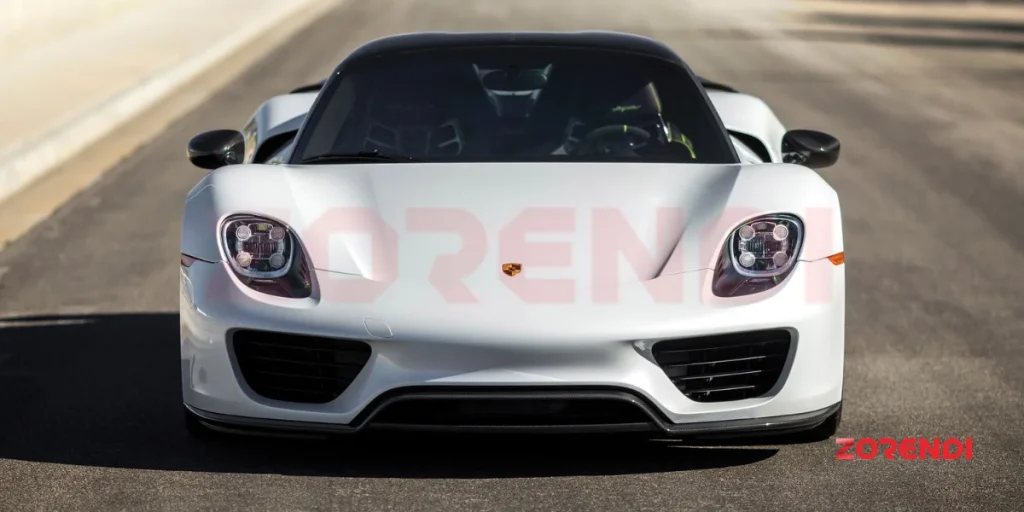
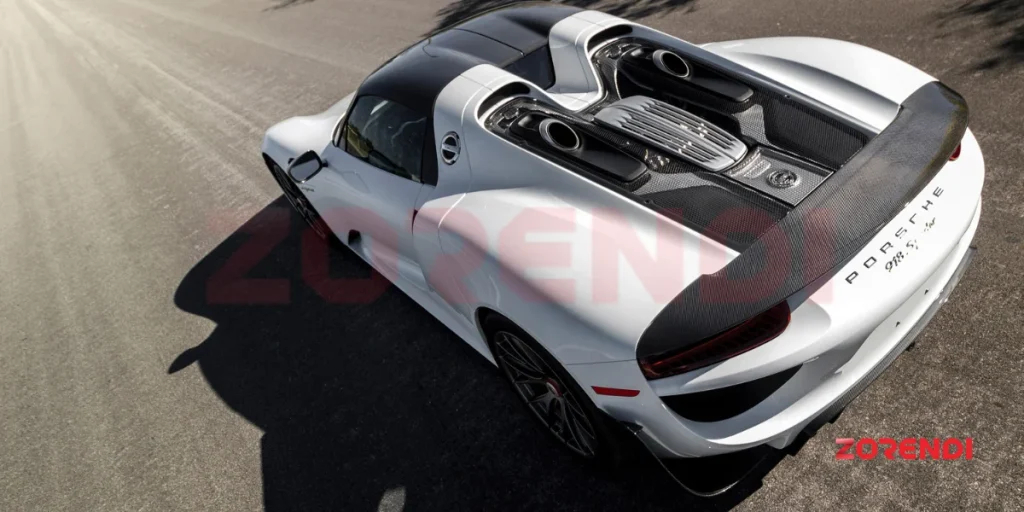
The Porsche 918 Spyder does not wear extreme wings for drama. It uses active aerodynamics that adapt in real time. Rear wing angle, diffuser flaps, and underbody airflow adjust depending on speed and drive mode.
At high speed, the car prioritizes downforce. Under braking, aerodynamic elements assist deceleration. In electric mode, drag reduction becomes the priority.
This is not styling. It is physics management.
A Cabin Built Around the Driver’s Brain
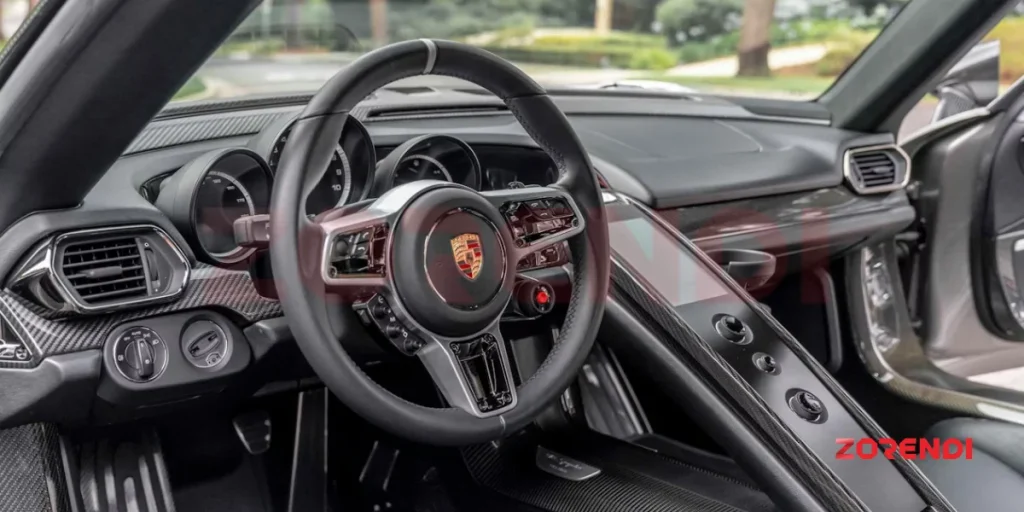
Inside the Porsche 918 Spyder, everything points inward. The rising center console is not decorative. It shortens the driver’s eye movement between critical controls. Materials are lightweight, tactile, and intentionally minimal.
There is no attempt to feel luxurious in a traditional sense. Leather is used sparingly. Alcantara dominates because grip matters more than gloss. The driving position is low, purposeful, and uncompromising.
Numbers Are Boring Until You Understand Them
Here is where numbers start to mean something when you connect them to real-world results.
| Specification | Porsche 918 Spyder |
|---|---|
| Total Power Output | 887 hp |
| 0 to 100 km/h | ~2.6 seconds |
| Top Speed | 345 km/h |
| Electric-Only Range | ~19 to 30 km |
| Nürburgring Lap Time | 6:57 |
Transmission Choices That Actually Matter
Porsche paired this system with a seven-speed PDK dual-clutch gearbox. No manual option, and that upset some purists. From an engineering standpoint, it was the only logical choice. The synchronization between electric motors and combustion output requires precision that a human simply cannot match.
What makes this interesting is how invisible the system feels. Power delivery is seamless. There is no theatrical handoff between electric and gasoline power. You just go faster, harder, and more controlled.
Why the Porsche 918 Spyder Still Matters
Technology ages fast. Philosophy does not. The Porsche 918 Spyder was built on principles that are now becoming industry standards. Hybrid assistance for performance, active aerodynamics, extreme weight discipline, and software-led control systems are no longer exotic ideas.
Porsche simply executed them earlier and better.
I have driven faster cars in straight lines. I have seen more dramatic designs. But very few machines feel as resolved as this one. No part feels like an afterthought. Even years later, that cohesion is rare.
If you are looking at the Porsche 918 Spyder purely as an investment, you are missing half the story. This is a reference point in automotive engineering. Owning one means holding a chapter of how performance cars evolved, not just a garage trophy.
Frequently Asked Questions
Is the Porsche 918 Spyder usable as a regular car?
Yes, within reason. It can run silently in electric mode, handle traffic without overheating, and does not punish you for short trips.
How reliable is the hybrid system long term?
Surprisingly solid. Porsche over-engineered the battery cooling and control software, reducing degradation compared to early hybrid systems.
Does the Weissach Package affect daily usability?
Slightly. It increases cabin noise and stiffness, but the performance and weight savings are worth it for most buyers.
Is the Porsche 918 Spyder likely to keep rising in value?
While nothing is guaranteed, its historical importance and limited production strongly support long-term value retention.
Also Read : Lexus LS Coupe Concept Overview
