Renault Fixed the Megane E-Tech’s Biggest Weakness for 2026
The Renault Megane E-Tech facelift is here, and it finally fixes the one number that sent buyers next door. Walk into a Renault showroom in 2024 and the Megane E-Tech would win you over fast the stance, the ride, that crisp portrait touchscreen. Then you’d glance at the range figure, and a lot of buyers quietly turned around and walked toward the Skoda dealer next door.

That figure was the problem. As of today, 22 June 2026, it isn’t anymore.

The number that sent buyers next door

Here’s the weakness, stated plainly: the old Megane E-Tech’s 60 kWh battery topped out at around 461 km of WLTP range. On paper that sounds fine. In the real world, against rivals quoting 500-plus, it read as the short straw and it got worse the longer you looked at it.

Because the most damning comparison wasn’t even a competitor. It was Renault’s own showroom. The Scenic E-Tech, sitting one rung up, packs an 87 kWh battery and comfortably clears 600 km. The Megane looked range-starved next to its own sibling, which is not a great look when a shopper is cross-shopping inside the same brand.

Then there was the second, quieter flaw: DC charging capped at 130 kW. Plug into a fast charger next to a VW Group hatch and the Megane simply drank slower. For a car pitched at people doing the occasional motorway run, that stung on exactly the days it mattered.

Old Megane E-Tech
461km
60 kWh NMC 130 kW DC
2026 Megane E-Tech
500km
67 kWh Usable LFP 165 kW DC
+39 km Range Gain
500 km WLTP Range
24 min 15–80% Charge

Why range hit this Renault harder than most

Range matters for every EV, but it mattered disproportionately for this one and that’s the bit most spec sheets miss.

Renault says roughly two in three Megane E-Tech buyers are coming to electric for the first time. First-timers don’t have the lived experience that tells a seasoned EV driver “320 real-world km is plenty for how I actually live.” They read the headline number, compare it to a petrol Golf, and get nervous. A weak WLTP figure scares the exact customer Renault is trying to convert.

So the range gap wasn’t a nerdy footnote. It was a conversion-killer aimed squarely at the buyers Renault most wanted to win. Fixing it was less about bragging rights than about getting people over the line in the first place.

Technical specifications

  • Length: 4,200mm
  • Width: 1,782mm
  • Height: 1,522mm
  • Wheelbase: 2,685mm
  • Front overhang: 800 mm
  • Rear overhang: 715 mm
  • Ground clearance: 124 mm unladen (105 mm laden)
  • Boot capacity: 440 litres / 1,332 litres with rear seats folded
  • Weight: 1,772kg unladen
  • Power: 160kW / 220hp
  • Torque: 300Nm
  • Battery: 67kWh usable LFP
  • Range: up to 500 km (WLTP)
  • Charging: 1 kW AC (22 kW AC optional) and 165 kW DC
  • DC charging: 15% to 80% in around 24 minutes
  • Top speed: 160 km/h / 99 mph
  • 0-50km/h / 0-31mph: 3.4 seconds
  • 0-100km/h / 0-62mph: 7.6 second

A bigger battery that finally cracks 500 km

At the heart of the Renault Megane E-Tech facelift is a new 67 kWh usable LFP battery, pushing WLTP range up to 500 km.

What makes that interesting is the chemistry. Lithium iron phosphate is, on paper, less energy-dense than the nickel-based cells it replaces it’s the “fewer headaches, longer life, happy charging to 100%” battery, not the range-king battery. For Renault to switch to LFP and still gain nearly 40 km of range tells you the new pack’s packaging and the car’s efficiency are doing real work. A cell-to-pack design crams the cells in tighter; the trade-off is a 20 mm taller ride height to fit it all.

It clears the symbolic 500 km line Renault clearly wanted, and it does so in a 4.2-metre hatchback that remains lighter than most of its VW Group rivals. That last point matters more than the brochure lets on.

Previous DC Peak Old
130kW
2026 DC Peak New
165kW
Old Peak 130 kW DC charging
New Peak 165 kW DC charging
Top-Up 24 minutes 15–80%
Quicker 25% rough improvement

And the charging gap closes too

The second weakness gets addressed just as directly. Peak DC charging rises from 130 kW to 165 kW, and a 15–80% top-up now takes around 24 minutes roughly 25% quicker than before.

That’s the upgrade road-trippers actually feel. It won’t trouble an 800-volt Korean car, but it pulls the Megane level with the quickest hatch in the VW Group stable and turns the motorway charging stop from a genuine annoyance into a coffee-length pause. Renault left the motor untouched still 160 kW (217 hp) driving the front wheels which is the right call. The Megane was never short on pace; it was short on range and patience at the plug.

The doubts are honest ones. Renault hasn’t confirmed pricing yet and the moment there’s a new Renault for sale in showrooms later this year, that one figure will decide whether this lands as a bargain or a near-miss against the cheaper Chinese newcomers. It’s still front-wheel drive only, still a compact 4.2-metre car, and on raw range it still trails the biggest-battery versions of its German cousins.

A sharper face and a smarter cabin

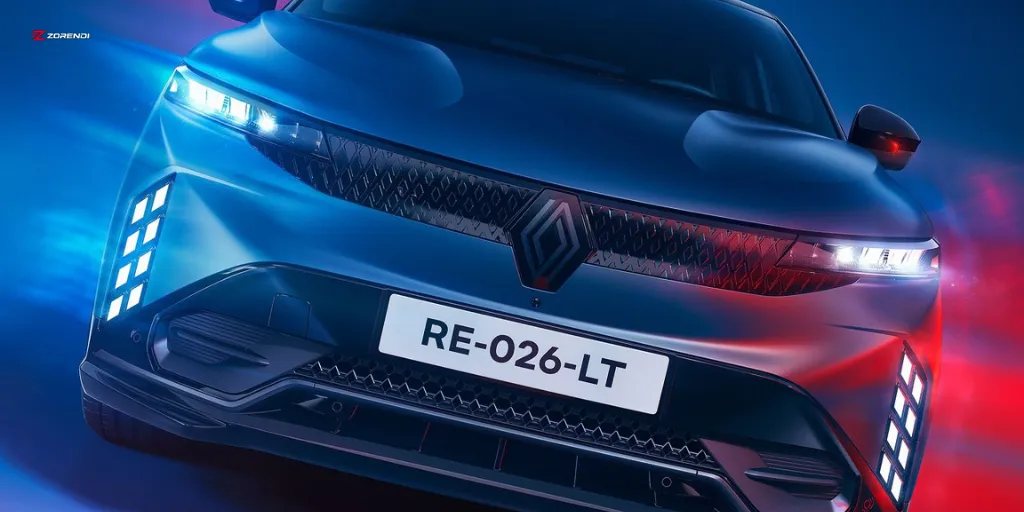
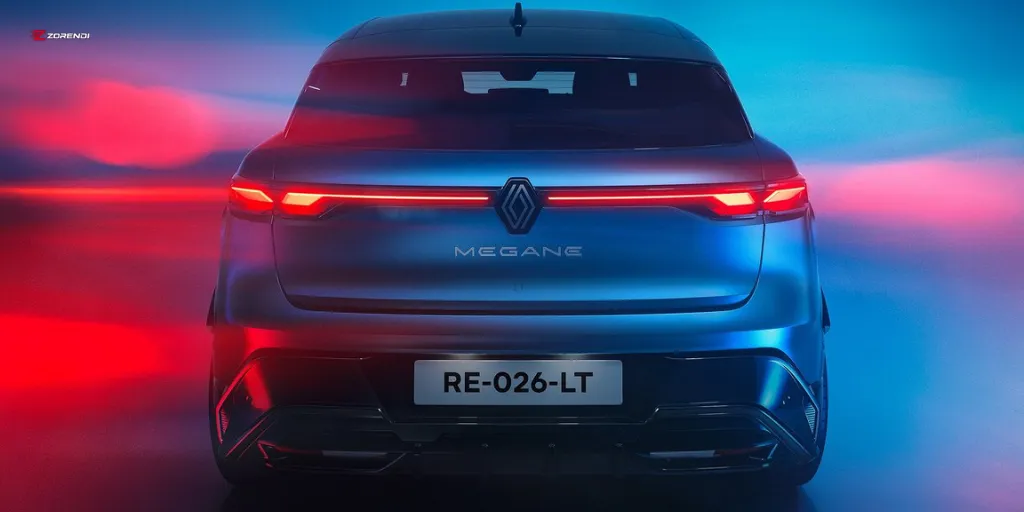
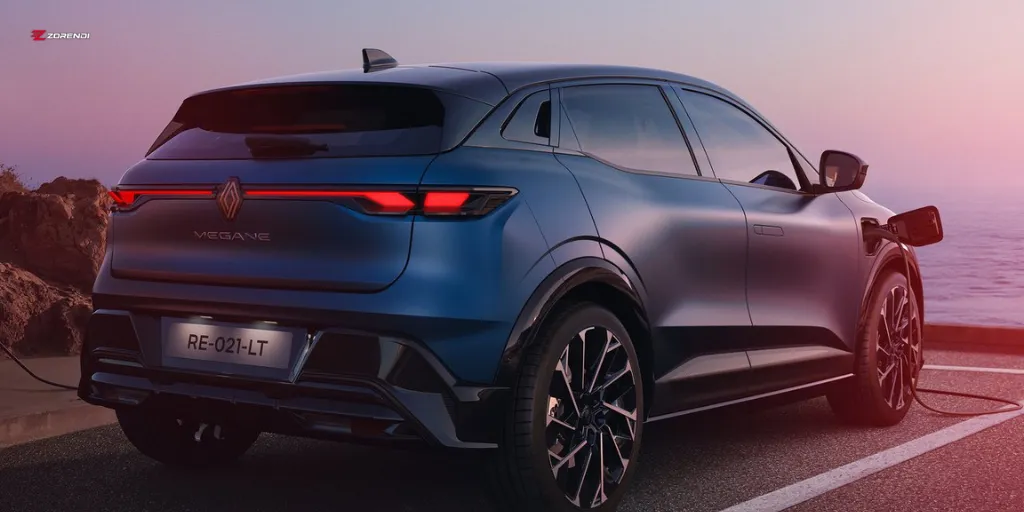
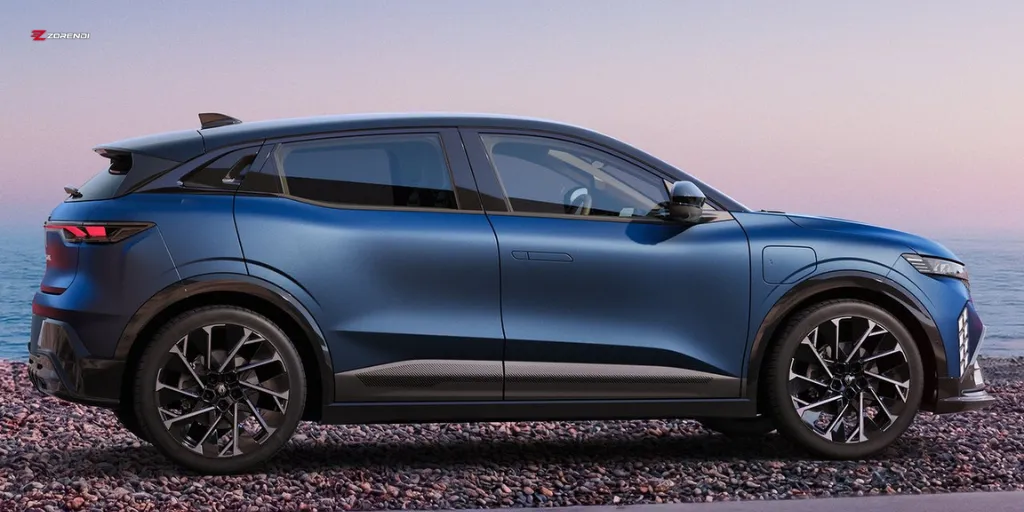
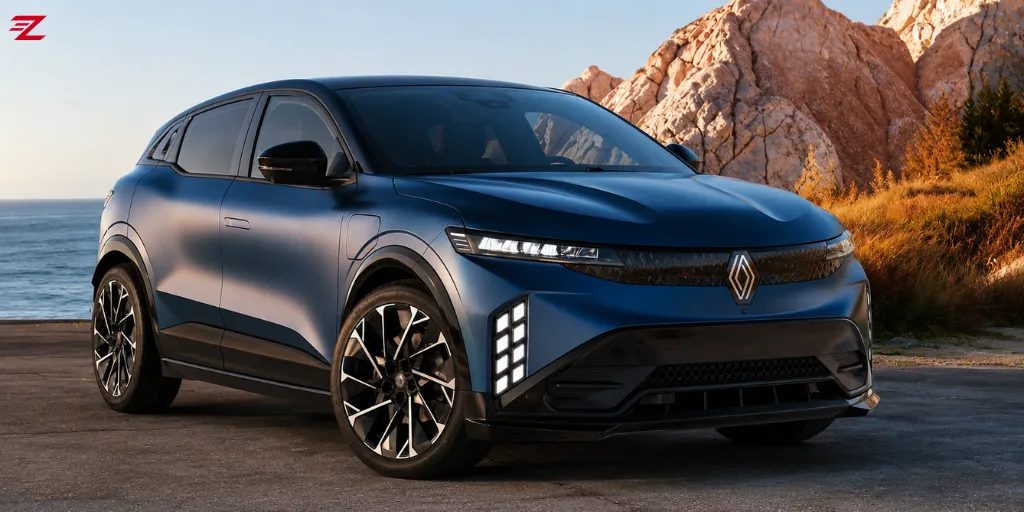
This is also where the car earns its new photos. The front end is redesigned around a diamond-shaped daytime-running-light motif in a chequerboard pattern, a closed gloss-black grille and a new bumper, with a fresh Satin Blue paint and 19- or 20-inch wheels. It reads wider and more planted, and finally drops the slightly awkward DRL signature of the old car.

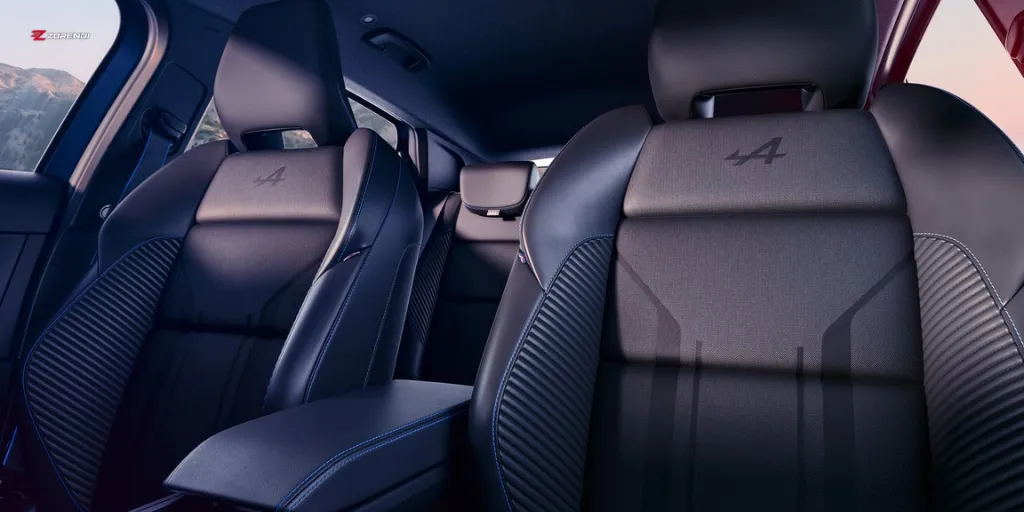
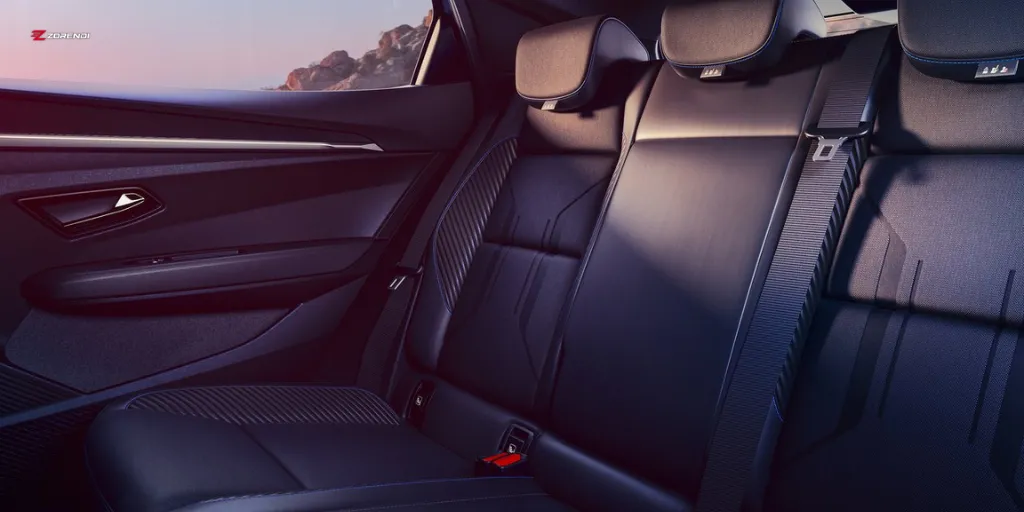
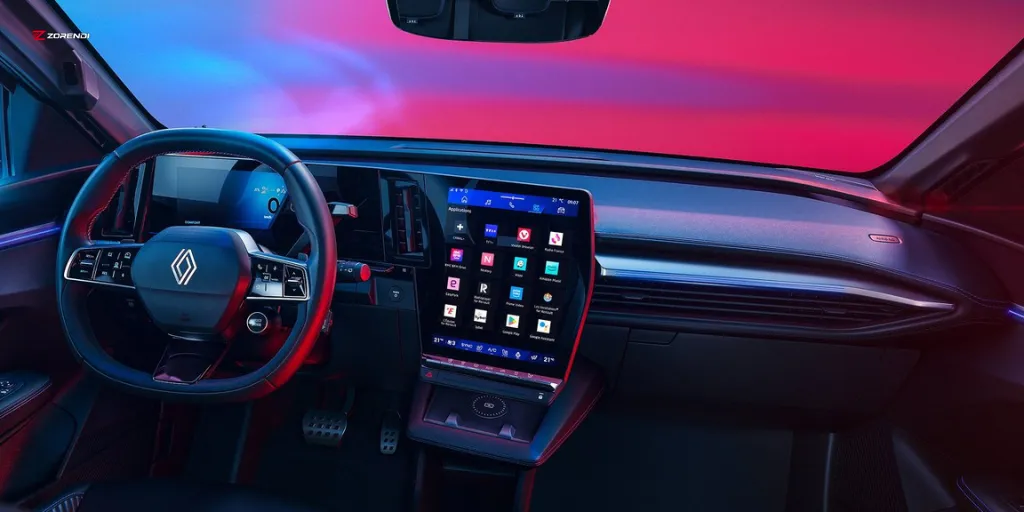
Inside, the headline is OpenR Link with Google built-in, now including Gemini, plus a driver-recognition camera that loads your seat and media preferences, Qi2 wireless charging, and a heat pump and vehicle-to-load capability as standard. Crucially, Renault kept physical climate buttons rather than burying everything in the screen a small thing that real owners will quietly thank them for. The range is also simplified to two trims: Techno and Esprit Alpine, built as before at Douai in France.

So has Renault done enough to win?

Here’s the honest reckoning. Judged against rivals with similar-sized batteries, the Megane has just leapfrogged the pack. The VW ID.3 Pro (59 kWh) manages around 430 km WLTP; the entry Cupra Born (58 kWh LFP) quotes about 424 km. At 500 km from 67 kWh, the new Megane comfortably out-ranges both and its 165 kW charging now matches or beats them.

But the rivals don’t stop at their small batteries. Step up to the big-pack flagships and the picture changes: the ID.3 Pro S stretches to roughly 565 km, the Cupra Born with the 77 kWh pack to around 547 km, and the Skoda Elroq 85 (an SUV, granted) to about 570 km. On outright range, those still go further they just do it with larger, pricier batteries.

So the fix is real but bounded. Renault hasn’t made the Megane the longest-legged car in the class; it’s made it competitive where it was previously compromised. The dealbreaker is gone. The bragging rights aren’t quite won.

Model Battery WLTP Range DC Charging Position
Renault Megane E-Tech 2026
67 kWh usable LFP
500 km
165 kW
Fixed
VW ID.3 Pro
59 kWh
430 km
Up to 165 kW
Lower Range
Cupra Born Entry
58 kWh LFP
424 km
Up to 165 kW
Lower Range
VW ID.3 Pro S
Larger Pack
565 km
Up to 170 kW
Longer
Skoda Elroq 85
Larger Pack
570 km
Up to 175 kW
SUV

The verdict

This is a genuinely smart mid-life update, because Renault spent its money exactly where the old car was bleeding range and charging rather than chasing horsepower no one asked for. For the first-time EV buyer who balked at 461 km, crossing 500 km with faster charging may be the difference between a test drive and a signature.On that promise, the Renault Megane E-Tech facelift delivers.

ALSO READ: Mercedes-AMG GLE 63 S and GLS 63 First Look (2027)

But “we fixed the one thing holding it back” is a much better story than “we added a stripe.” On that promise, the 2026 Megane E-Tech delivers.

Comments

  • No comments yet.
  • Add a comment
    Word list
    Post Your Ad Free