Range Rover vs BMW X7: Clash of Luxury SUV in Dubai
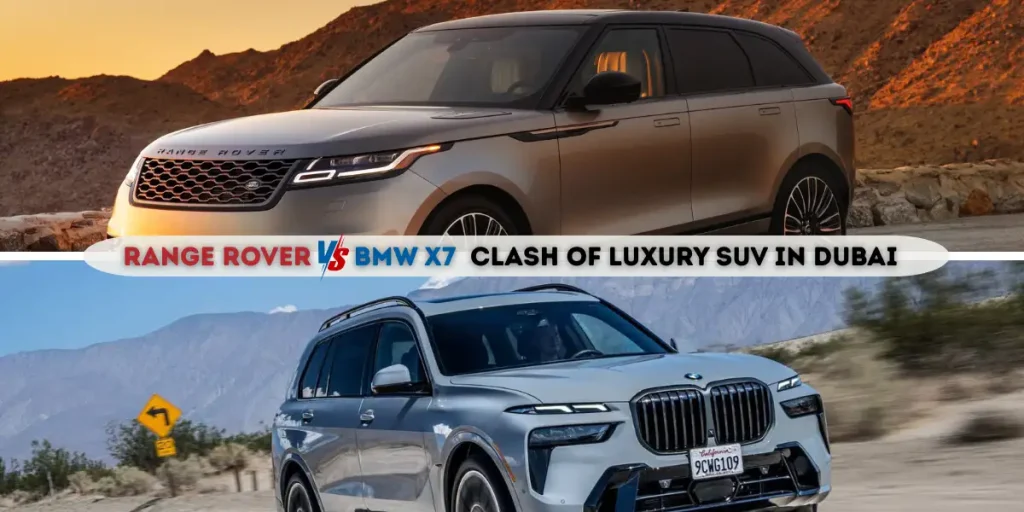
The Range Rover and BMW X7 suit buyers who want a large luxury SUV with serious road presence, strong performance and enough comfort for long drives across the UAE. The decision is not as simple as choosing the more expensive badge: the X7 gives you more equipment and performance for the money, while the Range Rover offers a more distinctive cabin, broader powertrain choice and stronger off-road capability.

Price: How Large Is the Gap in the UAE?

Price is the first major difference.

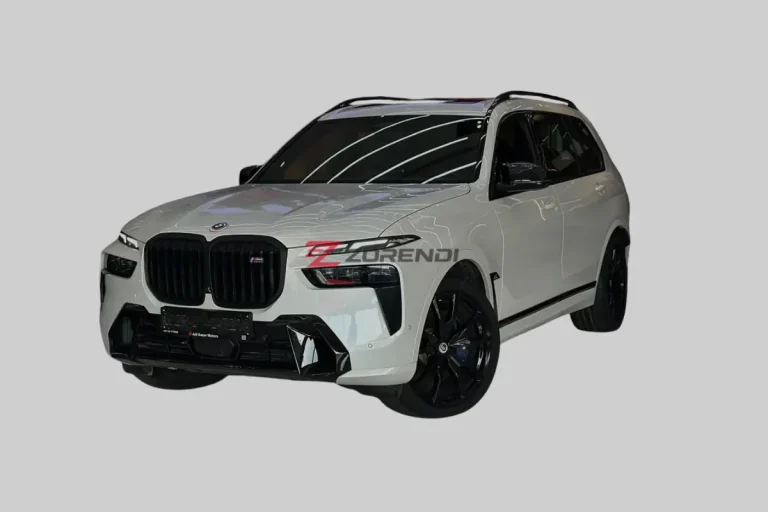
Current UAE market guides place the 2026 BMW X7 at approximately AED 496,000 to AED 610,000. The six-cylinder xDrive40i is listed between AED 496,000 and AED 550,000, while the V8-powered M60i sits around AED 600,000 to AED 610,000. These are guide prices rather than guaranteed BMW dealer quotations.

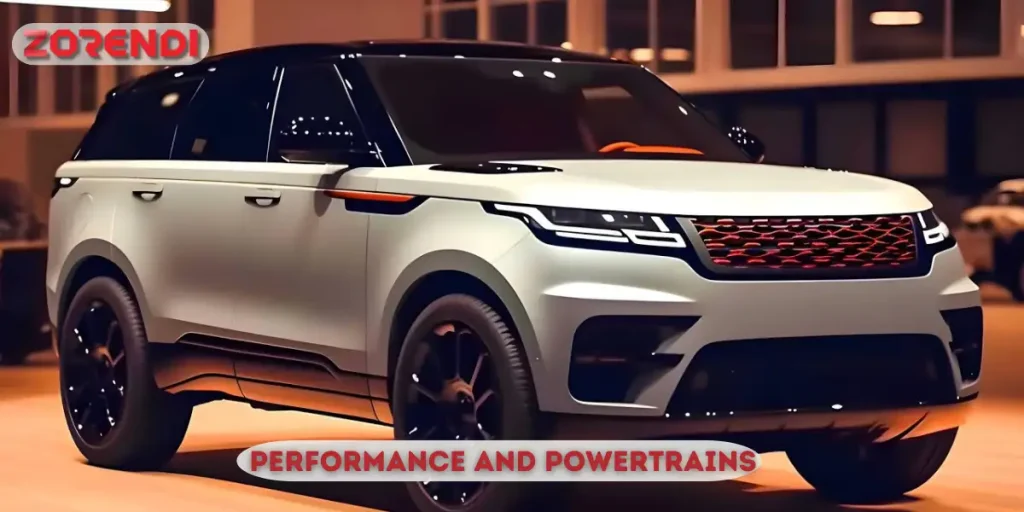
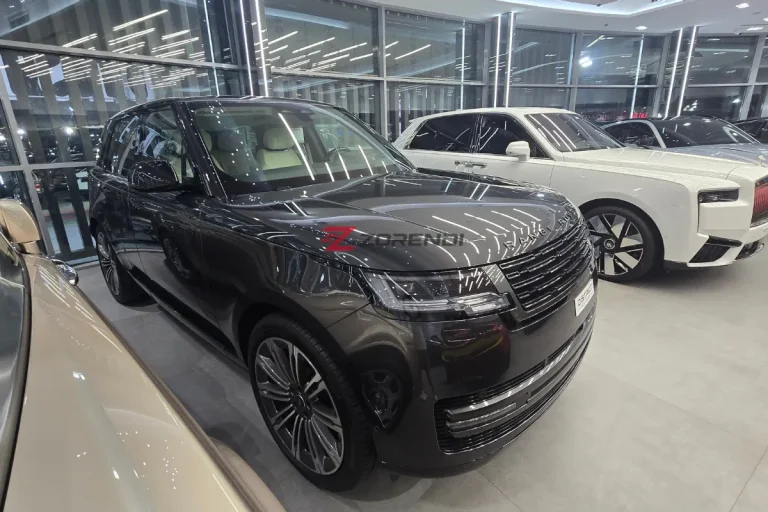
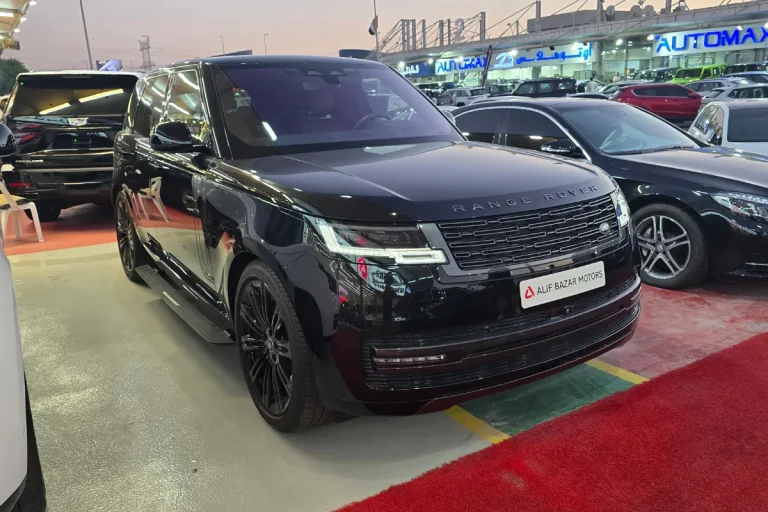
The 2026 Range Rover starts at roughly AED 565,000 for the SE P360 and can exceed AED 1.06 million for an SV P615. An Autobiography P530 is listed at approximately AED 822,000 to AED 830,000, which puts it well above even the performance-focused BMW X7 M60i.

That price spread changes the comparison. At the entry level, the Range Rover costs around AED 69,000 more than the cheapest X7. At the top of the range, the difference can exceed AED 450,000.

The X7 is the stronger value proposition. The Range Rover is the more exclusive purchase, particularly in Autobiography and SV form.

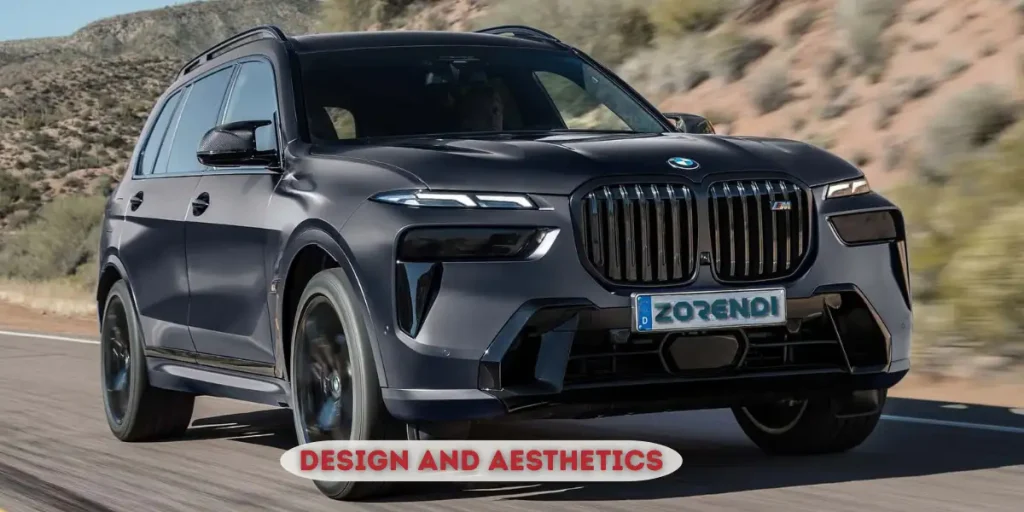
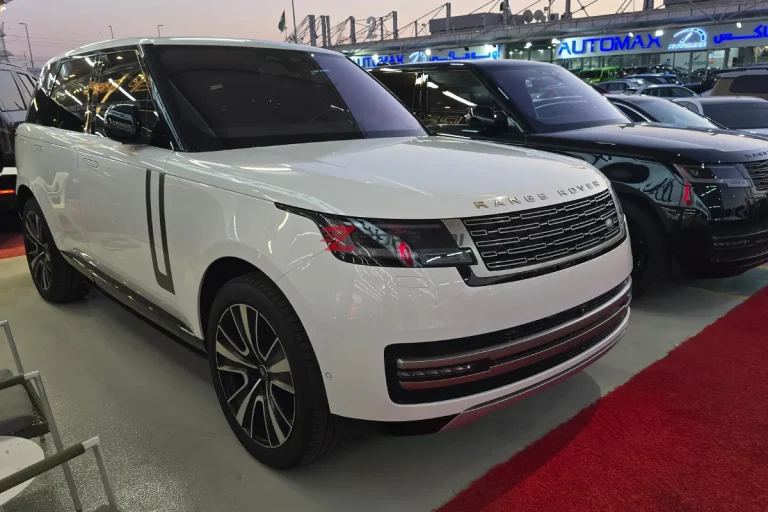
Design and Aesthetics

Performance: The BMW Has the Edge at the Entry Level

The BMW X7 xDrive40i uses a turbocharged 3.0-litre inline-six producing 381 hp and 540 Nm. BMW quotes 0 to 100 km/h in 5.8 seconds and a maximum speed of 250 km/h.

The entry-level Range Rover P360 produces approximately 360 PS and 500 Nm, with a quoted 0 to 100 km/h time of around 6.2 seconds. It is still quick for a large SUV, but the six-cylinder BMW is more powerful and slightly faster while costing less.

The V8 comparison is much closer. The BMW X7 M60i produces 530 hp and 750 Nm, reaching 100 km/h in 4.7 seconds. The Range Rover P530 also produces 530 PS and 750 Nm, with an official 0 to 100 km/h time of 4.6 seconds when Dynamic Launch is used.

Straight-line performance is therefore not a strong reason to pay extra for the Range Rover. The BMW matches it closely.

The difference is in character. The X7 feels more road-focused and controlled, while the Range Rover places more emphasis on isolation, suspension travel and the ability to handle poor surfaces away from normal roads.

Explore More: BMW for sale

Ride and Handling: Comfort or Road Control?

The Range Rover is the better option if the priority is a soft, isolated ride. Its official chassis systems include electronic air suspension, all-wheel steering, Adaptive Dynamics, Dynamic Response Pro and Terrain Response 2.

That setup makes sense in the UAE. It can handle motorway journeys, uneven construction access roads and light desert routes without making passengers feel that they are sitting in an off-road vehicle.

The BMW X7 is still comfortable, but its responses are sharper. BMW offers adaptive suspension, xDrive all-wheel drive and Integral Active Steering, while Executive Drive Pro adds active roll stabilisation on suitable specifications.

For someone who drives the vehicle personally and prefers more accurate steering, the X7 is likely to feel more natural. For chauffeur use or maximum passenger comfort, the Range Rover has the advantage.

Neither is small or agile in the conventional sense. A test drive should include a tight parking area, a speed-bump-heavy road and a section of motorway rather than a quick loop around the dealership.

Performance and Powertrains

Interior: Minimalist Luxury or More Technology?

The Range Rover cabin has the cleaner design. Controls are kept visually simple, the seating position is commanding and upper specifications can include Executive Class rear seating, massage functions and a rear touchscreen controller for comfort and entertainment settings.

It feels more like a dedicated luxury product than a larger version of another SUV. That is part of what buyers are paying for.

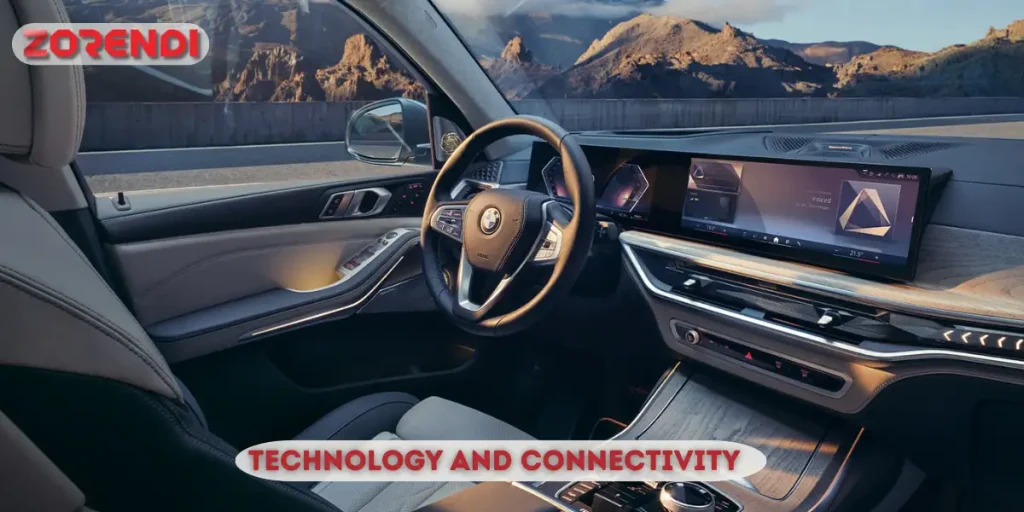
The X7 cabin is more technology-focused. Its curved digital display, BMW operating system and greater emphasis on driver information make it feel busier, but also more familiar to anyone moving from an X5, 5 Series or 7 Series.

Material quality is strong in both, although specification matters more than the badge. A basic Range Rover SE may not feel more luxurious than a well-equipped X7 with BMW Individual leather, upgraded audio and comfort seating.

Check the actual vehicle. Online trim names do not tell you whether the car has ventilated seats, massage functions, rear entertainment, premium audio or the interior finish you expect.

Browse More: BMW X7 for sale 

Practicality: Which Is Better for a Family?

The BMW X7 is designed around three-row family use. It is 5,181 mm long and can be configured with usable seating across all three rows, making it the simpler choice for buyers who regularly carry six or seven people.

The Range Rover offers more body configurations. Buyers can choose a standard-wheelbase model, a long-wheelbase version or a long-wheelbase seven-seat model. The regular five-seat versions should not be confused with the seven-seat LWB configuration.

That distinction matters when comparing advertisements. A five-seat Range Rover Autobiography may offer a more luxurious second row, but it cannot replace the flexibility of an X7 if the third row is needed every week.

The Range Rover’s official maximum loadspace figure reaches 1,061 litres behind the second row, depending on body style and measurement method. It also uses a split powered tailgate, which can be useful for loading or as a temporary seat during outdoor stops.

Choose the X7 for routine school runs and seven-passenger use. Choose the long-wheelbase Range Rover if rear passenger comfort is more important than getting the best value from every seat.

Technology and Connectivity

Off-Road Use: The Range Rover Wins Clearly

Most UAE owners will not take either SUV into demanding desert terrain, but capability still matters if the car will be used around farms, camps or unpaved areas.

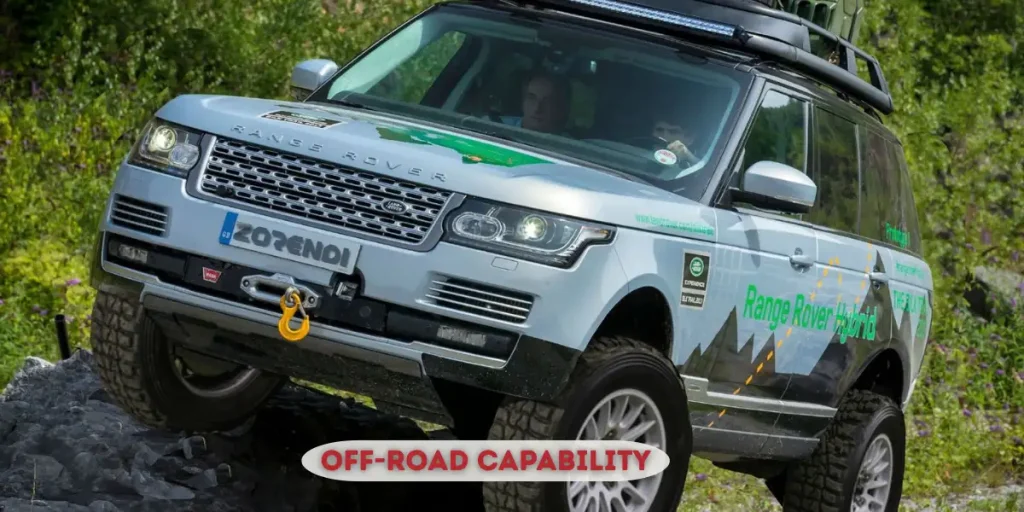
The Range Rover has the stronger hardware and software for that job. Terrain Response 2, electronic air suspension and off-road assistance systems allow the vehicle to adjust its responses for different surfaces.

The BMW X7 has all-wheel drive and enough ground clearance for gravel roads and light off-road use. It is not intended to match the Range Rover’s broader off-road ability.

Tyres remain the limiting factor. Large performance wheels with road tyres can reduce traction and increase the risk of sidewall damage, regardless of how advanced the vehicle’s four-wheel-drive system is.

Running Costs: Neither Is a Low-Cost SUV

The six-cylinder X7 xDrive40i is likely to be the least expensive version of either vehicle to operate. Its purchase price is lower, and it avoids the additional fuel, tyre and insurance costs associated with the V8 models.

The Range Rover offers plug-in hybrid versions, including the P460e and P550e. The official UAE page quotes up to 121 km of WLTP electric range for the current PHEV system, although real range depends on temperature, air-conditioning use, traffic and charging habits.

A plug-in hybrid only makes financial sense if it is charged regularly. Carrying a large battery without using external charging removes much of the benefit.

Before ordering either SUV, request written quotations for comprehensive insurance, tyres, brake replacement, scheduled servicing and an extended warranty. The cost difference between 21-inch and 23-inch tyres can be substantial, and low-profile tyres are more vulnerable to damage.

Do not assume a service package covers everything. Brake pads, tyres, wheel damage, cosmetic repairs and some wear items may remain the owner’s responsibility.

Explore More: Range Rover for sale

Off-Road Capability

Resale: Specification and History Matter More Than the Badge

Both SUVs have an established UAE market, but depreciation can be heavy on highly optioned luxury vehicles. The original owner may pay a large amount for bespoke paint, rear entertainment or special interior trim without recovering that money during resale.

The Range Rover has a much wider model and price range. UAE guides list 13 different 2026 variants, compared with three main X7 powertrain grades. This makes the Range Rover market more complicated because two visually similar cars may have very different engines, seating layouts and original prices.

The X7 is easier to compare. Most buyers can quickly separate the six-cylinder xDrive40i from the V8 M60i and assess each car against similar listings.

For either model, GCC specification, agency service history, warranty coverage, accident history and original condition will influence resale more than a rare interior colour. Imported cars may be cheaper, but their specification, warranty and repair history need closer examination.

What Should You Check Before Buying Used?

Start with the service history. A digital record should still be supported by invoices showing what work was completed and which parts were replaced.

Test the air suspension at different height settings. Check that the vehicle rises evenly, does not lean after being parked and shows no suspension warnings.

Operate every powered seat, screen, camera, soft-close door, tailgate, panoramic roof and climate-control zone. Luxury equipment is valuable when it works and expensive when it does not.

Inspect the wheels and tyres carefully. Large wheels can hide repaired cracks, buckling or uneven tyre wear caused by alignment and suspension problems.

A pre-purchase inspection should include diagnostic scanning, cooling-system checks, underbody inspection, paint-depth readings and verification of the chassis number against the service history. For a plug-in hybrid Range Rover, request a battery health assessment and confirm that the charging cable and related equipment are included.

Browse More: Cars for sale in Dubai

Range Rover or BMW X7: Which One Should You Buy?

Choose the BMW X7 xDrive40i if price, seven-seat practicality and lower everyday running costs matter most. It provides strong six-cylinder performance, a modern cabin and more equipment for the money.

Choose the BMW X7 M60i if you want V8 performance without moving into the much higher prices of a Range Rover Autobiography or SV. Its 530 hp output is almost identical to the Range Rover P530’s, and the performance difference is negligible.

Choose the Range Rover if ride isolation, rear-seat luxury, off-road capability and visual presence matter more than value. The P530 is the strongest balanced choice for buyers who want V8 performance without entering SV pricing.

For regular seven-passenger family use, the X7 is the more sensible purchase. For chauffeur use, luxury-focused ownership or mixed road and off-road travel, the Range Rover justifies more of its premium.

Comments

  • No comments yet.
  • Add a comment
    Post Your Ad Free