
Lexus LFA Review: A Supercar Legend
- Car Blog
- Car Review
-
Jul 21
-
8 min read
- Share post

Living in Dubai, where supercars gleam under the desert sun like jewels, I’ve seen my fair share of automotive masterpieces. As a Lexus LS 500 owner, I’m no stranger to the brand’s luxury, but the Lexus LFA is something else entirely—a legend that haunts every car meet I attend. Its howl echoes in my dreams, and the stories swapped over coffee with mates like Omar and Khalid only deepen my obsession. This isn’t just a car; it’s a symphony of engineering, passion, and audacity.
Birth of the Lexus LFA
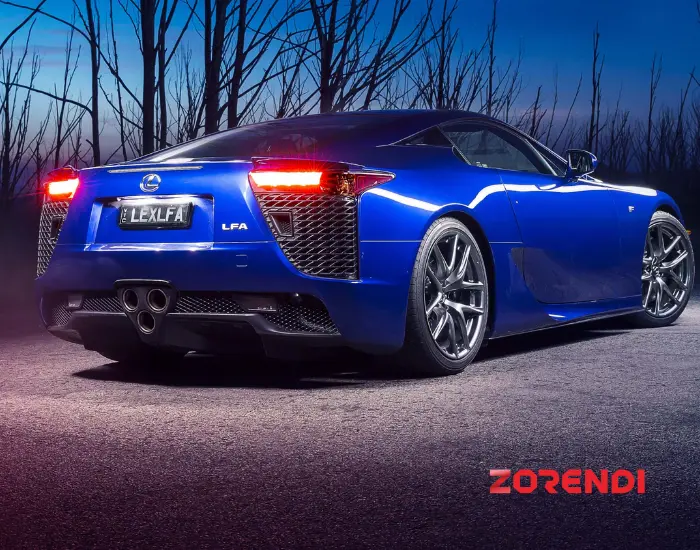
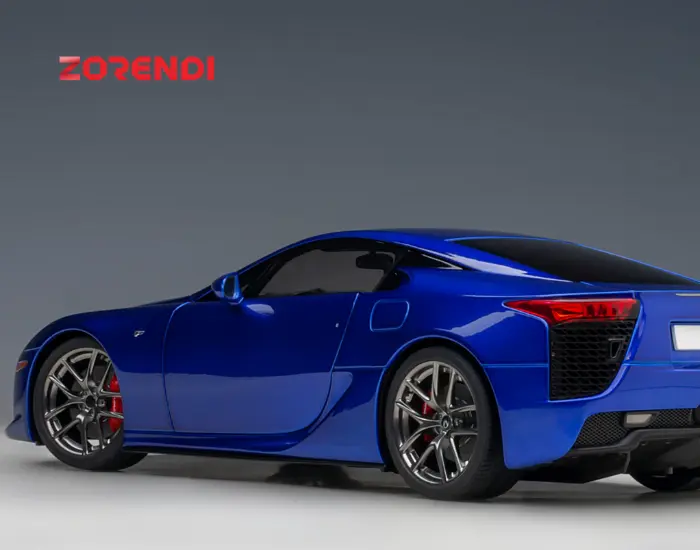
The Lexus LFA wasn’t born to be just another supercar—it was Toyota’s defiant middle finger to the European elite. Back in 2000, when I was still saving up for my first Lexus in Dubai, Akio Toyoda, Toyota’s visionary president, kicked off a project codenamed “F1.” My friend Omar, who’s been with a Lexus dealership here for a decade, once told me, “They didn’t just want to compete; they wanted to redefine what a Japanese supercar could be.” The LFA took nearly 10 years to perfect, with prototypes tearing up the Nürburgring by 2004. By 2010, it debuted at the Tokyo Motor Show, limited to just 500 hand-built units at Toyota’s Motomachi plant.
“The LFA was Toyota’s love letter to speed, written in carbon fiber and titanium.”
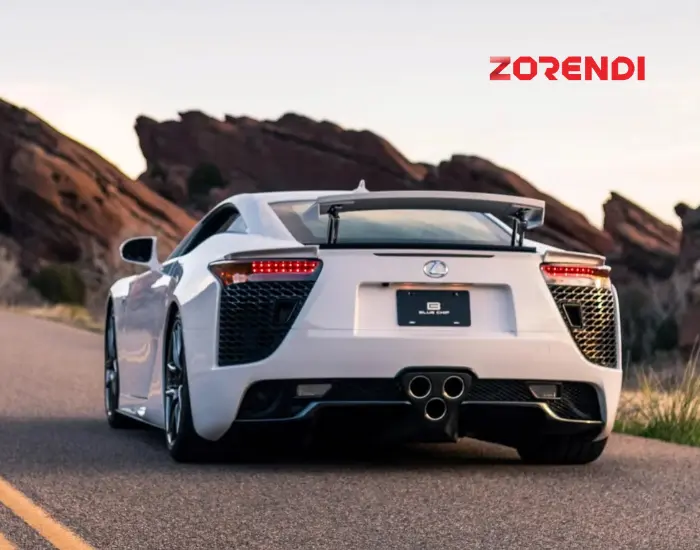
I saw my first Lexus LFA at a Dubai Marina car show in 2018—a pearl-white beauty that stopped everyone in their tracks. Whispers of Lexus for sale in Dubai floated around, but LFAs are unicorns here. Only about 20 are rumored to be in the UAE, with most owners keeping them under wraps. The car’s rarity, with just 190 units allocated to the U.S. and even fewer to the Middle East, makes spotting one feel like glimpsing royalty.
Development Secrets
The LFA’s development was obsessive. A lesser-known fact: Toyota scrapped an aluminum chassis in 2005 for carbon-fiber-reinforced polymer (CFRP), cutting weight by 100 kg while boosting rigidity by 30%. My mate Khalid, who’s driven one, says, “It feels like the car reads your mind.” The CFRP wasn’t off-the-shelf; Toyota built a proprietary loom to weave it, a process so precise it took 10 days to craft each chassis. The cost? Rumored to be $1 million per car to develop, with each LFA sold at a loss despite its $375,000 sticker price in 2010 (about $510,000 in 2025 dollars).
Power and Engine
The Lexus LFA’s 4.8-liter 1LR-GUE V10, co-developed with Yamaha, is pure magic. I heard one at a Sheikh Zayed Road meet, and it wasn’t just sound—it was a primal scream, hitting 9,000 rpm like an F1 car from my childhood. Khalid, who got a passenger ride in an LFA, said, “It’s like the engine’s alive, begging you to push harder.” Here’s what makes it special:
- Power: 552 hp at 8,700 rpm, 354 lb-ft torque at 6,800 rpm.
- Response: Throttle response under 0.2 seconds, thanks to a dry-sump system.
- Weight: Engine weighs just 238 kg, lighter than most V8s.
- Sound: Tuned by Yamaha’s music division for a harmonic exhaust note.
Info. The V10’s titanium valves and connecting rods reduce internal friction by 15% compared to standard steel components.
The engine’s paired with a 6-speed automated sequential gearbox, which I’ve heard feels snappy but slightly less raw than a manual. At a Jumeirah meet, a collector mentioned a prototype LFA with a manual transmission was tested but never produced—heartbreaking for purists like me.
Lexus LFA vs. Rivals (2010 Era)
|
Metric |
Lexus LFA |
Ferrari 458 Italia |
Lamborghini Gallardo LP560-4 |
|---|---|---|---|
|
Engine |
4.8L V10, 552 hp |
4.5L V8, 562 hp |
5.2L V10, 552 hp |
|
Weight (kg) |
1,480 | 1,380 | 1,410 |
|
0-100 km/h (s) |
3.7 | 3.4 | 3.7 |
|
Top Speed (km/h) |
325 | 325 | 325 |
|
Price (2010, USD) |
$375,000 | $230,000 | $202,000 |
|
Production Units |
500 | ~17,000 | ~14,000 |
This table, based on my chats with dealers and specs I’ve dug up, shows the LFA’s edge in exclusivity but also its premium price. Unlike cars for sale in Dubai flooding showrooms, the LFA’s scarcity drives its value—some now fetch $1.2 million at auctions.


Design and Materials
The Lexus LFA’s design is timeless. Its low-slung silhouette, sharp nose, and triple exhaust scream purpose. At a Palm Jumeirah meet, I overheard an engineer say the LFA’s aerodynamic shape was honed in a wind tunnel for 1,200 hours, achieving a drag coefficient of 0.31 Cd—better than most rivals. The carbon-fiber body, comprising 65% of the chassis, keeps weight at 1,480 kg, while the aluminum subframe adds just enough rigidity.
Signature Elements:
- Retractable rear wing deploys at 80 km/h for 20% more downforce.
- Air scoops feed the radiators, reducing front-end lift by 15%.
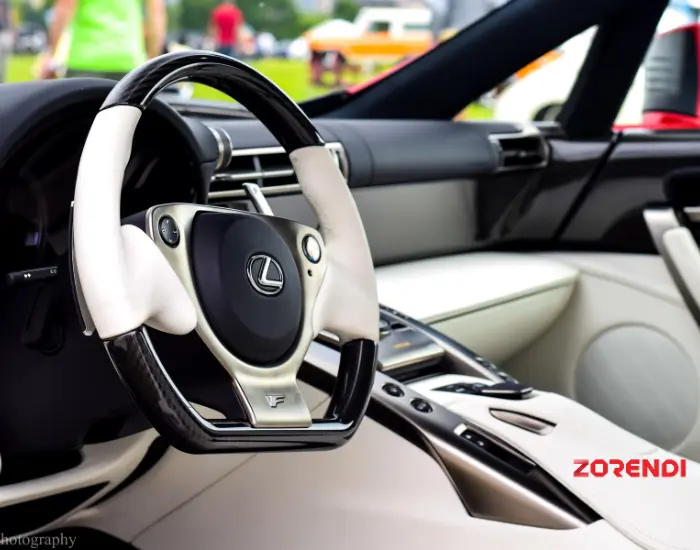
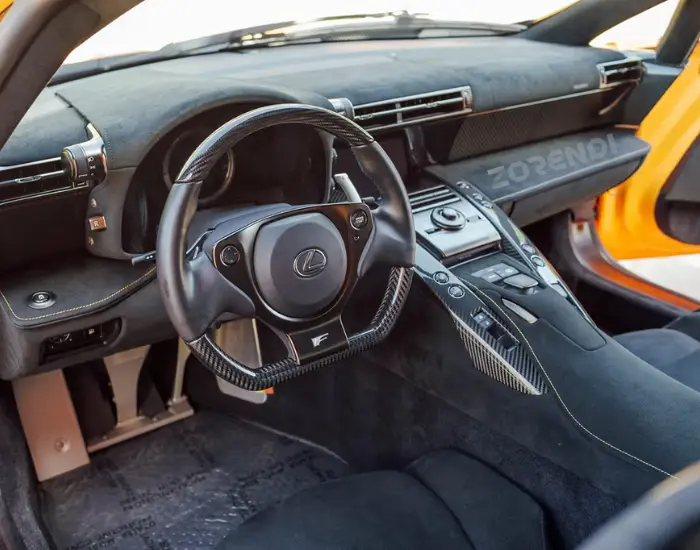
- Hand-stitched Alcantara interior, customizable in 30 colors.
-
Tip. If you spot an LFA in Dubai, check the side mirrors—they’re carbon fiber, a detail no website mentions.
Driving the Legend
I’ve never driven an LFA (yet!), but Khalid’s stories are vivid. He rode in one during a track day at Yas Marina. “It’s not just fast; it’s telepathic,” he said. The LFA’s double-wishbone front and multi-link rear suspension, tuned on the Nürburgring, deliver razor-sharp handling. Its 265/35ZR20 front and 305/30ZR20 rear Yokohama tires grip like glue, with a bespoke compound developed just for the LFA.
Performance Specs:
- Lateral grip: 1.05 g, rivaling track-focused cars.
- Braking: Carbon-ceramic brakes stop from 100 km/h in 34 meters.
- Nürburgring Lap Time: 7:14.64 (2011, LFA Nürburgring Package).
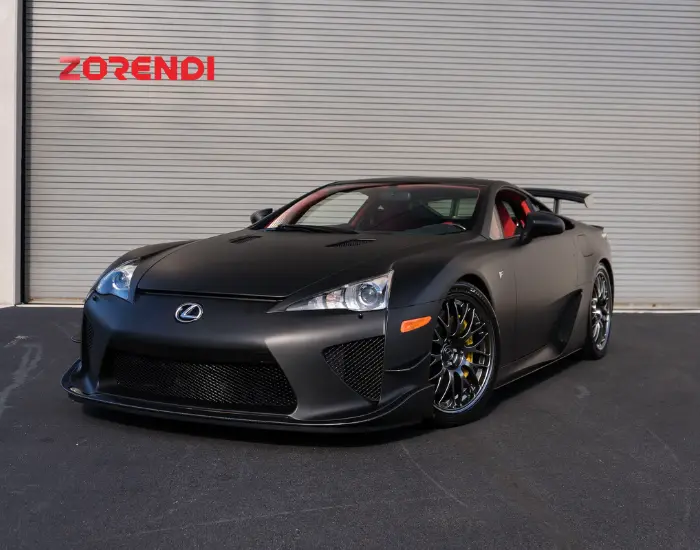
The Nürburgring Package, limited to 50 units, adds 10 hp, a fixed carbon-fiber wing, and stiffer springs. I saw one at a private Dubai event—matte black, menacing, and worth $1.5 million today. Khalid swears the steering feels like “an extension of your soul,” thanks to a rack-and-pinion system with a 14.3:1 ratio.

Ownership in Dubai
Owning a Lexus LFA in Dubai is a flex like no other. In 2010, it cost $375,000, but inflation and rarity have pushed used LFAs to $1.2–$1.8 million in 2025. Maintenance isn’t cheap either—Omar says a single service at Al-Futtaim Lexus costs $5,000, and carbon-ceramic brake replacements run $15,000. Yet, owners don’t flinch. “It’s not a car; it’s a legacy,” a collector told me at a Burj Al Arab event.
Ownership Costs (2025, UAE):
- Annual insurance: ~$12,000.
- Tire replacement: $3,500 for a set.
- Fuel economy: 11 mpg city, 16 mpg highway (not that owners care).
Info. Only 3 LFAs in Dubai have the Nürburgring Package, per local dealer gossip.
The LFA’s value is climbing faster than a Bugatti. A friend who tracks auctions says a low-mileage LFA sold for $1.7 million in Dubai last year, outpacing many Ferraris. If you’re hunting for one, good luck—dealers rarely list them publicly.
LFA in Dubai’s Car Scene
In Dubai, where supercars are a lifestyle, the Lexus LFA holds a cult status. At car meets, it’s the car everyone circles. My mate Ahmed, a photographer, says LFAs get more Instagram likes than Lambos. “It’s not just rare; it’s Japanese perfection,” he told me. The LFA’s influence extends beyond owners—local tuners have tried (and failed) to replicate its exhaust note, and kids sketch its silhouette in school notebooks.
The LFA’s legacy lives on, even if production ended in 2012. Rumors of a successor swirl, but Toyota’s tight-lipped. For now, the LFA remains Dubai’s ultimate automotive unicorn.
ALSO READ: Meet this monster; what exactly is the Bugatti Chiron? FAQ Lexus LFA
Why is the Lexus LFA so expensive now?
Its limited production (500 units), hand-built quality, and unmatched engineering drive demand. In Dubai, low-mileage LFAs fetch $1.2–$1.8 million due to rarity and collector hype.
How does the LFA compare to modern supercars?
While newer cars like the Ferrari SF90 are faster, the LFA’s analog feel and V10 scream offer an unmatched emotional connection, especially on Dubai’s open roads.
Can you daily-drive an LFA in Dubai?
Yes, but it’s rare. The suspension is stiff, and fuel costs add up. Most owners save it for weekend cruises or track days at Dubai Autodrome
