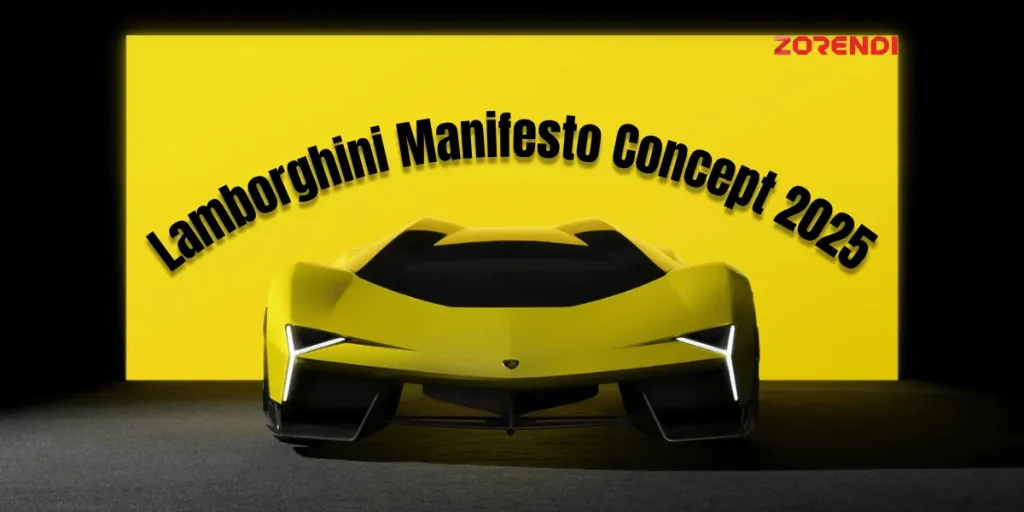
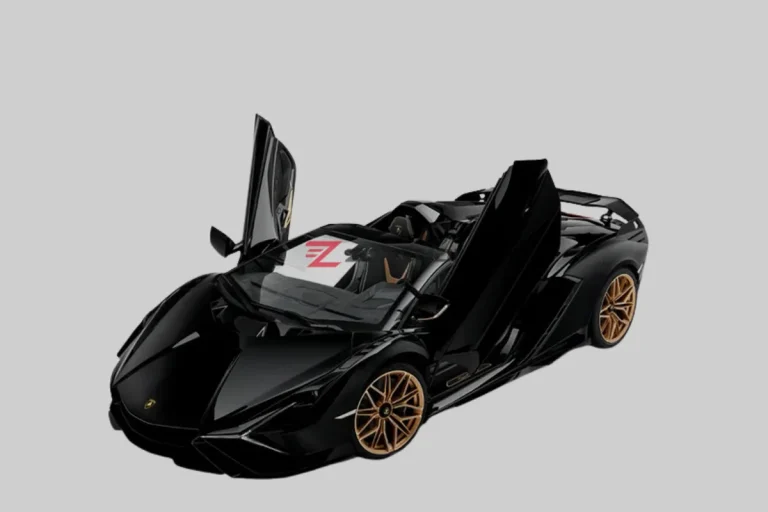
I remember the day I first laid eyes on the Lamborghini Manifesto Concept 2025. I was parked in front of Atlantis The Palm, dusk light reflecting off the glass towers, and my Aventador’s engine still humming in my chest. Something about those lines — sharp enough to cut the air, yet pure as sculpture — made me realize this wasn’t just a car. It was a declaration.
As someone who already owns a Lamborghini for sale here in Dubai, I see every exotic machine imaginable. But the Manifesto 2025? It hit differently. It wasn’t built to impress the crowd; it was built to redefine what it means to be a supercar.
This isn’t just another futuristic teaser. It’s Lamborghini saying, “We remember where we came from, but we’re rewriting what’s next.”
The Genesis
The Lamborghini Manifesto Concept 2025 isn’t about nostalgia. It’s a time capsule thrown forward. Its name — “Manifesto” — isn’t marketing fluff. It’s a statement of principles. The brand’s design studio wanted to capture the essence of Lamborghini before it disappears into digital abstraction.
From what I’ve gathered, this concept is an uncompromised vision: raw geometry turned liquid, tradition distilled into form. In Dubai, where everyone wants to be noticed, this design isn’t loud. It’s quietly dominant.
The team set out to imagine what a supercar would look like twenty years from now if Lamborghini still insisted on beauty through brutality. And that’s exactly what they built.
Manifesto Concept 2025 — Vision & Philosophy
“Not just a car — a declaration.”
Manifesto distills Lamborghini’s brutality into purified form:
raw geometry made liquid, design that is
quietly dominant in a world obsessed with noise.
Minimalism, amplifiedBeauty through brutalityFuture-forward nostalgiaQuiet dominance
Purpose
A Declaration, Not a Teaser
Manifesto redefines the supercar archetype. It isn’t made to impress the crowd — it exists to recalibrate expectations of purity, presence, and purpose.
Personality
Quietly Dominant
In places where everything screams, Manifesto whispers with confidence — the silhouette does the talking.
Design Ethos
Beauty → Function → Purity
Lighting becomes structure, aero hides beneath the skin, and every gesture serves speed, not spectacle.
“We remember where we came from — but we’re rewriting what’s next.”
Legacy, Reimagined
A respectful nod to the V12 bloodline and hexagonal DNA — expressed as subtle veins under the surface.
Purity Over Noise
Absence of gratuitous vents and wings. Every cut earns its place. Presence comes from coherence.
Future-Proof Emotion
Hybrid era without losing soul: the art is making technology feel visceral, not virtual.
Design as Declaration
Manifesto reads like a brand thesis — a blueprint for the next decade of Sant’Agata.
Design Language
When you stand in front of the Lamborghini Manifesto Concept 2025, you realize that minimalism can still be terrifying.
Front End & Lighting
The front has that shark-nose aggression Lamborghini is famous for, but the lines breathe more than they bite. The Y-shaped lighting is no longer decorative — it’s structural. The lights carve through the bodywork instead of sitting on it.
I’m convinced they’ve used micro-LED layers beneath an adaptive lens that morphs the Y shape depending on speed and mode. At low speeds it glows; in track mode it turns razor white.
Body & Aerodynamics
The sides have no over-dramatized vents. Instead, air moves beneath the skin through micro-channels carved in the carbon monocoque itself. You don’t see the aero — you feel it. The signature hexagonal geometry is there, but in whispers, like veins under skin.
Twelve vents line the rear spine — a quiet nod to the V12 bloodline. Every curve feels alive, and yet, the overall design is as smooth as a polished blade.
The Canopy
No visible doors. The whole glass canopy lifts forward like a fighter jet’s cockpit. It’s likely electrochromic, darkening when you need privacy or sunlight control. The roof and windshield merge into one seamless piece — futuristic but believable.
The Lamborghini Manifesto Concept 2025 doesn’t just look aerodynamic — it is aerodynamic. The air is its second skin.
Manifesto Concept 2025 — Design Language
Where Sharp Meets Soul
Minimalism that intimidates. Surfaces breathe, light becomes structure,
and aero hides beneath the skin. The result is presence without noise.
Y-signature lightingAero under skinHexagonal DNA, refinedQuiet dominance
Front End & Lighting
Shark-nose aggression that breathes more than it bites. The Y-shaped signature is structural:
micro-LED layers sit beneath an adaptive lens and morph by speed/mode—glow at city pace, razor-white on track.
Adaptive Y-frameMicro-LED stacksShark-nose stance
Body & Aerodynamics
No over-dramatized vents. Air travels through micro-channels carved in the carbon monocoque—performance you don’t see, only feel.
Under-skin airflowCarbon channels
The Canopy
No visible doors; a fighter-jet glass canopy lifts forward. Likely electrochromic—roof and windshield merged into one seamless arc.
Electrochromic tintSeamless arc
Key Design Cues
Twelve spine vents — a quiet nod to the V12 bloodline; heat exits through the rear ridge.
Hexagonal geometry — present as whispers under the skin, not loud ornaments.
Lighting as structure — the Y-frame carves through bodywork instead of sitting on it.
Polished-blade surfaces — alive in motion, coherent at rest.
Form Purity
Aero Integration
Visual Noise
The Engineering Hypothesis
Lamborghini hasn’t shared any hard data, but being around enough engineers here in Dubai, you start hearing things in hushed tones. Based on internal patterns, this is what makes sense:
From these, you can infer numbers: 0–100 km/h in 2.2 s, 0–200 km/h in under 6 s, and a top speed near 370 km/h. Power-to-weight ratio? Roughly 1.2 kg per PS. That’s Bugatti territory — but lighter, sharper, and angrier.
Tip.
I’ve heard rumors that the cooling ducts are internal — meaning, airflow enters under the front splitter, passes through hollow subframes, and exits through the rear spine vents. That’s aerospace-grade fluid dynamics in a street car.
Manifesto Concept 2025 — Engineering Hypothesis
Numbers They Won’t Tell You
An inferred powertrain that keeps the mechanical soul alive while adding electric aggression. Below is a compact breakdown of the rumored stack.
Component Stack (Estimated)
Component
Specification
Purpose / Insight
Engine
6.5L NA V12 + hybrid
Preserve analog soul; add electric punch
Electric Motors
3 axial-flux (~400 kW total)
Instant torque + torque vectoring
Transmission
8-speed dual-clutch hybrid e-DCT
Ultra-fast, seamless blend
Battery
10 kWh solid-state
High discharge; short EV range
Chassis
Graphene-infused carbon monocoque
~12% higher rigidity, less mass
Weight
1,580–1,650 kg (dry)
Right-sized for a hybrid hypercar
Output
1,200–1,400 PS (combined)
Track-rewriting potential
Hybrid harmonicsAnalog roar, digital thrustAxial-flux efficiency
Performance Inference
0–100 km/h: ~2.2 s • 0–200 km/h: < 6 s • Top speed: ~370 km/h
Power-to-weight: ~1.2 kg per PS Bugatti-tier, lighter & sharper
Normalized performance index
Internal Cooling Ducts
Air enters under the front splitter, travels through hollow subframes, then exits via the rear spine vents.
It’s aerospace-grade fluid dynamics in street clothing.
Cleaner exterior — fewer visible intakes, more purity.
Thermal efficiency — short, direct heat paths reduce soak.
Structural integration — ducts double as stiffening elements.
Rigidity Gain
~12% vs. traditional carbon (graphene composite)
Hybrid Thrust
e-motors fill the torque valley; V12 delivers the crescendo
For most people, “concept” means fantasy. But Lamborghini doesn’t do fantasy — it does prophecy. The Lamborghini Manifesto Concept 2025 signals what all Lamborghinis will feel like soon: lighter, electrically enhanced, and emotionally raw.
Future V12s may die, but their soul — that mix of vibration, howl, and violence — will be reborn through hybrid harmonics.
Driving this would be like having your nervous system connected directly to the tarmac. The instant torque of the e-motors, the climbing scream of the combustion unit, and the aerodynamic whisper all combine to form a single mechanical heartbeat.
Material Revolution
Traditional carbon fiber is ancient history. The Manifesto uses graphene-reinforced composites, probably baked in autoclaves that use ultrasonic curing rather than heat.
That means strength without excess resin weight. Some insiders estimate 10–12% higher torsional stiffness, which allows thinner panels and, therefore, better aero.
If Lamborghini decides to build a “Manifesto-inspired” limited edition, it could be the first production supercar under 1,600 kg with over 1,200 PS — a balance unheard of even today.
Info.
Graphene-based composites are electrically conductive — that means panels themselves could act as part of the car’s electrical grounding and even heat management systems.
Manifesto Concept 2025 — Materials & Future
Material Revolution & What Comes Next
Graphene-reinforced composites, cleaner aero, and a brand thesis that will echo through future Lamborghinis. Below is a distilled outlook.
Beyond Carbon Fiber
Traditional carbon is yesterday’s news. Manifesto points to graphene-reinforced composites, likely cured with ultrasonic-assisted autoclaves.
Expect higher stiffness with less resin mass and panels that participate in the car’s electrical/thermal management.
Stiffness Gain
~10–12% torsional stiffness vs. baseline carbon
Functional Panels
Conductive skins for grounding & heat shedding
Graphene latticeUltrasonic curingThin-wall aero
Hidden Aero = Purity
Micro-channels within the monocoque route air internally, keeping surfaces clean while improving cooling and downforce balance.
Internal ducts reduce visual noise.
Rear spine vents act as thermal chimneys.
Lower drag, higher stability at V-max.
Future Application
Design cues to expect in 2028+ models and special series inspired by Manifesto:
Sculpted canopy with electrochromic integration.
Y-frame lighting as load-bearing visual structure.
Absence of gratuitous vents — form purity becomes the flex.
Wider use of graphene composites; canopy/electrochromic systems become mainstream in halo cars.
Price & Exclusivity (If Built)
Sticker: ~USD 4.5–6.0M • Volume: ≈20 units • Why it matters: Ownership = a slice of the brand’s future, not just another hypercar.
Ultra-limitedCollector gravityDesign thesis, not teaser
Price and Exclusivity
If Lamborghini ever built a road-legal Manifesto derivative, I’d bet its tag would start around 4.5 to 6 million USD. That’s hyper-limited territory — maybe 20 units globally. And honestly? Worth it. Because this isn’t about transportation. It’s about owning the future while everyone else is still arguing about horsepower.
conclusion
Sometimes, at night, I drive along Sheikh Zayed Road with the skyline glowing behind me. And I imagine the Lamborghini Manifesto Concept 2025 gliding beside me — soundless, ruthless, and inevitable.
That car is what all of us in Dubai’s supercar scene secretly crave: something that doesn’t just shout power but redefines it.
To me, the Manifesto isn’t a concept. It’s a mirror held up to our obsessions — with speed, with form, with perfection. It’s a reminder that we’re not chasing horsepower anymore. We’re chasing purity.