2.0-litre turbocharged four-cylinder petrol engine.

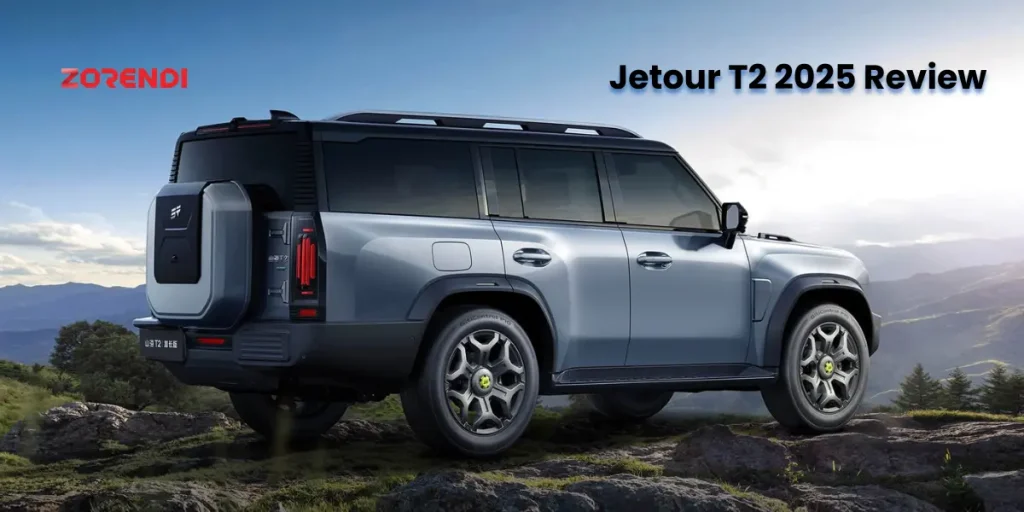
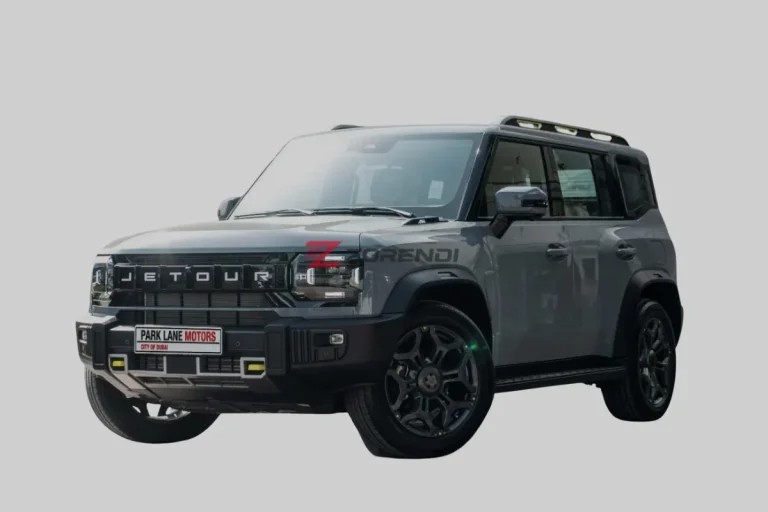
The Jetour T2 2025 is a five-seat 4WD SUV aimed at UAE buyers who want rugged styling, useful ground clearance and a long equipment list without moving into the pricing of more established premium off-road models. In official UAE specification, the petrol T2 uses a 2.0-litre turbocharged four-cylinder engine producing 187 kW and 390 Nm, with the transmission depending on the trim.
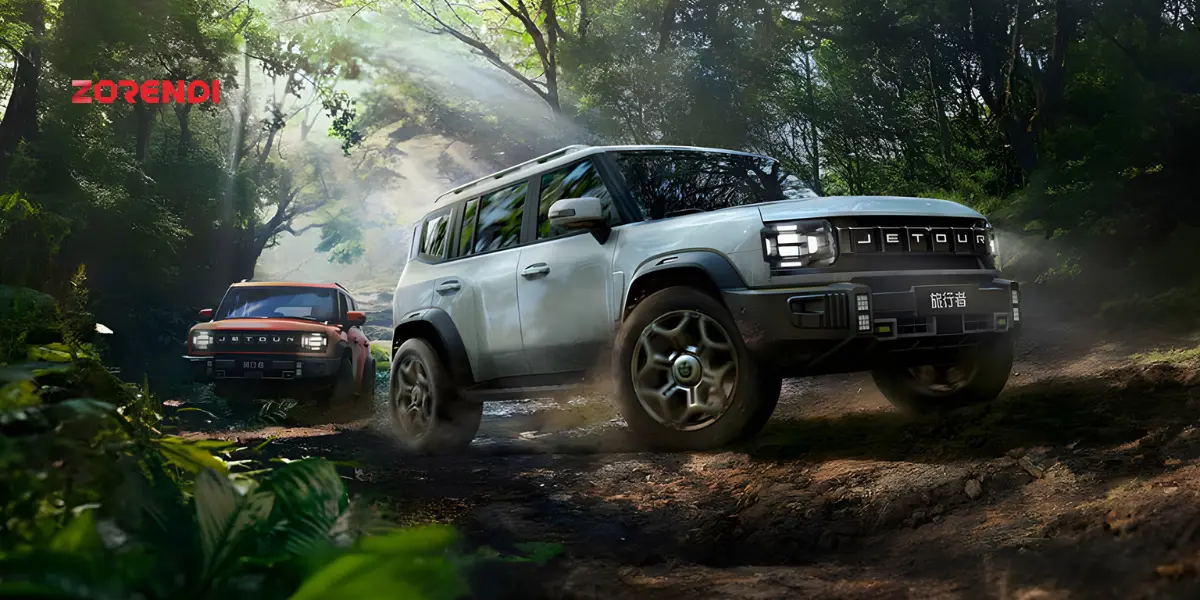
The important point is that the T2 should be judged on its confirmed hardware rather than exaggerated desert-test claims. Jetour UAE publishes a 220 mm minimum ground clearance, 39-degree approach angle, 25-degree ramp angle and 30-degree departure angle, along with a four-wheel-drive system and seven selectable driving modes.
For Dubai buyers, that combination makes the T2 interesting as a road-focused SUV with genuine off-road-oriented features, but it does not automatically make it a substitute for every traditional body-on-frame 4×4.
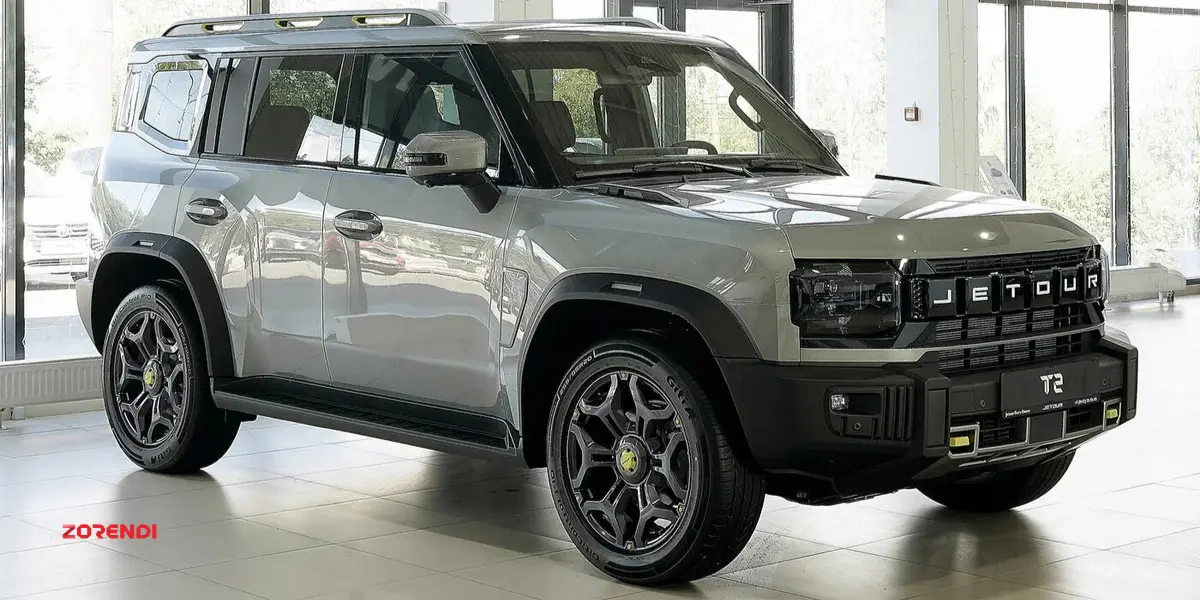
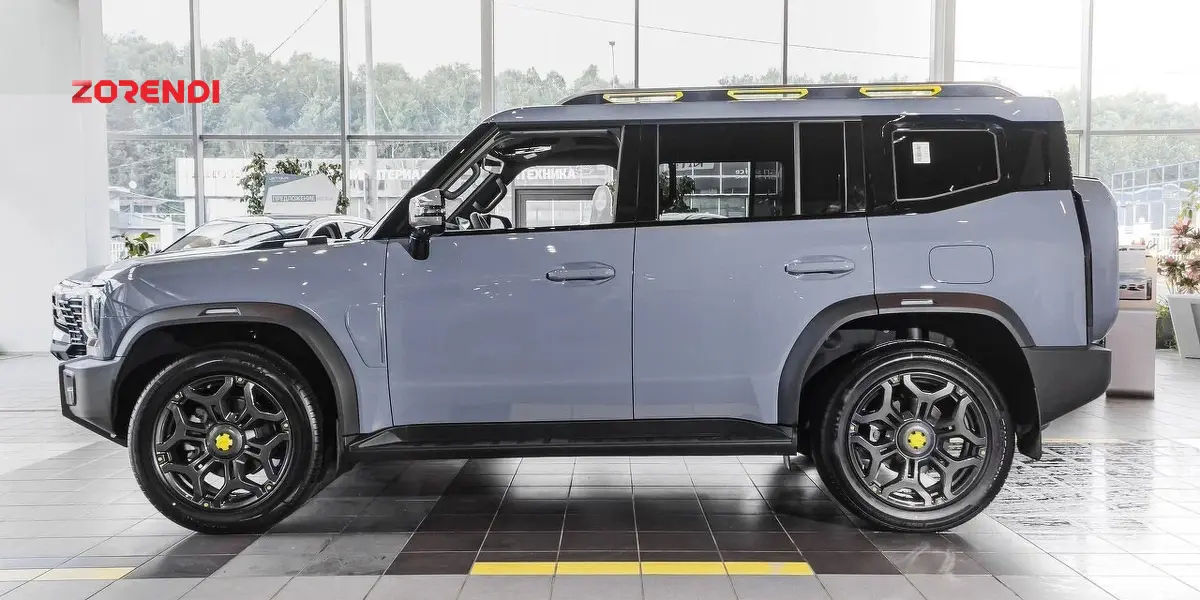
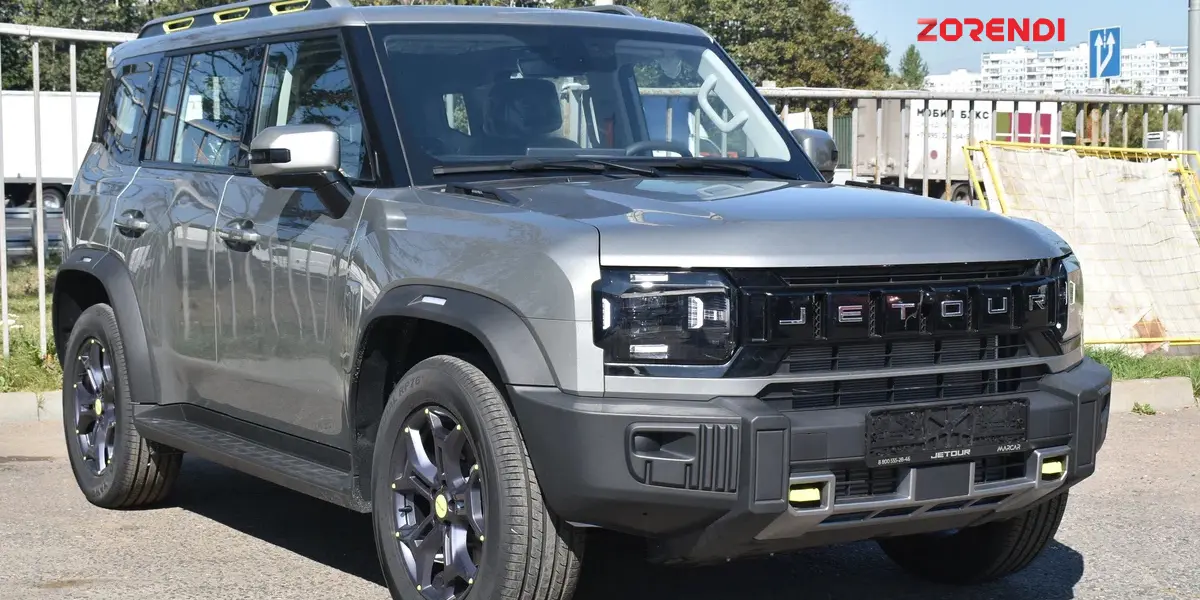
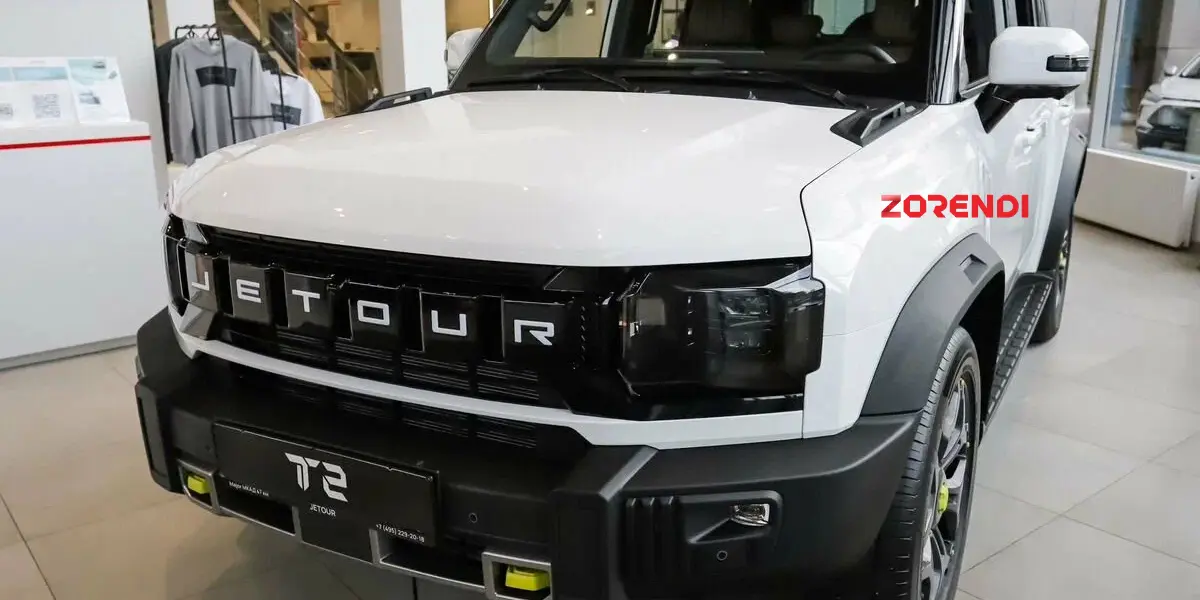
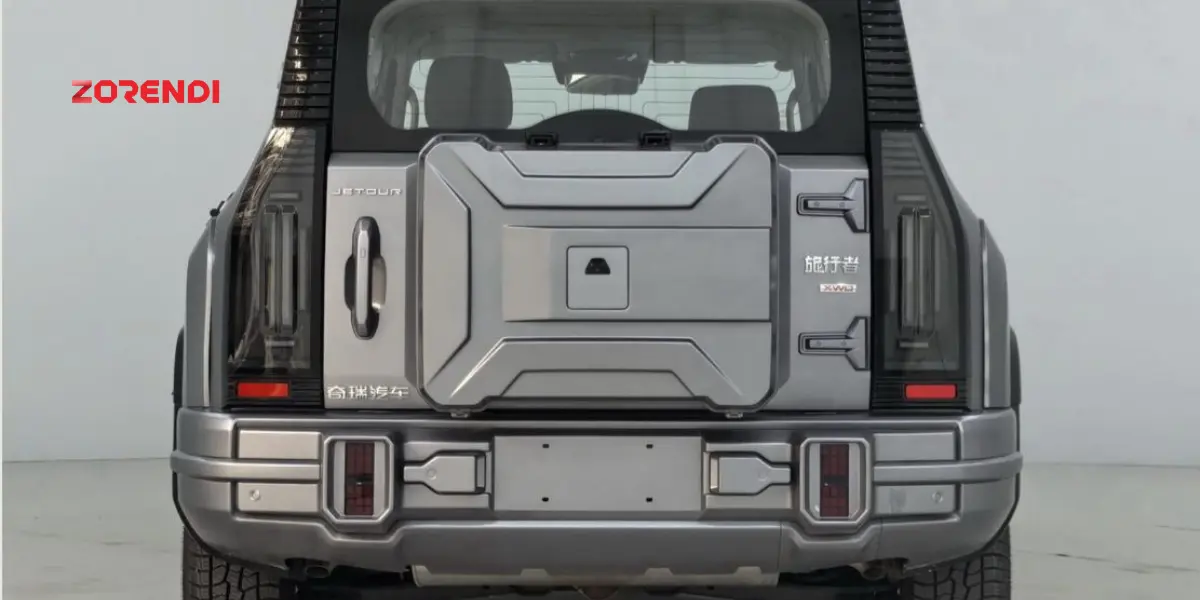
The T2 is a monocoque five-door SUV with a boxy design, an external spare-wheel cover and dimensions that give it a noticeably larger road presence than many compact crossovers.
Jetour UAE lists the vehicle at 4,785 mm long when the spare-wheel cover is included, 2,006 mm wide and 1,880 mm high. The wheelbase measures 2,800 mm and minimum ground clearance is 220 mm.
The UAE range has included the T2 Luxury and the later T2 Luxury Plus. Buyers should check the exact trim rather than assuming that every 2025 T2 uses identical equipment or transmission hardware.


The petrol T2 uses a 1,998 cc turbocharged four-cylinder direct-injection engine. Jetour’s UAE specification lists maximum output at 187 kW and maximum torque at 390 Nm between 1,750 and 4,000 rpm.
The regular 2025 Luxury specification uses a seven-speed dual-clutch transmission, while the Luxury Plus brochure lists an eight-speed automatic. This difference matters when comparing listings because the transmission should be identified from the exact vehicle rather than inferred from the model name alone.
Jetour lists a maximum speed of 180 km/h. The manufacturer does not provide the highly specific dune acceleration, wheel-slip recovery or torque-vectoring response times previously published in this article, so those figures should not be treated as verified T2 performance data.
The T2 has several useful dimensions for light to moderate off-road use. Official UAE figures include a 39-degree approach angle, 30-degree departure angle, 25-degree ramp angle and 220 mm minimum ground clearance.
Jetour also equips the UAE petrol model with four-wheel drive. The current local product page describes a BorgWarner sixth-generation 4WD system and seven selectable driving modes intended to adapt the vehicle to different surfaces.
Those specifications make the T2 considerably more adventure-focused than a conventional front-wheel-drive crossover. However, buyers planning frequent heavy dune driving should still consider tyre choice, recovery points, underbody protection, payload and driver experience before assuming that electronic drive modes remove the need for proper off-road preparation.
The previous version of this review referred to 240 mm of wheel articulation, adaptive air springs, magnetorheological dampers and graphene-infused damper fluid. None of those claims appear in Jetour UAE’s 2025 specification documents and they should not be used as confirmed T2 features.
Confirmed figures from Jetour UAE for the petrol T2. Transmission equipment varies between the Luxury and Luxury Plus specifications.
2.0-litre turbocharged four-cylinder petrol engine.
Available between 1,750 and 4,000 rpm.
Official minimum ground-clearance figure.
Do not apply the petrol T2 specification to the T2 i-DM plug-in hybrid. The two models use different powertrains and transmissions.
The 2025 UAE specification lists MacPherson front suspension and a multi-link rear setup. That differs from the double-wishbone front suspension previously described in this article.
The combination is more conventional than the old article suggested, but that is not necessarily a weakness. A multi-link rear arrangement can provide useful wheel control and road comfort, while the T2’s ride height and four-wheel-drive hardware are more relevant to its intended positioning than an invented suspension-frequency figure.
The Luxury Plus specification also lists 255/55 R20 tyres. Owners who intend to spend significant time away from paved roads should judge tyre suitability separately from the capability of the drivetrain.
Jetour UAE’s current T2 page does not display a fixed cash retail price; it currently advertises finance from AED 1,799 per month and directs buyers to the dealer for the vehicle price.
For historical market context, UAE automotive price guides have listed the 2025 Jetour T2 at around AED 146,000 when new. That should be treated as a market reference rather than a permanent official dealer price because promotions and available trims change over time.
The used market is already lower. Jetour’s own approved pre-owned inventory has recently shown 2025 petrol T2 Luxury examples around AED 109,000 to AED 113,000, depending on mileage and the individual vehicle.
Anyone comparing a Jetour for sale on Zorendi should therefore compare model year, trim, transmission, mileage, GCC status, warranty and service history rather than using one fixed price for every T2.


Start by confirming whether the car is a Luxury, Luxury Plus or another specification. The transmission and some equipment can change between versions even when the exterior looks almost identical.
For a vehicle that has been used off road, inspect the underside, wheels, tyres, suspension components and protective panels for damage. A clean exterior is not proof that a vehicle has never had a hard dune impact.
Ask for the full dealer service history and written confirmation of remaining warranty coverage. Modifications such as suspension changes, oversized tyres, engine tuning or non-approved electrical accessories should also be disclosed because they may affect reliability or warranty claims.
Finally, confirm accident history and GCC specification. The presence of a long factory warranty adds value only when the individual vehicle still satisfies the conditions required for that warranty to remain active.
Off-road use, specification and warranty status can make two similar-looking T2 examples very different purchases.
Check whether the vehicle is Luxury or Luxury Plus and verify the transmission, equipment and original GCC specification.
Look for impact damage around underbody protection, suspension, wheels and tyres if the vehicle has been driven in the desert.
Ask for the written warranty status and confirm that servicing and modifications have not affected the remaining coverage.
Dealer history, accident records and documented repairs are more useful than assumptions based on exterior condition alone.


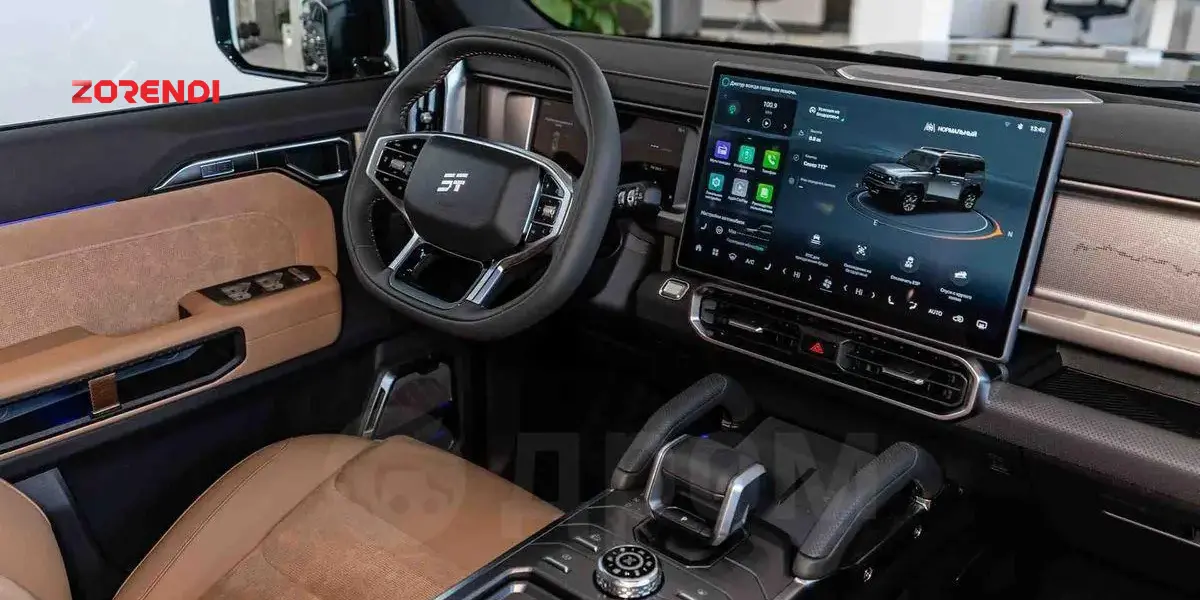
The Jetour T2 2025 is easier to recommend when the exaggerated claims are removed. Its real specification already includes a 187 kW turbocharged engine, 390 Nm of torque, four-wheel drive, 220 mm ground clearance, useful approach and departure angles and a technology-rich five-seat cabin.
The strongest ownership arguments are its equipment, local dealer representation and long advertised warranty. The main buying checks are trim, transmission, service history, remaining warranty and evidence of previous off-road use.
It does not need graphene dampers, fictional driving modes or fabricated desert test logs to sound capable. The confirmed hardware is enough to explain where the T2 fits in the UAE SUV market.
ALSO READ: Volkswagen VW Golf MK8 Full Reviewsources:
Zorendi Editorial Team is the editorial team behind Zorendi, covering cars, motorcycles, luxury vehicles, automotive technology, and mobility trends across the UAE and international markets.
Our articles are developed through research, comparison of reliable sources, official manufacturer information, vehicle specifications, and relevant market data. The team focuses on creating clear, practical, and regularly reviewed content to help readers better understand new models, specifications, technologies, ownership considerations, and developments across the automotive industry.
Zorendi Editorial Team aims to present information in a straightforward and useful way, with an emphasis on accuracy, relevance, and providing readers with the context they need when researching vehicles and mobility-related topics.
240mm of articulation with gear on top? That’s insane for this price point. Do you think it’s actually more stable than the Defender in dunes?
I tested both back-to-back at Al Badayer. Defender still feels a bit more planted when cresting, but the T2’s adaptive air suspension narrows the gap massively. For daily UAE desert runs, the Jetour holds its own.
That graphene-doped damper fluid detail blew my mind. Honestly didn’t expect Jetour to push tech this far into the suspension game. But tell me—did you actually feel a big difference between the 2024 sag and the 2025’s self-leveling system when you were loaded with gear?
Absolutely. With the rooftop tent and full kit, the 2024 dipped noticeably on inclines—felt soft in the rear. The 2025 barely budged; the air springs and faster dampers kept the stance level and the ride far more controlled. You feel it most when cresting dunes with weight onboard.
Word list
×
Ryan
September 23, 2025 at 2:20 pmGraphene in the dampers? Never thought I’d see nanotech in a mid-price SUV 😂. Any noticeable difference or just marketing fluff?
Mr.Amin
September 24, 2025 at 6:15 amHonestly? Not fluff. The viscosity change rate is quicker—you feel fewer jolts on gravel compared to older T1. It’s subtle, but on long drives it reduces fatigue