BYD Yangwang U9 | The Supercar That Doesn’t Feel Like a Joke
A few years ago, if someone mentioned BYD, most people immediately pictured affordable EVs, taxi fleets, or practical daily commuters. Nobody was seriously comparing the brand to Ferrari, McLaren, or Rimac. The Yangwang U9 changes that conversation completely.

And honestly, it changes it fast.

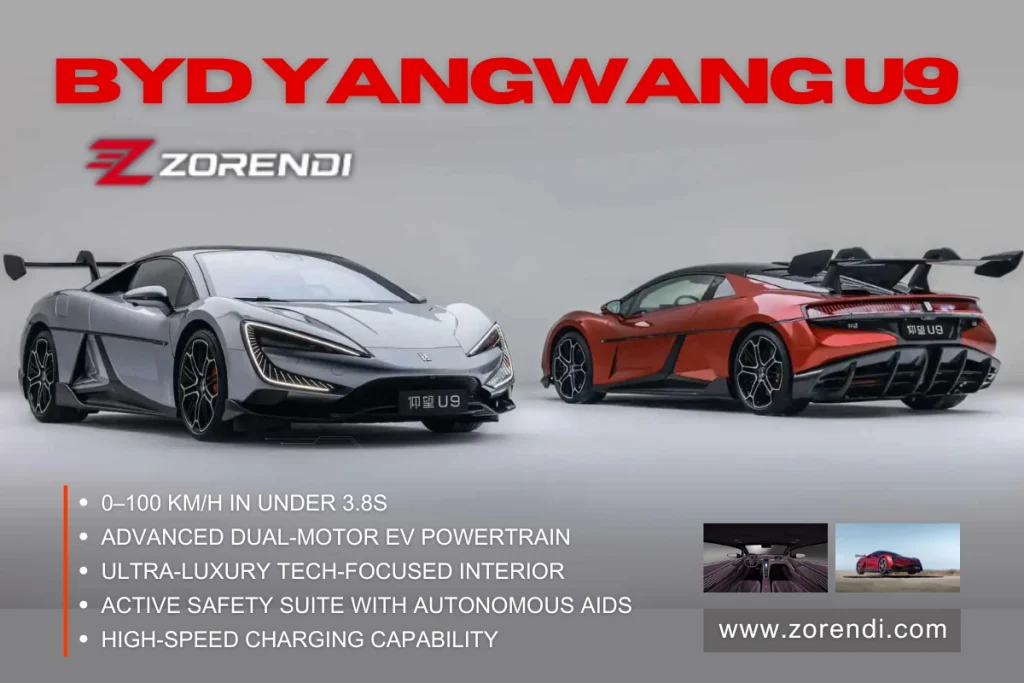
This thing doesn’t arrive quietly. It doesn’t ease people into the idea of a Chinese electric supercar either. It shows up with nearly 1,300 horsepower, a body that looks like it escaped from a sci-fi racing game, and performance figures aggressive enough to make long-established brands uncomfortable.

The first reaction most people have is skepticism. Fair enough. A Chinese brand building a six-figure electric supercar sounds strange at first. But once you actually look at what the U9 is doing mechanically and electronically, you start realizing this car was never designed to be “good for a Chinese car.” It was designed to compete. Period.

The numbers are wild, but the feeling matters more

On paper, the Yangwang U9 produces around 1,287 horsepower through four independent electric motors. BYD claims 0–100 km/h in roughly 2.3 seconds, which already puts it deep into real supercar territory.

But spec sheets are easy. Every company throws numbers around now.

What matters is how the car feels when it moves.

And this is where the U9 gets interesting.

The torque delivery is violent in the way only high-powered EVs can be. No build-up. No hesitation. You touch the throttle and the car reacts instantly. In heavy Dubai traffic that almost sounds pointless, but the strange thing is how manageable it still feels at low speed.

Bigger electric performance cars sometimes feel numb or disconnected in city driving. The U9 doesn’t completely fall into that trap. There’s still sharpness in the steering. The chassis feels alive. Even crawling through areas like Downtown Dubai or Jumeirah, the car constantly feels tense, alert, almost impatient.

Then you open it up somewhere less crowded and the whole personality changes.

Suppose you’re driving late at night on Sheikh Zayed Road when traffic finally clears out a bit. The acceleration doesn’t feel cinematic. It feels unnatural. The speed builds so quickly that your brain takes a second to catch up with what’s happening.

That’s the part people don’t really understand until they sit inside a car like this.

The scary part is not the launch itself. It’s how easily the car keeps pulling after speeds where most vehicles already feel stressed.

Read More: Explore Our Sport Car for Sale

BYD Yangwang U9 review

BYD Yangwang U9 Price Comparison With Super Sport Rivals

Car Model Country Production Years Approx. Price Powertrain Engine Size Cylinders
BYD Yangwang U9 China 2024–Present AED 870,000+ Electric / 4 Motors N/A 0
Ferrari 296 GTB Italy 2021–Present AED 1,250,000+ Hybrid Petrol 3.0L Twin-Turbo V6
McLaren Artura UK 2022–Present AED 940,000+ Hybrid Petrol 3.0L Twin-Turbo V6
Porsche 911 Turbo S Germany 2020–Present AED 850,000+ Petrol 3.7L Twin-Turbo Flat-6
Lamborghini Huracán Tecnica Italy 2022–2024 AED 915,000+ Petrol 5.2L NA V10

Dubai actually makes sense for a car like this

Oddly enough, Dubai is one of the few places where the Yangwang U9 genuinely fits.

Not because of practicality. Nobody buys a car like this to be practical.

But Dubai’s roads, car culture, and obsession with unusual machines create the perfect environment for it. In some cities, the U9 would constantly feel out of place. Here, it almost blends into the ecosystem of extreme cars.

You’ll already see Aventadors parked outside cafés. McLarens casually sitting in valet lines. Brabus G-Wagons everywhere. The visual shock factor in Dubai is different.

Still, the U9 gets attention.

Partly because people don’t immediately recognize it. You notice heads turning at traffic lights because drivers are trying to figure out what they’re looking at. Some assume it’s a new hypercar startup. Others think it’s a concept car.

Then someone says “It’s a BYD.”

That’s usually when the conversation changes.

Feature Comparison: BYD Yangwang U9 vs Super Sport Rivals

Car Model Top Speed 0-100 km/h Battery / Engine Range / Fuel Horsepower Torque
BYD Yangwang U9 322 km/h 2.1 s Electric / 4 Motors 650 km 1,200 hp 1,600 Nm
Ferrari 296 GTB 330 km/h 2.9 s Hybrid Petrol NA 830 hp 740 Nm
McLaren Artura 330 km/h 3.0 s Hybrid Petrol NA 671 hp 720 Nm
Porsche 911 Turbo S 330 km/h 2.7 s Petrol NA 640 hp 800 Nm
Lamborghini Huracán Tecnica 325 km/h 3.2 s Petrol NA 640 hp 565 Nm

The suspension system is probably the craziest part

Everybody talks about horsepower first, but the real engineering flex is the suspension technology.

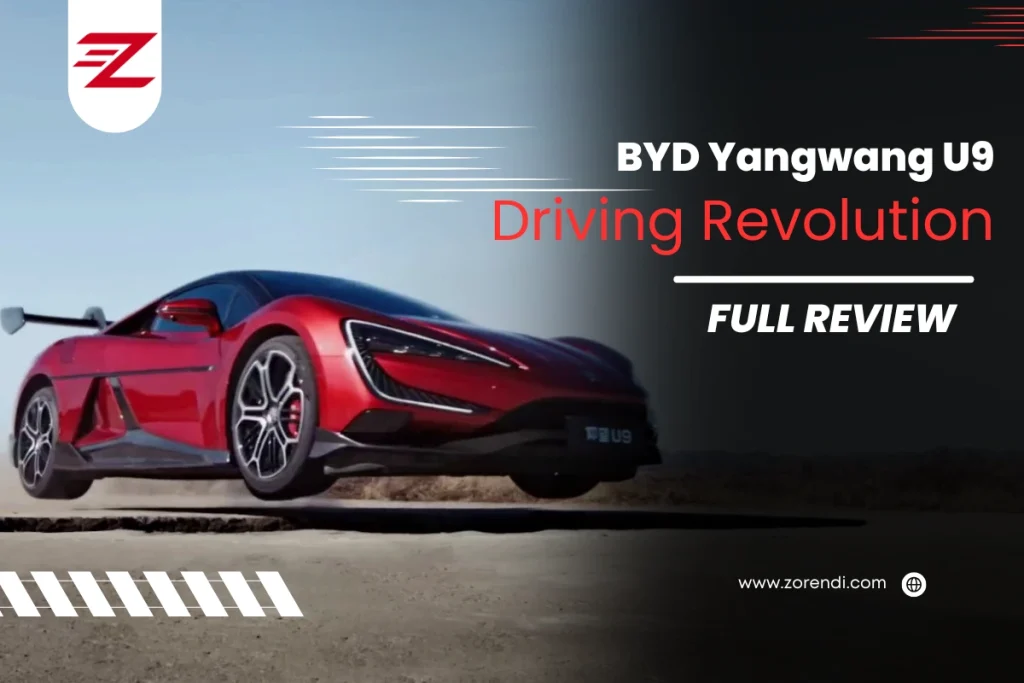
BYD equipped the U9 with its DiSus-X intelligent body control system. This setup allows the car to actively control body movement in ways that honestly look ridiculous the first time you see them.

Yes, this is the car that can jump slightly off the ground.

Sounds gimmicky. And maybe part of it is. But the system itself is extremely advanced.

The suspension constantly adjusts balance, damping, and wheel movement individually. On rough roads or uneven surfaces, the car stays surprisingly composed for something this low and aggressive.

And that matters more in Dubai than people think.

Not every road here is perfect despite the image outsiders have. You still deal with aggressive speed bumps in residential communities, uneven parking ramps, underground entrances, and occasional rough patches around construction zones.

A supercar that survives Dubai comfortably without scraping every five minutes is actually valuable.

Explore More: Cars for Sale

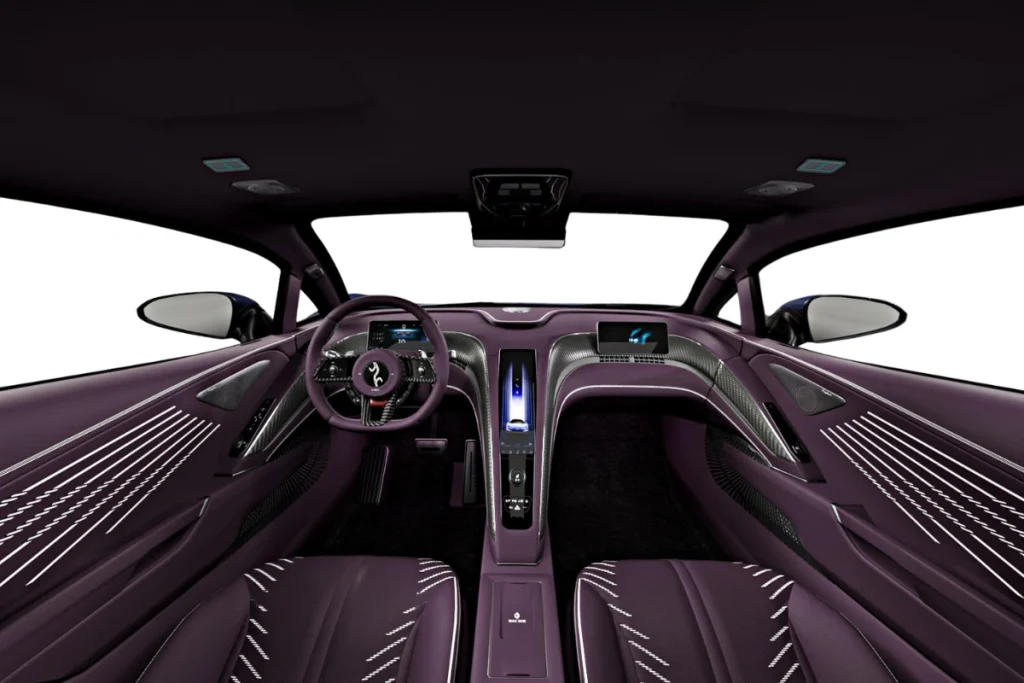
BYD Yangwang U9 interior

BYD Yangwang U9 Scores

Quick-reference scores for the BYD Yangwang U9, shown on a 10-point scale.

What ownership would realistically look like

This is the part where things become less glamorous.

Because owning an exotic EV is never just about performance.

The Yangwang U9 will probably have lower routine servicing costs than traditional V12 or twin-turbo supercars. No engine oil. Fewer moving parts. Less mechanical complexity in certain areas.

But that doesn’t automatically mean cheap ownership.

Battery cooling systems, software calibration, suspension electronics, and specialized components are expensive if something goes wrong outside warranty coverage.

And sourcing parts could become frustrating depending on regional dealer support.

That’s important.

Ferrari and Lamborghini already have established service infrastructure in Dubai. BYD’s ultra-high-performance division is still very new in comparison. Early owners are partly betting on the brand’s future support network.

Annual maintenance estimates right now are difficult to pin down accurately because the car is still rare globally, but realistically, owners should expect costs similar to other high-end EV performance cars rather than normal BYD models.

Insurance in Dubai also won’t be gentle. Especially for younger drivers.

Strengths & Weaknesses

Depreciation is the real question mark

This might be the most interesting part of the whole car.

Nobody truly knows how the Yangwang U9 will behave in the resale market yet.

Traditional exotic brands survive partly because decades of heritage protect their value. Ferrari has history. Porsche has collector credibility. Lamborghini has emotional branding people grew up admiring.

BYD doesn’t have that legacy in the supercar world yet.

So the U9’s depreciation curve could go in two completely different directions.

If the car becomes known as the first genuinely respected Chinese supercar, early models could end up holding value surprisingly well.

But if newer versions evolve rapidly and flood the market with better technology every few years, older U9 models could lose value much faster than traditional exotics.

And honestly, EV depreciation in general is still unpredictable compared to gasoline supercars.

Technology moves too quickly.

A five-year-old EV can suddenly feel ancient once battery efficiency, charging speed, or software systems improve enough.

That uncertainty is real.

So… is the Yangwang U9 actually good?

Yeah. Surprisingly good.

Not perfect. Not emotionally beautiful in the same way as an old Ferrari V12. Not iconic yet either.

But that’s not really the point of this car.

The Yangwang U9 feels important because it proves something bigger is happening in the automotive industry. Chinese manufacturers are no longer just chasing established brands from behind. They’re starting to build cars that feel genuinely ambitious, technically advanced, and globally relevant.

And the uncomfortable truth for older manufacturers is this:

Cars like the U9 are improving very, very quickly.

Maybe faster than people expected.

Continue Reading: Jetour Dashing Review in Dubai

Comments

  • No comments yet.
  • Add a comment
    Word list
    Post Your Ad Free