
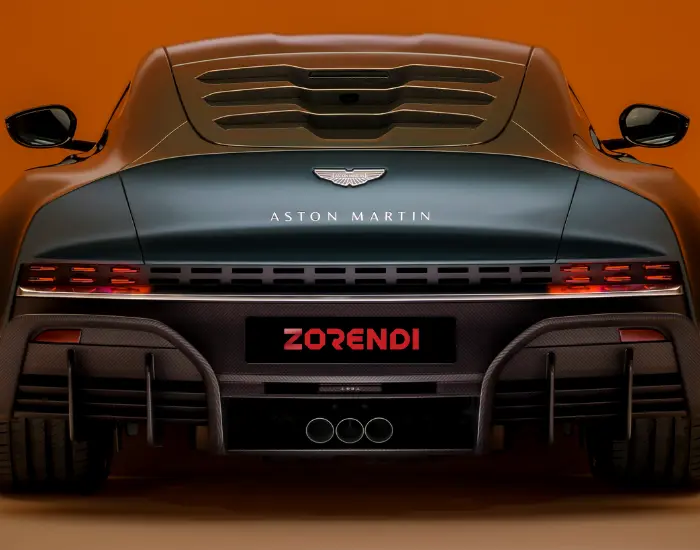
Aston Martin Valour Specifications and Features

The Aston Martin Valour is one of the rare modern sports cars to combine a twin-turbocharged V12 with a six-speed manual gearbox and rear-wheel drive. Limited to just 110 examples worldwide, it was created to celebrate Aston Martin’s 110th anniversary and deliberately focuses on driver involvement rather than chasing the fastest possible acceleration figures.

For buyers researching an Aston Martin for Sale in Dubai, the Valour is particularly unusual because its appeal comes from the combination of rarity, manual transmission, V12 power and bespoke construction. It is closer to a limited-production collector’s sports car than a conventional Aston Martin model.

Engine and Performance Unleashed

The Valour uses Aston Martin’s 5.2-liter twin-turbocharged V12, producing 715 PS and 753 Nm of torque. The engine is paired with a bespoke six-speed manual gearbox and sends its power to the rear wheels through a mechanical limited-slip differential.

The engine develops its maximum torque across a broad range, with Aston Martin describing a virtually flat torque profile in second gear from around 1,800 rpm through to 7,000 rpm. This approach allows the driver to manage the available power directly through the manual transmission rather than relying on an automatic gearbox to make those decisions.

The six-speed manual gearbox is arguably the defining mechanical feature of the Valour. Aston Martin developed the car around the relationship between the V12 and manual transmission, including an exposed gear-shift mechanism that makes the mechanical operation part of the cabin experience.

The Valour also uses a mechanical limited-slip differential. That choice fits the car’s overall philosophy: instead of removing as much driver input as possible, the drivetrain gives the driver greater responsibility for managing the rear axle.

Chassis and Handling

The Valour’s structure combines a lightweight bonded aluminium platform with full carbon-fibre body panels. Aston Martin describes it as having its most rigid body to date, while the suspension has been specifically developed with adaptive dampers, springs and anti-roll bars.

The suspension calibration is intended to provide a clear connection between the road and the driver without turning the Valour into a track-only machine. Aston Martin describes the car as a road car first, with the chassis balancing body control and compliance.

Braking hardware is also substantial. The Valour uses carbon-ceramic brakes, with 410 mm front discs and six-piston calipers. Aston Martin states that the carbon-ceramic setup saves 23 kg of unsprung weight, helping suspension control and grip.

The tyres were developed specifically for the Valour in collaboration with Michelin. The bespoke Michelin Pilot Sport S 5 specification uses a compound designed to balance dry grip, wet performance and braking response.

Exterior Design

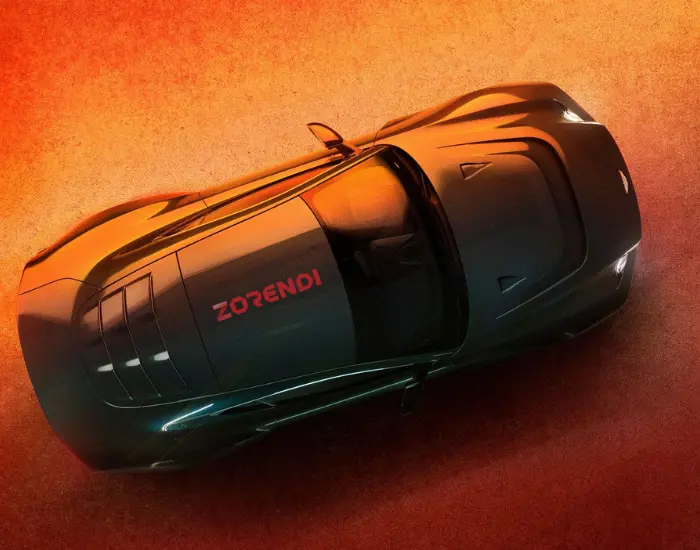
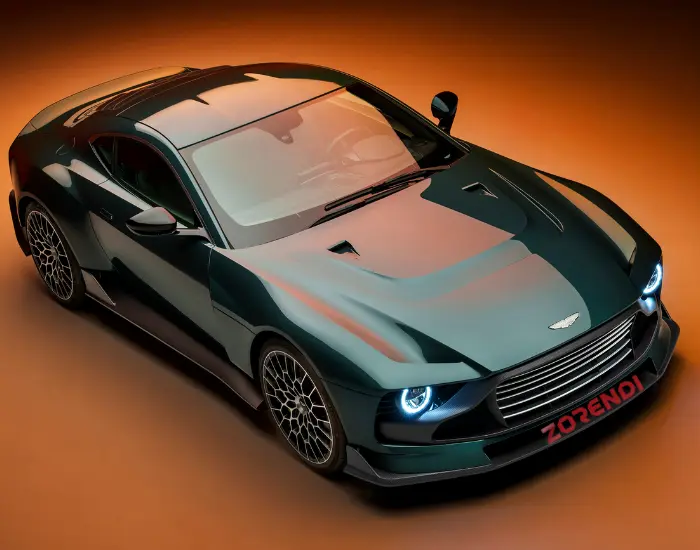
The Valour’s exterior takes clear inspiration from Aston Martin’s 1970s racing and road cars while using modern carbon-fibre construction and aerodynamic development. Its proportions, short overhangs and wide stance give it a very different appearance from Aston Martin’s regular production sports cars.

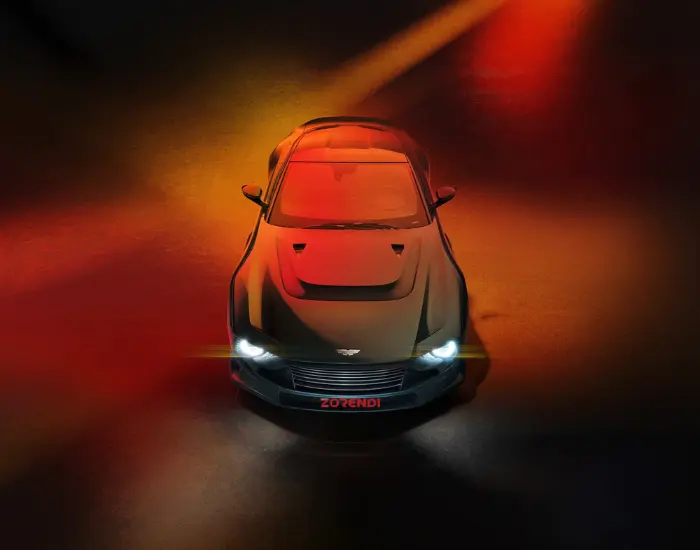
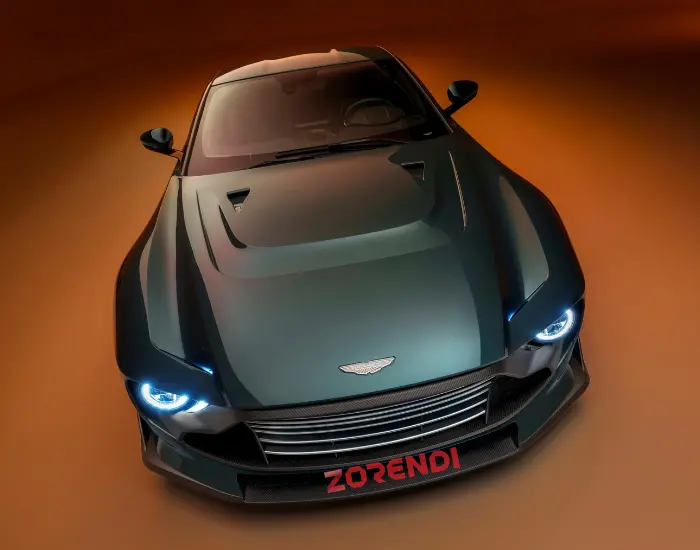
One of the most recognisable elements is the clamshell bonnet, which incorporates a horseshoe-shaped vent and twin NACA ducts. These features contribute to engine cooling while also giving the front end a distinctive visual identity.

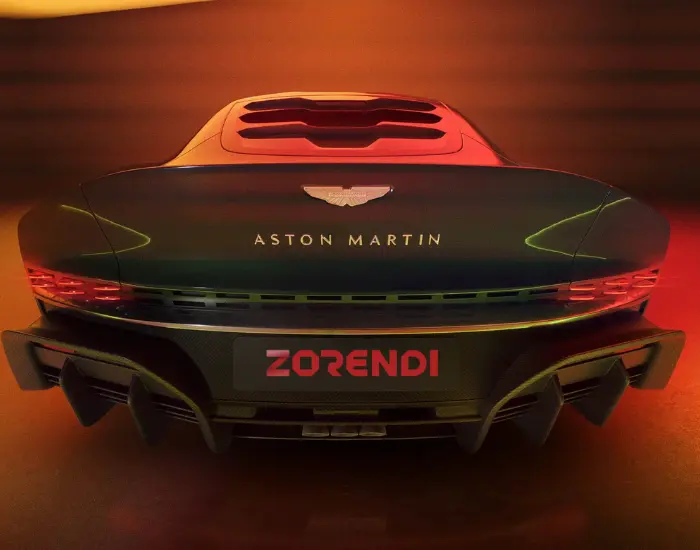
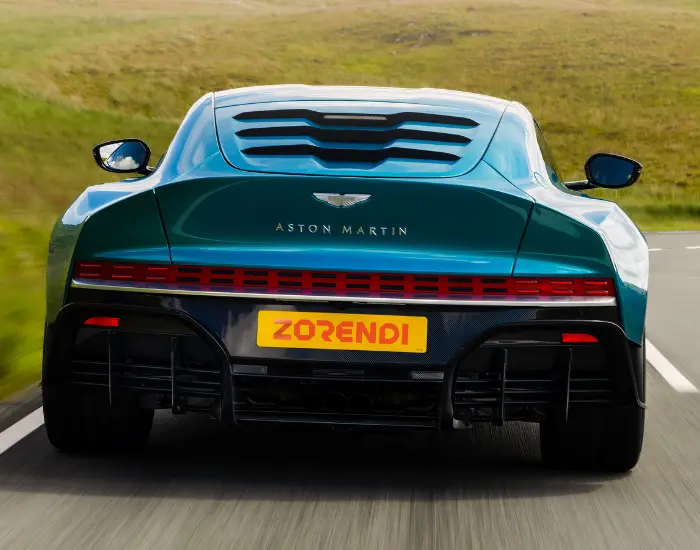
At the rear, the Kamm-tail design is both a styling reference and an aerodynamic feature. Aston Martin states that it generates significant rear downforce to help balance the car at speed. The carbon-fibre diffuser works with the front splitter to manage airflow around the vehicle.

The Valour also uses 21-inch honeycomb alloy wheels inspired by the Aston Martin Valkyrie and Victor. Twelve LED light blades, a solid aluminium rear panel and the centre-mounted triple exhaust further separate the car from more conventional Aston Martin models.

Interior

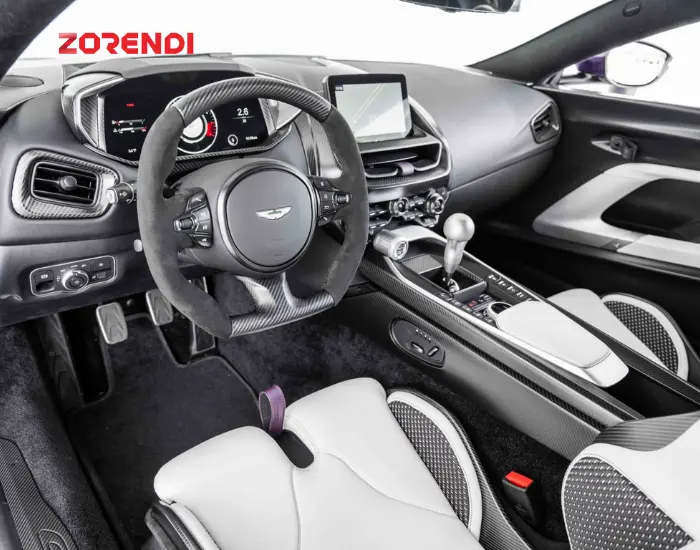
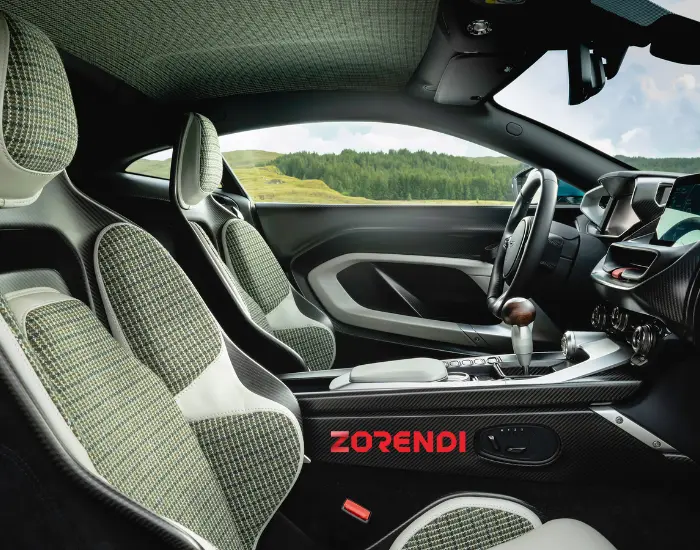
The Valour’s interior follows the same philosophy as its exterior: traditional driving elements are combined with modern lightweight materials. At the centre of the cabin is the manual gear lever and its exposed shift mechanism, making the transmission a visible part of the interior design.

Carbon fibre is used extensively throughout the cabin, including the door cards, centre console, transmission tunnel, air vents and performance seats. Leather grab handles and exposed billet aluminium add different textures without turning the interior into a conventional luxury-car environment.

Aston Martin also incorporated DBR1 tweed as a reference to the 1959 Le Mans-winning Aston Martin. This heritage element sits alongside modern materials such as Mokume carbon fibre, creating the contrast that defines much of the Valour’s interior.

The cabin is also highly configurable. Through Q by Aston Martin, customers can specify different colours, materials, tweed fabrics, cashmere, tinted carbon fibre and hand-stitched leather.

Price and Ownership Experience

The Valour was produced in an extremely limited run of only 110 cars worldwide. That production number is part of the model’s fundamental identity and places it firmly in the collector-oriented segment of the Aston Martin range.

The previous version of this article stated that the Valour cost approximately AED 2.5 million in Dubai and provided fixed figures for Q options, registration, maintenance and insurance. Those numbers have been removed because a universal current UAE price or ownership cost cannot be established from Aston Martin’s official Valour information.

The same applies to claims about individual resale premiums. A limited-production Aston Martin can behave differently from a normal production model, but future market value depends on specification, provenance, mileage, condition and collector demand.

For a buyer considering a Valour, the exact car’s documentation and specification are therefore more important than a generic price estimate. Q by Aston Martin personalisation can make individual examples substantially different from one another.

Technical Deep Dive

The Valour’s technical specification is interesting because Aston Martin deliberately avoided the usual route of adding an automatic transmission or hybrid assistance to increase performance. Instead, the car uses a 5.2-liter twin-turbo V12, six-speed manual transmission, rear-wheel drive and a mechanical limited-slip differential.

The V12 produces 715 PS and 753 Nm, while the mechanical LSD gives the rear axle a direct mechanical connection to the driver’s inputs. This combination makes the gearbox and differential central to the driving experience rather than simply supporting components behind an automated system.

The chassis uses adaptive dampers, dedicated springs and anti-roll bars, with geometry specifically developed for the Valour. Aston Martin also uses full carbon-fibre body panels over a lightweight bonded aluminium structure, reducing mass while increasing structural rigidity.

The previous article included unsupported figures such as a 45 mm shift throw, a 45% differential lock-up rate, 10-millisecond damping response and a friction coefficient of 0.7. These figures have been removed because they are not part of the official Valour specifications reviewed here.

That is important when discussing a car as specialised as the Valour. Its confirmed engineering choices already explain why it is different without needing invented measurements.

Why the Valour Matters in Dubai’s Car Scene

Dubai has a large market for high-performance and limited-production cars, but the Valour occupies a particularly narrow part of it. Its combination of V12 power, manual transmission and a 110-car production run makes it fundamentally different from high-volume performance models that can be found relatively easily in the UAE.

The manual gearbox is especially significant. Many modern high-performance cars have moved toward dual-clutch or automatic transmissions because they can deliver faster and more consistent acceleration. The Valour deliberately goes in the opposite direction, making driver involvement part of the product rather than treating it as an inconvenience.

Its design also gives it a strong collector identity. The references to Aston Martin’s 1970s cars, the DBR1-inspired interior elements and the use of carbon fibre all connect the modern car to the company’s heritage while keeping the engineering contemporary.

For Dubai collectors, that combination is arguably more important than a headline 0–100 km/h time. The Valour was designed to be rare, distinctive and mechanically engaging.

Conclusion

The Aston Martin Valour is defined less by a single performance number than by the combination of engineering decisions behind it. A 5.2-liter twin-turbo V12 producing 715 PS and 753 Nm is paired with a six-speed manual gearbox, rear-wheel drive and a mechanical limited-slip differential.

Its carbon-fibre bodywork, adaptive suspension, carbon-ceramic brakes and bespoke Michelin tyres give it the hardware expected from a high-performance Aston Martin, while the 110-unit production run gives it a level of rarity that normal production models cannot match.

The interior continues the same approach, combining exposed mechanical elements with carbon fibre, leather, DBR1-inspired tweed and Q by Aston Martin personalisation. The result is a car that connects Aston Martin’s historical design language with a modern performance platform.

For Dubai buyers and collectors, the Valour is therefore more interesting as a rare analogue-style V12 sports car than as another entry in a horsepower competition. Its defining qualities are the ones that are becoming less common: a manual gearbox, a naturally direct rear-wheel-drive layout and a production number limited to just 110 cars.

sources:

www.astonmartin.com

Frequently Asked Questions

What’s the real-world fuel economy of the Aston Martin Valour in Dubai?

I’ve averaged about 8 km/L in city driving, dropping to 6 km/L when pushing it on open roads. Expect to visit petrol stations often.

Compared to a Lamborghini Huracán or Ferrari 812, the Valour’s manual gearbox and V12 make it more engaging but less forgiving. It’s for drivers who want to work for their thrills.

It’s a two-seater with a small boot, so don’t expect to haul groceries. But for cruising or car meets, it’s perfect. Parking in tight Dubai Mall spaces can be a challenge, though.

Comments

  • Ali Rahman
    August 3, 2025 at 6:04 am

    Bro, the way you describe that gearbox has me hooked—manual V12 in Dubai traffic is the boldest flex ever. How’s it holding up in daily drives though? Not too heavy on Sheikh Zayed Road stop-and-go?

    • Mr.Amin
      September 3, 2025 at 2:19 pm

      Good question, Ali. Honestly, it’s surprisingly easy—clutch is light, gearbox is smooth, and once you get used to it, even rush-hour traffic feels engaging rather than tiring. The Valour makes every shift feel worth it.

  • SupercarSultan
    August 6, 2025 at 12:11 pm

    Only 110 units worldwide? Owning one in Dubai must feel unreal. How do people react when they see it on Sheikh Zayed?

    • Mr.Amin
      September 3, 2025 at 2:04 pm

      Bro, it’s pure chaos. Phones out, heads turning—it feels like driving a UFO through the skyline. People know it’s rare even if they don’t know the name.

  • Nasser Al Qubaisi
    August 16, 2025 at 9:07 am

    Reading this gave me goosebumps. The way you captured the Valour’s manual gearbox really highlights what sets it apart in Dubai’s sea of paddle-shift exotics. That detail about the shorter 45 mm throw compared to older Astons—that’s the kind of enthusiast knowledge you don’t get from brochures. I did wonder though, with carbon-ceramic brakes tuned that sharp, do they feel grabby in slow-speed city driving, like around JBR traffic? Or do they manage to stay smooth when you’re just cruising?

    • Mr.Amin
      September 3, 2025 at 1:39 pm

      Appreciate that, Nasser. Honestly, the carbon-ceramics are surprisingly civil at low speeds. Around JBR or Downtown traffic, they don’t have that on/off grab some other setups do. The modulation is smooth enough for daily driving, but when you push hard on the Autodrome, they transform—fade-free, consistent, and confidence-inspiring. It’s like they have two personalities depending on how you use them.

  • Hassan Al Farsi
    August 16, 2025 at 9:15 am

    Man, this write-up on the Valour hit me hard. The way you described the torque curve and that Graziano manual—pure poetry for anyone who still craves driver connection in a city where PDKs and DCTs dominate. I’ve seen your Hyper Red Valour at Marina Mall, and honestly, the retro-modern vibe had more presence than the Aventadors parked next to it. But let me ask: with Dubai’s heat and stop-go traffic, how livable is that manual gearbox day-to-day? Or is it more of a weekend/track beast for you?

    • Mr.Amin
      September 3, 2025 at 1:35 pm

      Appreciate that, Hassan. The manual’s surprisingly livable here. The clutch isn’t overly heavy, so Sheikh Zayed traffic doesn’t kill your left leg. That said, it shines most on weekend runs or track days at Autodrome. For me, it’s worth the trade-off—having that raw connection daily makes every drive feel special.

Add a comment
Post Your Ad Free