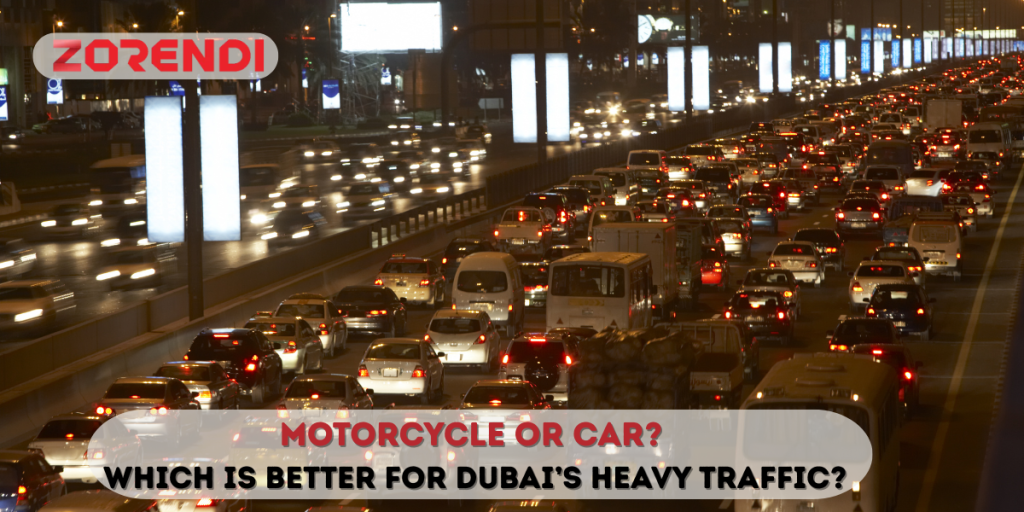
It’s early morning, the aroma of freshly brewed coffee lingers in the air, and the sound of honking cars creates a chaotic symphony on Dubai’s bustling streets. As I sit behind the wheel or grip the handlebars of my motorcycle, one question constantly nags at me: in Dubai heavy traffic, which option truly gets me to my destination faster, more comfortably, and more economically?
Motorcycle or car? As an Emirati navigating the vibrant yet congested roads of Dubai daily, I’ve decided to dive deep into this dilemma. In this article, I’ll use detailed statistics, technical insights, and real-world experiences to help you make the best choice for commuting in Dubai’s traffic.
Dubai, this dazzling city with its towering skyscrapers, attracts millions of visitors and residents yearly. According to the Dubai Roads and Transport Authority (RTA) 2024 report, the number of registered vehicles in Dubai has surpassed 2.1 million, marking a 12% increase from 2020.
During peak hours, major roads like Sheikh Zayed Road and Al Khail Road often drop average speeds below 15 km/h. This is where choosing between buy motorcycle in Dubai or a car becomes a critical decision.
When I’m stuck in traffic, the scorching Dubai sun burns my skin, and the sound of car engines fills my ears. But the breeze flowing through my helmet gives me an unmatched sense of freedom when I’m on my motorcycle. Let’s break down both options from every angle.
Motorcycle or car? As an Emirati navigating Dubai’s vibrant yet congested roads daily, I’ve decided to dive deep into this dilemma. In this article, I’ll use detailed statistics, technical insights, and real-world experiences to help you make the best choice for commuting in Dubai’s traffic.
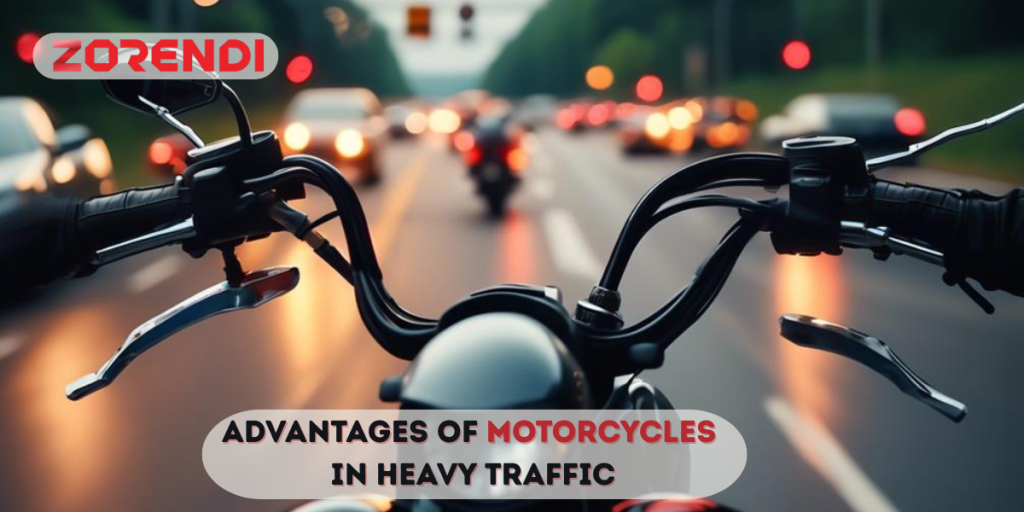
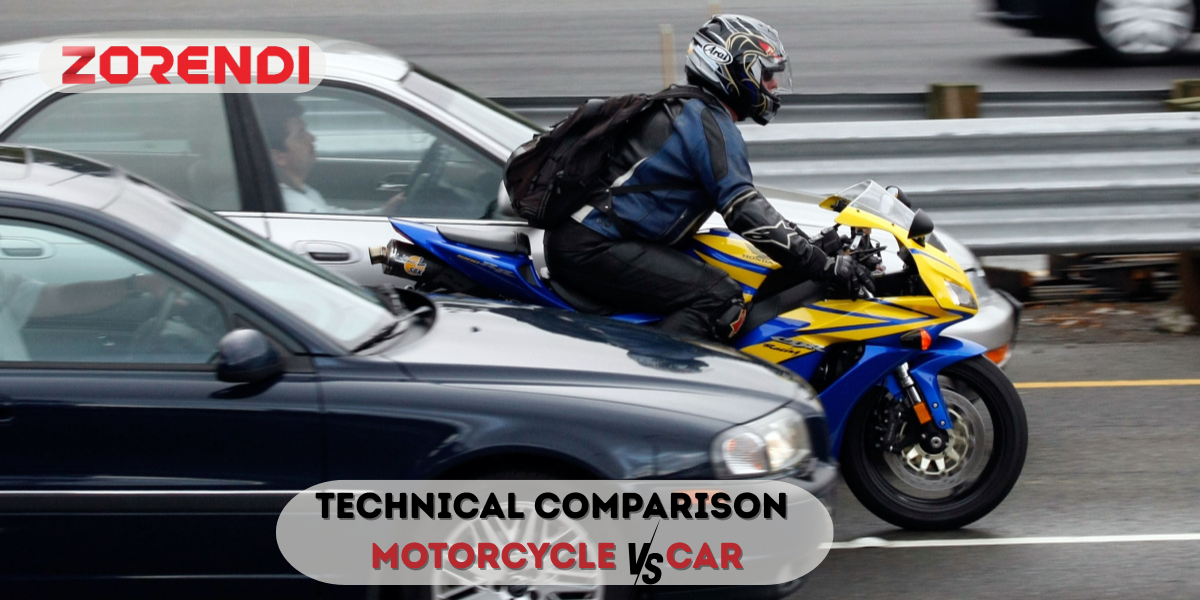
Motorcycles can weave through stalled cars with ease. For instance, on Sheikh Zayed Road, where cars might be stuck for 30 minutes, a motorcycle can cover the same distance in under 10 minutes.
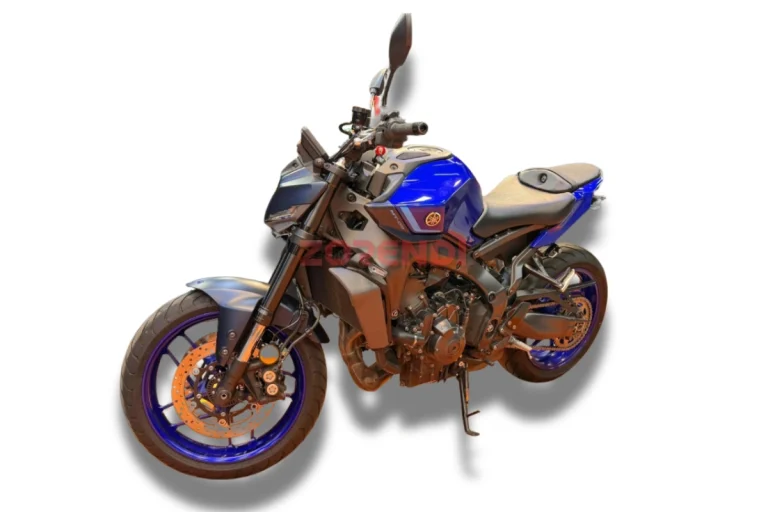
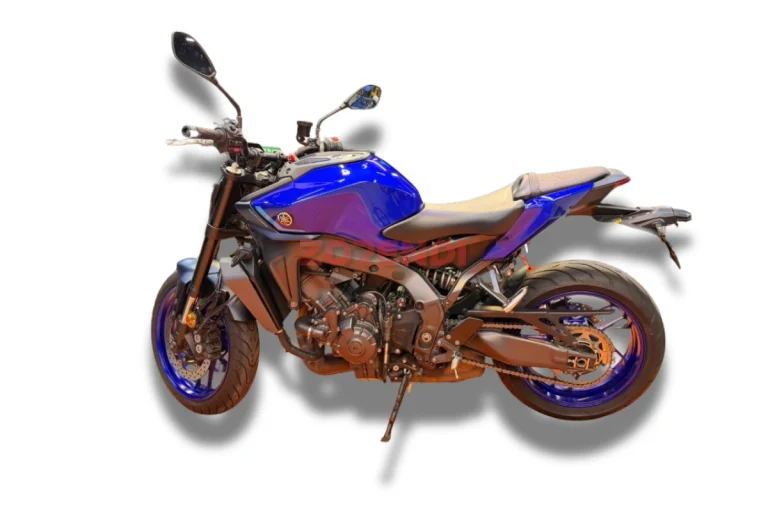
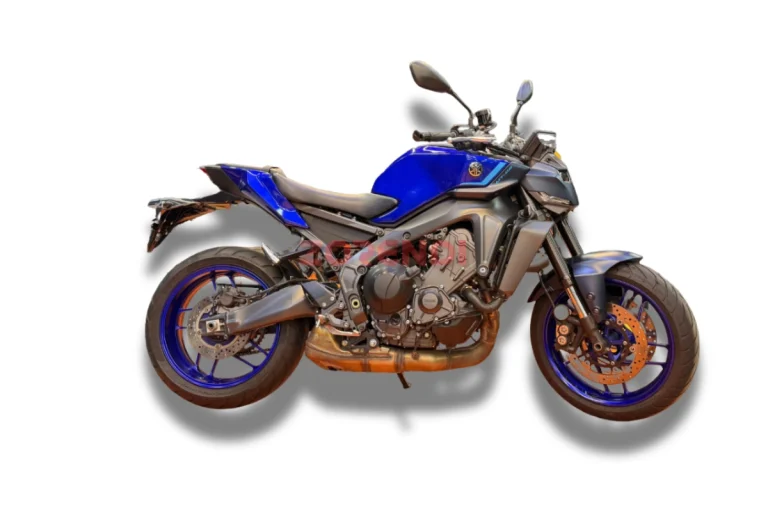
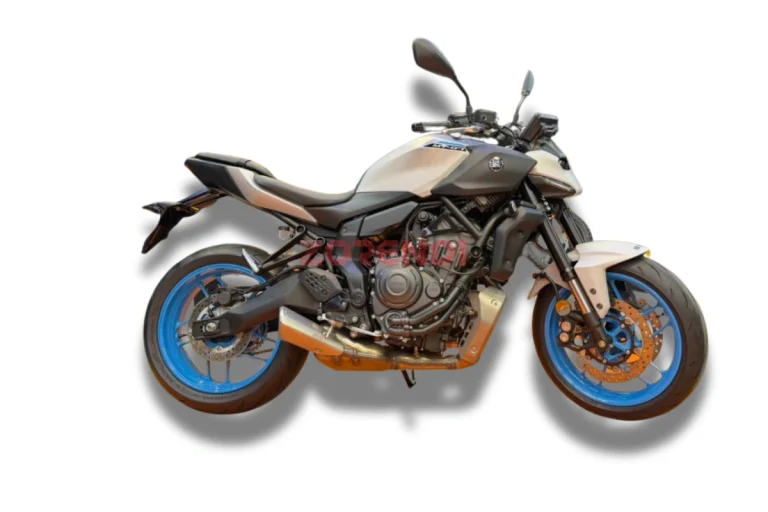
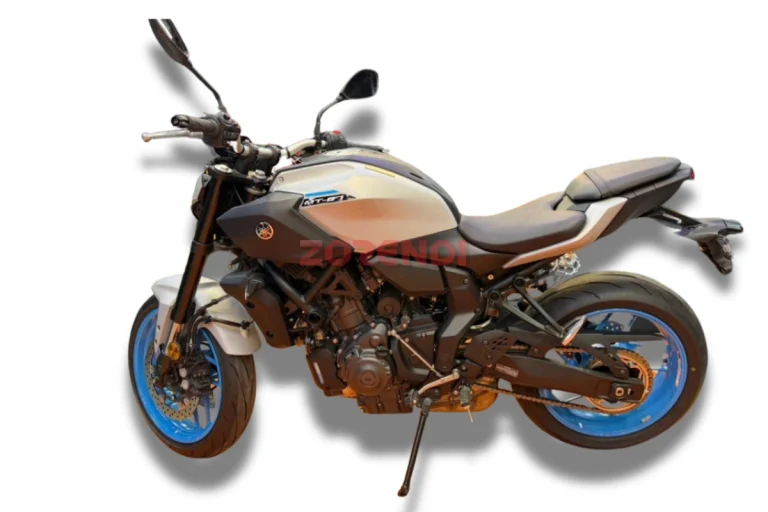
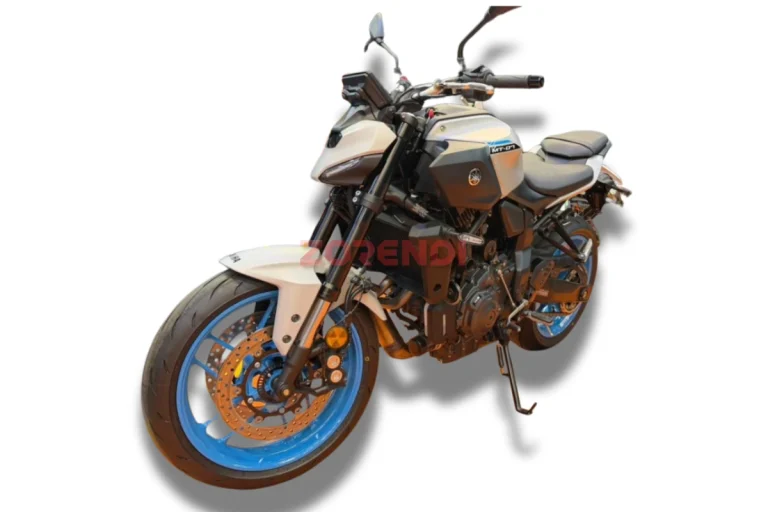
Fuel costs for a motorcycle like the Yamaha MT-07, with an average consumption of 4.2 liters per 100 km, are significantly lower than a sedan like the Toyota Camry, which consumes 7.5 liters per 100 km.
Finding parking in Downtown Dubai is like searching for treasure! Motorcycles require less space and can often squeeze into tight parking spots.
But it’s not all smooth riding. Dubai’s summer heat, often reaching 45°C, can make motorcycle riding exhausting. Sweat beads on my forehead, and the helmet sometimes feels stifling.
Safety is another concern. According to RTA’s 2024 report, 68% of motorcycle accidents in Dubai result from high speeds or failure to maintain safe distances.
Motorcycle Model | Approx. Price (AED) | Fuel Consumption (L/100 km) | Top Speed (km/h) |
|---|---|---|---|
Yamaha MT-07 | 35,000 | 4.2 | 220 |
Honda CBR500R | 28,000 | 3.8 | 180 |
Kawasaki Ninja 400 | 22,000 | 4.1 | 190 |
Prices sourced from official Dubai dealerships as of January 2025.
When it comes to cars, comfort and safety come to mind first. Inside the cool cabin of a Lexus ES with its powerful air conditioning, I feel shielded from Dubai’s blazing heat. But is this comfort worth enduring Dubai’s heavy traffic?
Cars offer advanced air conditioning, comfortable seats, and high-quality sound systems, creating a luxurious experience. For example, the Toyota Land Cruiser’s advanced suspension minimizes fatigue even in long traffic jams.
Cars are safer than motorcycles. RTA data shows a 1.2% fatality rate in car accidents compared to 3.8% for motorcycles.
Cars offer advanced air conditioning, comfortable seats, and high-quality sound systems, creating a luxurious experience. For example, the Toyota Land Cruiser’s advanced suspension minimizes fatigue even in long traffic jams.
However, cars have their downsides. When I’m stuck in Dubai Heavy Traffic on Sheikh Mohammed Bin Zayed Road, the incessant honking and exhaust fumes can be maddening.
Maintenance costs are also significant. For instance, the annual service for a Mercedes-Benz C-Class can cost up to AED 4,500, while a motorcycle like the Honda CBR500R costs around AED 1,800.
Car Model | Approx. Price (AED) | Fuel Consumption (L/100 km) | Top Speed (km/h) |
|---|---|---|---|
Toyota Camry | 98,000 | 7.5 | 210 |
Nissan Patrol | 210,000 | 12.5 | 200 |
Lexus ES | 165,000 | 6.8 | 220 |
Prices sourced from official Dubai dealerships as of January 2025.
Criterion | Motorcycle | Car |
|---|---|---|
Travel Time in Traffic | 50% faster during peak hours | Slower, especially in peak traffic |
Fuel Costs | 3-4 liters per 100 km | 6-12 liters per 100 km |
Maintenance Costs | AED 1,500-2,500/year | AED 3,500-6,000/year |
Safety | Higher risk (3.8% fatality rate) | Safer (1.2% fatality rate) |
Comfort in Heat | Less (exposed to sun) | More (air-conditioned cabin) |
When I first bought my Kawasaki Ninja 400, the thrill of speed and freedom hooked me instantly. But after a few months, the summer heat and safety concerns made me consider buy car in Dubai.
Now, owning both a Toyota Camry and a motorcycle, I choose based on the situation: for quick trips in the city center, my motorcycle is my go-to. For family outings or hot days, the car’s unmatched comfort wins.
Choosing between a motorcycle and a car for Dubai Heavy Traffic depends on your needs, lifestyle, and priorities. If speed, cost-efficiency, and agility are key, a motorcycle is ideal, especially for short city commutes. However, if safety, comfort, and cargo capacity matter more, a car is the better choice. My advice?
If you’re new to riding, start with an affordable motorcycle like the Honda CBR500R for quick trips, and opt for a comfortable car like the Toyota Camry for longer journeys. Whichever you choose, Dubai’s bustling streets will always keep you on your toes!
Word list
×
Dave36
May 23, 2025 at 8:52 pmI’ve tried both a motorcycle and a car in Dubai traffic. The motorcycle is definitely faster, especially in peak hours, and cheaper on fuel. But, in the summer heat, a car with air conditioning feels way more comfortable. It really depends on the situation, but both have their perks!