
Ferrari Luce and the Difficult Test of Entering the Electric Car World
- Car Blog
- Car Review
-
Jun 02
-
16 min read
- Share post
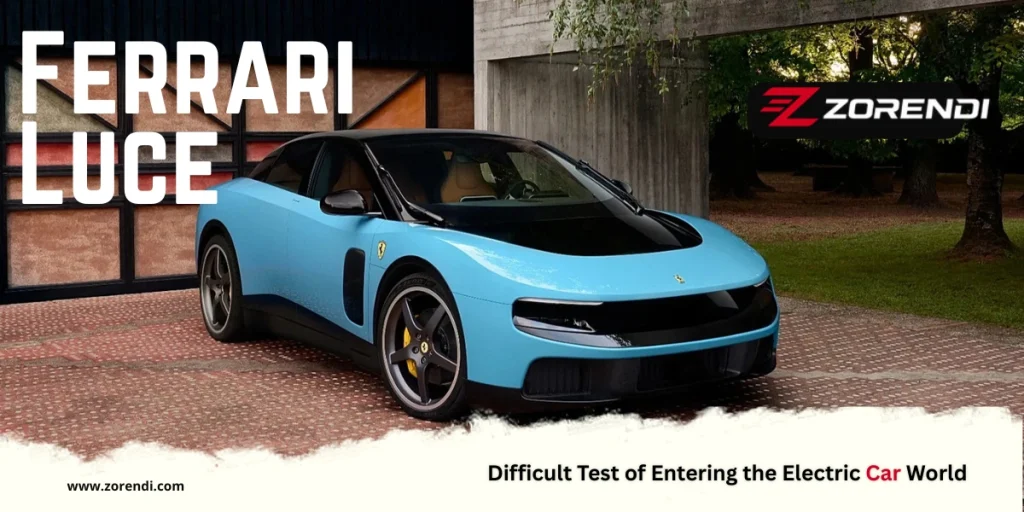
The introduction of the Ferrari Luce is not just the unveiling of a new model. For Ferrari, this car feels like a turning point; a place where a well-known brand with a long history of building emotional petrol-powered cars now wants to enter a path that many of its fans still do not fully accept. The fall in Ferrari shares after the introduction of this model was not only a momentary market reaction either, but a sign of a bigger hesitation; a hesitation about whether Ferrari can enter the world of electric cars without losing part of its identity.
The purpose of this article is not to simply praise or criticize the Ferrari Luce. The main issue is to understand why the introduction of a new car from a brand like Ferrari, instead of creating full excitement, caused concern among investors and discussion among car enthusiasts. To judge fairly, several angles need to be seen; the car’s design, its place in Ferrari’s history, market reaction, pricing, and the question of who the real customer for such a model is.
After this article, the reader should be able to have a clearer picture of the story. Not only know why Ferrari shares fell, but also understand what this fall says about the future of luxury electric cars, fan loyalty, and the market’s sensitivity toward the change of direction by major brands.
Ferrari Luce Specifications & Key Technical Details
A clean technical section for readers who want the main specs of Ferrari’s new electric model in one place. This layout highlights the most important figures while keeping the presentation premium, readable, and visually sharp.
Luce is not just another Ferrari launch. It represents Ferrari’s move into a segment where performance alone is not enough. The market is also judging whether the brand can keep its emotional value, exclusivity, and driving identity in an EV format.
Some figures shown here are based on widely reported early information and launch coverage. Final official production specifications may be updated later by Ferrari.
Ferrari Luce Analysis; Beyond the News of Ferrari’s Share Price Drop
To examine the Ferrari Luce, one should not rely only on the share price drop number or the first reactions. The news of the 8 percent fall in shares is important, but the real value of the content is formed when we look behind this number. Why did the market react this way? Was the concern about low sales of an electric car, or fear of Ferrari changing its character? This is exactly where the article must move away from repeating the news and reach analysis.
At first glance, introducing an electric Ferrari may seem natural, because most luxury automakers have moved toward electrification. But Ferrari is different from other brands. A Ferrari customer is not only looking for acceleration or technology. Engine sound, the mechanical feel of driving, the rarity of the models, and the emotional connection with the brand’s history matter to them. Therefore, when a car like the Luce is introduced, the main question is not only how much battery capacity it has or how quickly it accelerates. The more important question is whether this car still feels like a Ferrari or not.
The value of this article is exactly at this point. It is not supposed to place a few lines from news reports next to each other. The subject must be examined from the angle of the market, investor behavior, the mindset of luxury car buyers, and the risk of changing a brand’s direction. For example, if an ordinary electric car receives a cold reaction, the issue may only be the product. But when this happens to Ferrari, the discussion becomes related to brand credibility, customer loyalty, and the future of its entire electrification strategy.
Read More: Ferrari for sale in Dubai
The Credibility of Ferrari Luce Analysis and Why Market Reaction Matters
For the analysis of the Ferrari Luce to be reliable, we need to separate the emotional reaction of fans from real market signals. Not all criticism has the same value. Some people simply did not like the appearance of the car, some are worried about Ferrari moving away from its traditional personality, and another group looks at the issue from an investment angle. Correct analysis is formed when these perspectives are separated from each other.
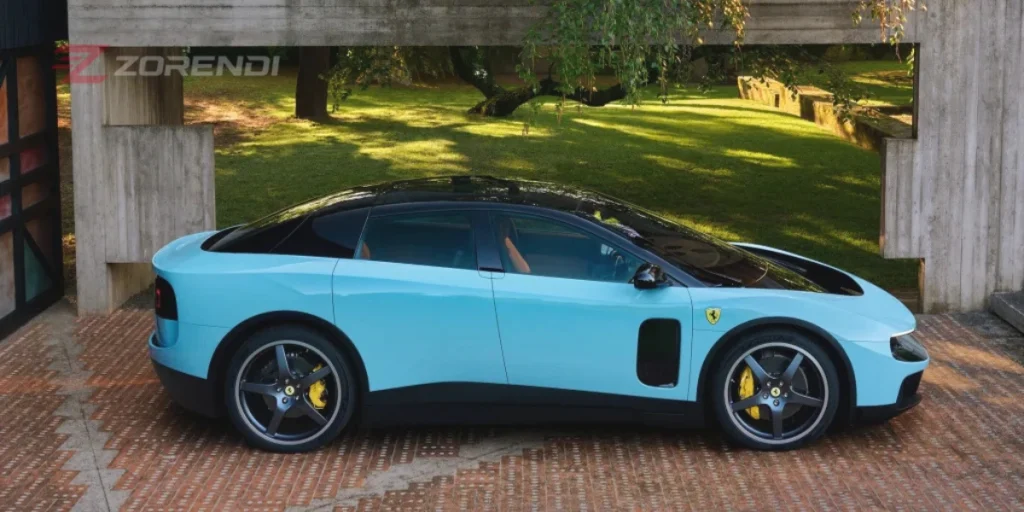
There are a few reliable points in this story. The Luce has been introduced as Ferrari’s first fully electric car, and this alone creates a lot of sensitivity. According to a Reuters report, Ferrari shares in Milan fell 8.4 percent after the unveiling of this car, and the reaction from critics and investors was cold. The Guardian has also referred to the car’s different design, its price of around 640 thousand dollars, its 530-kilometre range, and its 0 to 100 acceleration of 2.5 seconds. These numbers help the discussion move forward based on more than personal opinion.
On the other hand, every share price drop should not be seen as a definite sign of failure. The market sometimes reacts cautiously to major changes, especially when a brand like Ferrari enters a segment that is distant from its past identity. For this reason, the main judgment in this article is based on a combination of several factors; technical specifications, brand position, investor reaction, Ferrari’s history with controversial changes, and the question of whether the Luce can attract new customers or only push older fans further away.
Ferrari Luce vs Key Electric Performance Rivals
A market-focused comparison of Ferrari Luce against high-end electric rivals. This section looks beyond raw figures and shows how Ferrari’s first full EV compares in brand identity, usability, performance focus, and buyer appeal.
Where Ferrari Luce Wins
Ferrari Luce has the strongest emotional brand advantage in this comparison. Even if rivals can match or beat it on certain numbers, none of them carry the same pressure, history, and collector interest as Ferrari’s first full EV.
Where Rivals Feel Safer
Porsche, Lucid, Rolls-Royce, Lotus, and Rimac already have clearer EV identities. Their buyers know what to expect. Luce has to prove that an electric Ferrari can still feel special beyond acceleration figures.
Market Verdict
Luce is not competing only as an electric car. It is competing as a Ferrari. That makes the comparison harder, because the market will judge its design, sound, emotion, exclusivity, and resale story as much as its technical data.
User Experience and the Human View of Ferrari Luce
A reader who comes across our article wants to understand the Ferrari Luce not only from the perspective of the market and investment, but also from a human and tangible angle. For that reason, this section tries to provide a clear picture of the user experience: what does someone feel when they sit behind the wheel of the Luce? Has the sense of being a Ferrari, the excitement, and the pleasure of driving been preserved, or does it feel more like an ordinary luxury electric car?
For this purpose, examining driving test reports and critic feedback is important. Critics have pointed out that the acceleration and technical performance of the car are still at Ferrari’s high level, but the engine sound and traditional mechanical feeling are less present. Such information is valuable for a real reader, because they can decide based on it whether this model suits their personal taste or not.
The article also offers practical recommendations for the reader. For example, if you are planning to see or pre-order the car, it is better to experience a test drive and carefully compare the difference between Ferrari’s electric and petrol models. This simple but useful point takes the value of the article beyond just news and numerical analysis, and strengthens the human and real feeling of the content.
In the end, the purpose of this section is to create real satisfaction and learning for the audience. After reading it, the reader should be able to have a more open and confident view about the place of the Luce in the world of luxury electric cars and feel that the article has answered their needs.
Final Summary of Ferrari Luce and Lessons for Luxury Electric Car Enthusiasts
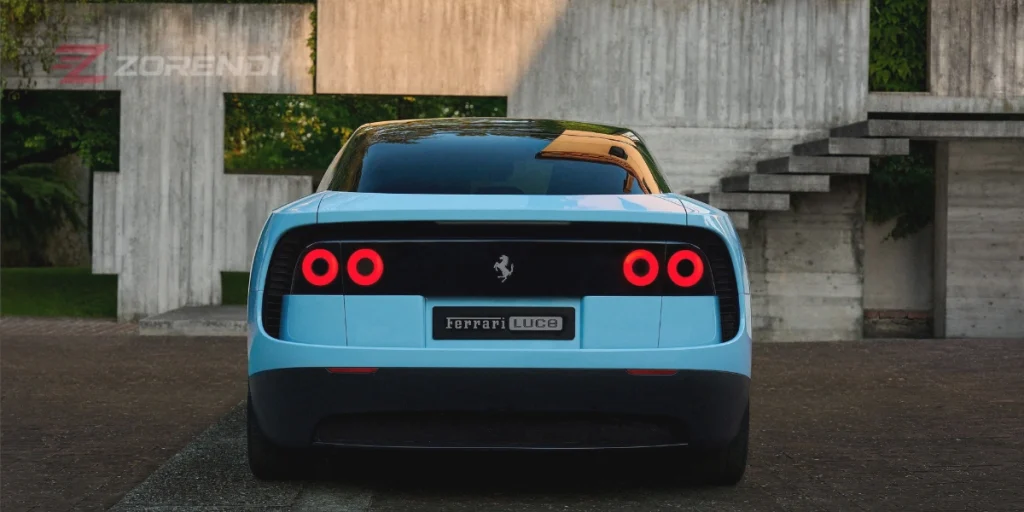
The Ferrari Luce is an example of the challenges facing luxury brands on the path to electrification. This article has tried to combine information, analysis, and user experience and provide a fair and human perspective. The important point is that the purpose of the content was not simply to attract search engines, and all examples and analyses are based on data, reports, and real user experience.
The key points from examining the Luce are:
Ferrari’s introduction of the Luce caused a drop in its share price, but this fall is more a sign of the market’s reaction to the brand’s change of direction than product failure.
Accurate analysis includes technical specifications, design, brand position, and investor behavior, not just repeating the news.
Human and reader-focused experience is important for deciding whether to buy or pre-order, and includes examining the driving feel, loyalty to the brand, and comparison with petrol models.
The content is shaped based on research, evidence, and real user experience, and avoids false information or automation without added value.
After reading this article, the reader should be able to have a clear and realistic picture of the Luce and its impact on Ferrari and the luxury electric car market, and feel that their decisions are based on reliable and human analysis.
Ferrari Luce Advantages & Drawbacks
A clear look at where Ferrari Luce feels strong, where it raises questions, and why its market reaction matters for luxury EV buyers.
Advantages
What makes Luce important
Reported 0–100 km/h acceleration of around 2.5 seconds keeps Luce in the high-performance Ferrari conversation.
With a reported range of around 530 km, it is positioned as more usable than a purely weekend-focused exotic car.
Its historical position as Ferrari’s first full EV may give it long-term collector interest beyond normal product demand.
The five-seat positioning gives Luce a wider use case than many traditional Ferrari models.
Drawbacks
What buyers may question
The reported price of around $640,000 puts Luce in a bracket where buyers expect more than strong EV numbers.
Some traditional Ferrari buyers may question whether an EV can deliver the same emotional connection as petrol models.
The early share-price reaction shows that investors are not fully relaxed about Ferrari’s EV direction yet.
Until real customer deliveries, resale behavior, charging experience, and long-term demand become clearer, Luce remains a calculated risk.
Ferrari Luce is not being judged like a normal EV. Buyers and investors are watching whether Ferrari can keep its brand emotion while entering a quieter, more technology-led segment.
Frequently Asked Questions About Ferrari Luce and Ferrari’s Share Price Drop
What exactly is the Ferrari Luce?
The Ferrari Luce is Ferrari’s first fully electric car, and for this reason it is not considered just a new model in the brand’s production line. This car marks the beginning of a sensitive stage for Ferrari; a stage where the brand must prove that it can enter the world of electric cars without losing its original personality.
Why did the introduction of the Ferrari Luce cause Ferrari shares to fall?
The fall in Ferrari shares was more related to the cautious reaction of the market. Investors became concerned that Ferrari’s entry into the electric car segment, especially with a design and position different from its traditional models, could affect the brand’s identity and customer demand. This fall does not necessarily mean the Luce has failed, but it shows that the market still does not have full confidence in Ferrari’s electrification path.
Does the Ferrari Luce still feel like a real Ferrari?
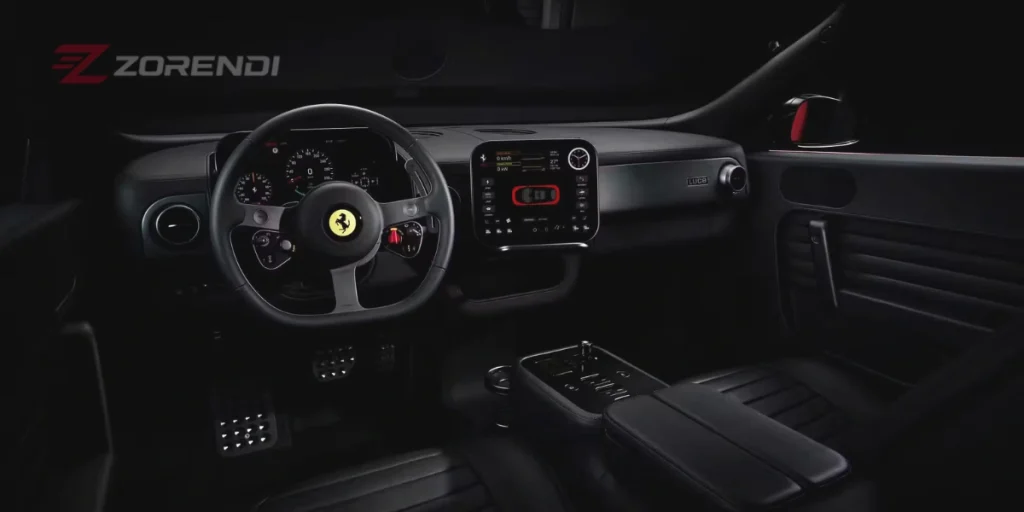
This is the most important question for fans of the brand. In terms of technical performance, the Luce is expected to be at a very high level, but the feeling of being a Ferrari is not measured only by acceleration and numbers. Engine sound, the driver’s connection with the car, emotional design, and the history of petrol-powered models are all part of the Ferrari experience. For this reason, the Luce needs to be more than just a fast electric car.
Are the criticisms of the Ferrari Luce fair?
Part of the criticism is understandable, because Ferrari has always been known for loud engines, aggressive design, and a sporty personality. When an electric, four-door, and different model is introduced, it is natural that some fans react negatively. But the final judgment should be made after examining the driving experience, build quality, real customer demand, and sales performance.
Does the fall in Ferrari shares mean the Luce has failed?
No, at least such a conclusion cannot be made yet. The stock market usually reacts quickly to major changes, especially when the subject is an expensive and sensitive brand like Ferrari. The share price drop is more a sign of initial concern than a final result of sales or car quality.
Who is the real customer for the Ferrari Luce?
The Luce customer is probably not exactly the same as the traditional buyer of models like the 812 or SF90. This car may be more attractive to buyers who care about technology, more daily usability, more space, and the special nature of owning an electric Ferrari. At the same time, such a customer still expects the car to convey rarity, power, and the credibility of the Ferrari brand.
Is the high price of the Ferrari Luce justifiable?
A high price is not a new subject for Ferrari, but in the case of the Luce it has become more sensitive. That is because the buyer must accept paying an amount at the level of special Ferrari cars for an electric vehicle. If the Luce is seen only as a luxury EV, its price becomes harder to justify. But if it can deliver a truly special and different experience from other electric cars, its price position looks more logical.
Has Ferrari moved away from its original identity with the Luce?
This concern is real, but the answer is not definite. Ferrari has had controversial changes in the past as well, from hybrid models to the Purosangue. Some changes were first met with doubt, but later found their place in the market. The Luce can also become part of the brand’s future instead of a threat, if it can preserve Ferrari’s driving quality and sense of being special.
Is buying or pre-ordering the Ferrari Luce logical?
For collectors and special buyers, the Luce can be attractive because it is the first fully electric Ferrari, and this gives it historical value. But for someone looking for the classic Ferrari experience, it is better not to rush before making a decision. Reviewing driving tests, the reaction of the used market, and the level of acceptance among real customers is very important.
What does the Ferrari Luce show about the future of luxury electric cars?
The Luce shows that electrification for luxury brands is not just a technical change. The main issue is how a brand can combine new technology with its old heritage. If this balance is built correctly, luxury electric cars can succeed. If not, even a powerful brand like Ferrari can face a tough market reaction.
Read More: BYD Yangwang U9 | The Supercar That Doesn’t Feel Like a Joke

I’ve been working in the automotive and digital space for over 10 years, focusing on how vehicles are presented, evaluated, and sold online.
The listings and articles here are based on real experience with the Dubai market, from pricing trends to common issues in used cars and motorcycles.
Over time, I’ve learned that small details matter. A clean-looking vehicle doesn’t always mean a good deal.
Every listing is reviewed with a practical mindset, and every article is written to help you make a better decision, not just a faster one.
The goal is simple: give you clarity before you spend your money.
