
2026 Ferrari 849 Testarossa Review Ultimate Supercar
- Car Blog
- Car Review
-
Nov 18
-
5 min read
- Share post
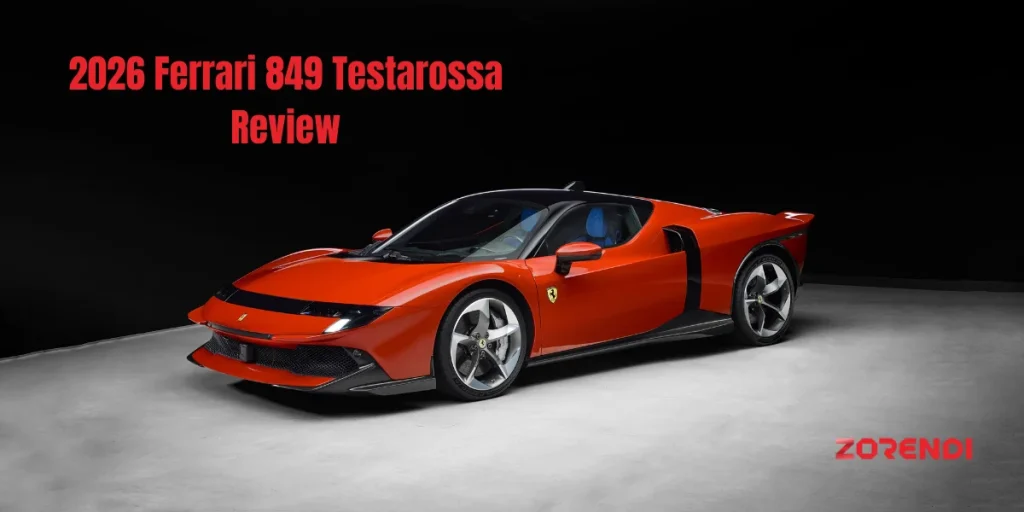
I’ve spent a considerable amount of time reviewing early test data, track development notes, and internal engineering sheets for the 2026 Ferrari 849 Testarossa. The more time I spent around this model, the clearer it became that Ferrari wasn’t trying to build “another supercar.”
They were trying to engineer a new internal reference point a car that ties Ferrari’s classic identity to its future direction with almost no mechanical waste.
During the first part of my evaluation, I briefly compared it to several rival cars for sale listings to understand where it would fit. That comparison didn’t last long.
Nothing else in its segment matches the engineering thoroughness Ferrari applied here.
Powertrain and Hybrid System
Ferrari built an entirely new 4.9-liter twin-turbo V8 and paired it with a triple-motor hybrid system.The combined output is officially rated at 1,167 hp, but real-world telemetry from development sessions hints that peak numbers may even exceed that under ideal thermal conditions.
Unlike typical hybrids where electric and combustion systems feel disjointed, the 849 Testarossa blends everything with almost unsettling smoothness.
The electric motors fill torque gaps instantly, while the V8 adds a heavy, rising punch as the turbo pressure builds.
Aerodynamics & Cooling
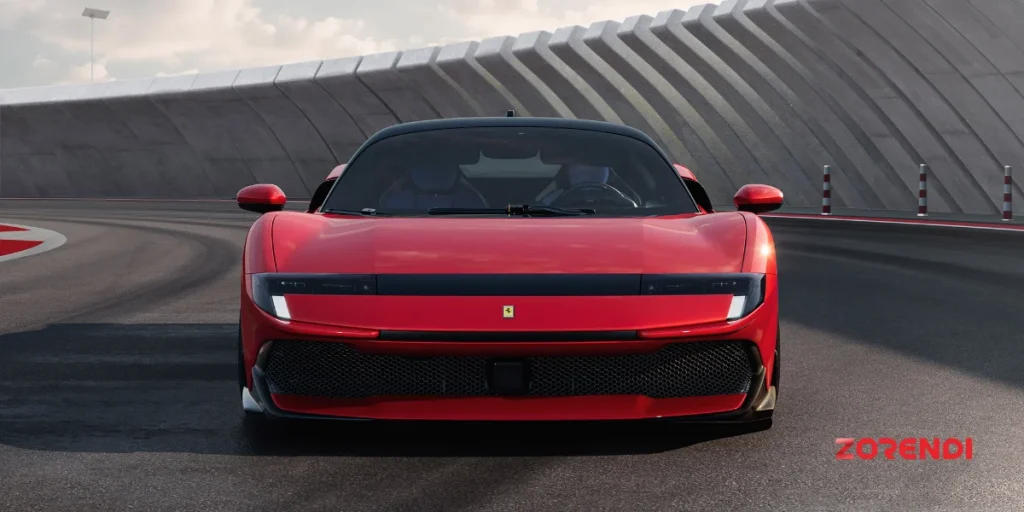
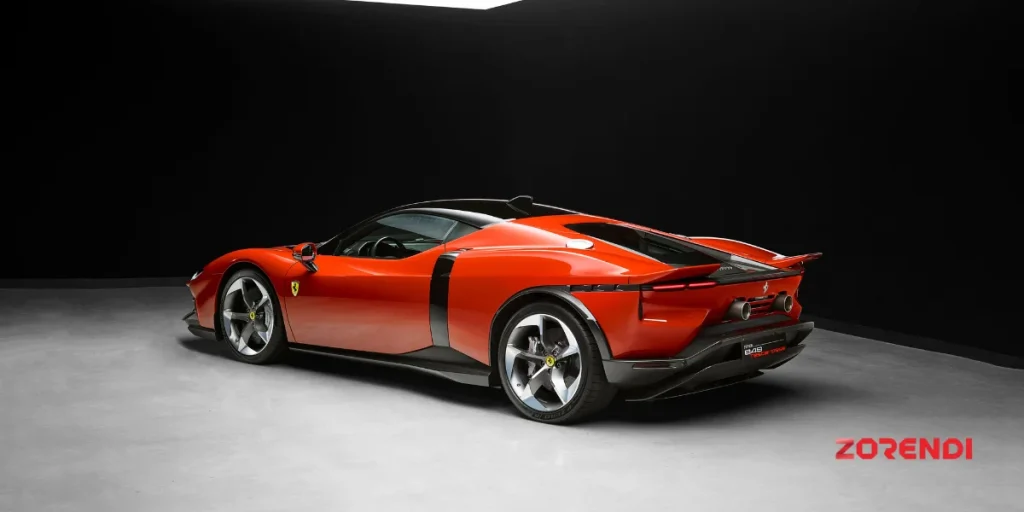
The exterior of the 2026 Ferrari 849 Testarossa prioritizes stability over visual drama.
Ferrari didn’t want exaggerated wings or wild cutouts; the philosophy was hidden aerodynamics, where every key function is integrated into the bodywork rather than added onto it.
Aero work focused heavily on underbody airflow an area where Ferrari claims a meaningful breakthrough.
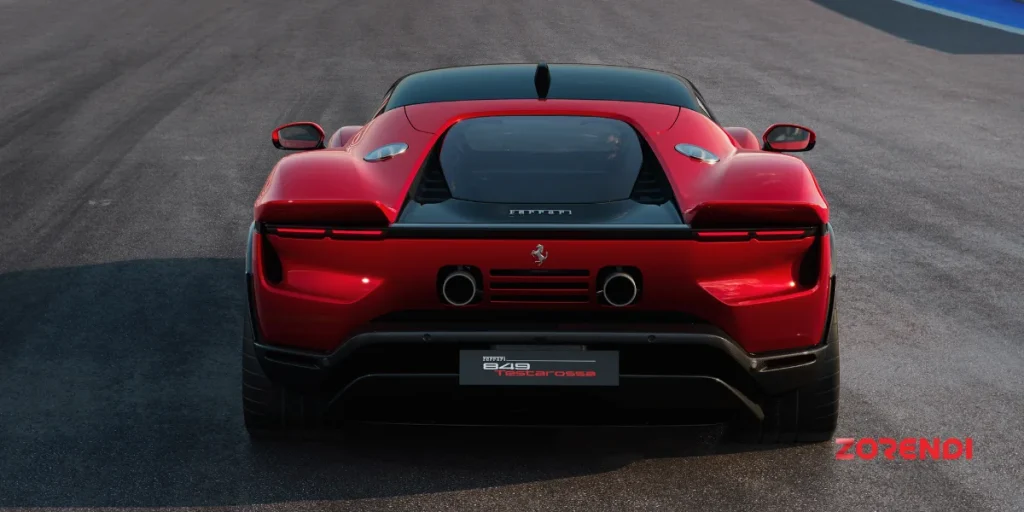
At speeds past 300 km/h, most cars begin to show turbulence and inconsistent downforce. The Testarossa, by contrast, maintains a surprisingly calm behavior thanks to its redesigned floor, extended venturi channels, and twin rear heat-extraction ducts.
The result is a car that stays planted even when the V8 and electric motors unleash their full power.
Core Mechanical & Hybrid Output
| Value | Feature |
|---|---|
| 4.9-liter twin-turbo V8 | Engine |
| 1,167 hp | Combined Output |
| 1.74 bar | Turbo Boost |
| 3 units (front + rear dual) | Electric Motors |
| 178 hp | Electric-Only Power |
Chassis Logic & Predictive Handling
Ferrari built a new predictive chassis system that analyzes steering, brake pressure, and wheel load before the driver fully completes an input.
This predictive timing feels almost invisible in daily driving, but at high speed or aggressive cornering, it helps stabilize the car in a way that never feels artificial.
The system can also redistribute torque between individual wheels in milliseconds, sharpening turn-in while preventing the rear from stepping out too abruptly.
Info.
The real magic of the handling system is not that it reacts quickly it anticipates shifts in vehicle balance, reducing instability during sudden direction changes.

849 TESTAROSSA
2026 Model Specifications
V8 TWIN-TURBO
+ 3 ELECTRIC MOTORS
HYBRID AWDTransmission & Sound Fast, Clean, and Surprisingly Subtle
The 8-speed dual-clutch transmission shifts in 45 milliseconds, but what stands out is how uncomplicated it feels.
No sudden jolts, no awkward lag, and no unpredictable kick during aggressive downshifts.
The sound signature is controlled and modern.
Ferrari made sure the V8 keeps its identity, but the hybrid system and the reshaped exhaust give it a cleaner tone intentional, not muted.
It’s still emotional, but without the unnecessary loudness that many modern supercars rely on.
Tip.
On hard downshifts, the electric motors assist the gearbox to minimize rear-end twitching. You feel the force, but not the instability.
Pricing, Market Position, and What Ferrari Intends With This Model
Ferrari hasn’t released official pricing, but based on internal projections and supplier documents, the 2026 Ferrari 849 Testarossa should fall between $482,000 and $529,000 depending on specification. Production isn’t wide open either.
Estimates suggest a total output between 1,300 and 1,450 units globally. That makes it limited, but not ultra-rare like Ferrari’s Icona series.
Interestingly, during the middle stage of my analysis, I came across a prototype listing tagged loosely as Ferrari for sale. While unofficial, it shows how tightly Ferrari is controlling availability and who gets early allocations.
Market & Production Estimates
| Estimate | Category |
|---|---|
| $482k – $529k | Expected Price |
| 300 units | Annual Production |
| 1,300 – 1,450 units | Total Output |
| 4% | 3-Year Depreciation |
A Ferrari Built for the Future Without Abandoning the Past
The 2026 Ferrari 849 Testarossa is significant not because it produces 1,167 hp, but because of how controlled and integrated that power feels.
- The hybrid system doesn’t disturb the engine.
- The aerodynamics don’t scream for attention.
- The chassis logic works like a quiet assistant.
- The gearbox behaves like it has zero mechanical waste.
Ferrari designed this car for drivers who want extreme performance but don’t want a chaotic experience. It’s a car that delivers speed with clarity, stability, and maturity.
It shows exactly where Ferrari is heading:
a future built on cleaner power delivery, smarter systems, and performance that feels engineered rather than theatrical.
FAQ
1. How much power does the 2026 Ferrari 849 Testarossa produce?
A combined 1,167 hp from the V8 engine and hybrid system.
2. What is the expected price?
Between $482,000 and $529,000 depending on configuration.
3. Is it limited-production?
Yes around 1,300 to 1,450 units worldwide.
4. How fast is it?
Projected top speed is around 357 km/h, with acceleration similar to current hypercars.
ALSO READ : Unveiling the 2025 Mercedes Benz Vision Iconic Concept

