
Private Jet vs First Class Which One Actually Makes Sense ?
- Aircraft Blog
- Dec 27
- 9 min read
- Share post
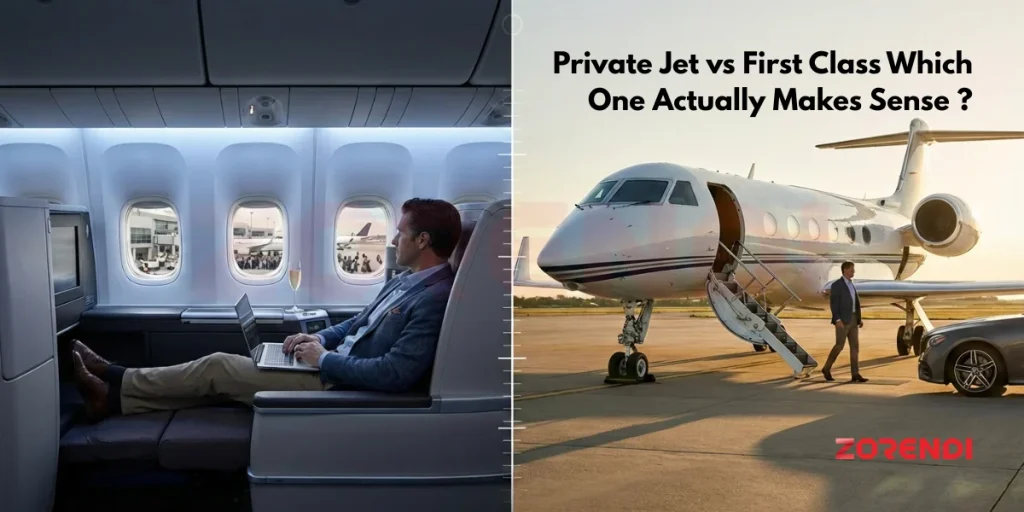
Private Jet vs First Class is not really a question of which option feels more luxurious. The practical choice depends on route, schedule flexibility, group size, airport access, privacy requirements and the total cost of the trip. Travelers comparing private jet for Sale listings, charter options and premium airline cabins should treat private aviation and First Class as different travel tools rather than two levels of the same experience.
First Class offers premium comfort within a commercial airline network, while private aviation gives travelers much greater control over departure time, airport choice and itinerary. The option that makes sense changes depending on how often someone flies, how complex the journey is and how valuable schedule flexibility is for that particular trip.

The Core Question Most People Get Wrong
When people frame Private Jet vs First Class, they usually ask the wrong question. They ask which one is more luxurious. That question is useless. The correct question is when each option becomes rational.
A private jet is not a better version of First Class. It is a different tool entirely. First Class is still commercial aviation. A private jet is a logistics system built around you.
That distinction matters more than legroom ever will.
Private Jet vs First Class
Cost Reality What You Actually Pay, Not the Advertised Number
A long-haul international First Class ticket typically costs between 7,000 and 15,000 USD one way. On ultra-premium routes it can reach 20,000 USD, but that is not the norm. Taxes and fees are usually baked in, and there are no surprises after booking.
Private jet pricing works differently. A light jet can cost 2,500 to 4,000 USD per flight hour. A midsize jet runs between 5,000 and 8,000 USD per hour. A heavy jet for transcontinental or transatlantic flights can exceed 12,000 USD per hour. Add landing fees, crew duty, overnight costs, fuel surcharges, and positioning legs, and the real cost becomes clearer.
On paper, Private Jet vs First Class looks one-sided. In practice, it depends on how many seats you are buying and how tight your schedule is.

Time Is Not a Metaphor Here It Is a Metric
This is where Private Jet vs First Class stops being theoretical. First Class still requires arriving early, clearing security, waiting for boarding, and landing at major hubs. Even with priority lanes, you lose time to systems you do not control. On international flights, immigration alone can cost forty minutes.
Private jets eliminate almost all of that. You arrive fifteen to twenty minutes before departure. You land closer to your final destination. You leave the airport immediately.
On some regional trips, private aviation can reduce total door-to-door travel time by avoiding fixed airline check-in windows, scheduled boarding and connections through major hubs. The actual time saved varies by route, airport, immigration requirements and ground transport, so it should be calculated for the specific journey rather than treated as a fixed number.

Cabin Comfort Is the Least Important Difference
People obsess over seats, beds, and champagne when discussing Private Jet vs First Class, but that is surface-level thinking. Modern First Class cabins are excellent. Fully flat beds, privacy doors, high-end dining, and quiet cabins are standard on top airlines. For a single passenger on a long flight, First Class is objectively comfortable.
Private jets vary widely. Some cabins are tighter than First Class seats. Others feel like flying offices. The real advantage is not softness. It is control over the environment. You decide when to eat, when to sleep, when to work, and when to land.
This matters more than it sounds, especially on irregular schedules.
Private Jet vs First Class: Decision Metrics
Privacy and Control
Privacy is often mentioned casually, but it has measurable value. In First Class, privacy is visual and acoustic. In a private jet, privacy is structural. No strangers, no cameras, no overheard calls, no cabin announcements. Conversations stay inside the aircraft.
For travelers handling confidential business discussions, private aviation can provide a level of separation that commercial cabins cannot fully replicate. Fewer unrelated passengers and greater control over the cabin environment can be useful for executives, legal teams or anyone who needs to discuss sensitive information while travelling.
This is why Private Jet vs First Class becomes less about luxury and more about risk management for certain travelers.
| Factor | First Class | Private Jet |
|---|---|---|
| Typical cost per seat | 7,000 to 15,000 USD | 3,000 to 12,000 USD per flight hour |
| Airport arrival time | 2 to 3 hours | 15 to 30 minutes |
| Schedule flexibility | Fixed | Full control |
| Privacy level | High | Absolute |
| Ideal group size | 1 to 2 | 3 to 8 |
| Best use case | Long solo flights | Complex or urgent travel |
If you want a broader perspective on this topic, you can also visit zorendi.

The Break-Even Point No One Talks About
Here is the quiet truth. The decision flips when three conditions align. You are traveling with more than two people. Your schedule has zero tolerance for delays. Your destination is not a major hub.
Under those conditions, Private Jet vs First Class stops being a luxury comparison and becomes an operational one.
For a group travelling on short notice, the cost gap between a private charter and several First Class tickets can sometimes narrow considerably. There is no universal break-even point, however. Aircraft type, flight duration, positioning costs, passenger count and commercial ticket prices all affect the comparison, so the total trip cost should be calculated for the actual itinerary.

Ownership, Charter, and the Grey Zone In Between
Some readers think the choice is binary. It is not. Charter exists between ownership and First Class. It allows access without long-term commitment. Some travelers assume the choice is limited to owning an aircraft or flying First Class, but charter provides a middle ground. It offers access to private aviation without the capital commitment and fixed operating costs associated with ownership. Whether owning an aircraft makes financial sense depends on annual utilisation, aircraft type, financing, crew, maintenance, hangar costs and the availability of suitable charter alternatives.

Psychological Fatigue Is a Real Variable
One part of Private Jet vs First Class rarely quantified is mental load. Commercial travel, even in First Class, forces you into someone else’s system. Delays, reroutes, gate changes, and cancellations add cognitive overhead.
Private aviation can reduce some of the uncertainty associated with fixed airline schedules, connections, gate changes and crowded terminals. That can be particularly valuable for executives, medical travelers or families working with tight timelines. The benefit is operational rather than simply luxurious: fewer external schedule dependencies can make a complex journey easier to manage.

When First Class Is the Smarter Choice
There are many scenarios where First Class is the rational winner. Solo long-haul flights with fixed dates. Routes between major hubs. Travelers who value onboard service over schedule control.
In these cases, Private Jet vs First Class is not close. First Class delivers excellent value and comfort without unnecessary expense. Overthinking it leads to waste.

Which Option Actually Makes More Sense?
Private Jet vs First Class comes down to one practical distinction. First Class provides a high level of comfort within a commercial airline schedule, while private aviation gives the traveler substantially more control over departure time, airport choice and itinerary. Neither option is automatically better.
For a solo long-haul trip between major international hubs, First Class can be the more rational choice because it delivers comfort without the cost of chartering an entire aircraft. Private aviation becomes easier to justify when several passengers are travelling together, the itinerary involves multiple stops, the destination is poorly served by commercial flights or schedule flexibility has unusually high value.
The expensive mistake is paying for a benefit the trip does not require. A straightforward journey may need nothing beyond First Class, while a complex or time-sensitive itinerary can make the flexibility of private aviation far more useful.
Frequently Asked Questions
Is a private jet always more expensive than First Class?
No. For groups or last-minute travel, the cost difference can narrow or even reverse.
Does First Class offer enough privacy for business calls?
It depends on the airline and route, but it never matches the structural privacy of a private jet.
When does owning a private jet make sense?
Usually above 250 flight hours per year, and only if capital efficiency is not a priority.
Which option is less stressful overall?
For complex schedules, private jets reduce stress significantly. For simple trips, First Class is often easier.

Zorendi Editorial Team is the editorial team behind Zorendi, covering cars, motorcycles, luxury vehicles, automotive technology, and mobility trends across the UAE and international markets.
Our articles are developed through research, comparison of reliable sources, official manufacturer information, vehicle specifications, and relevant market data. The team focuses on creating clear, practical, and regularly reviewed content to help readers better understand new models, specifications, technologies, ownership considerations, and developments across the automotive industry.
Zorendi Editorial Team aims to present information in a straightforward and useful way, with an emphasis on accuracy, relevance, and providing readers with the context they need when researching vehicles and mobility-related topics.